
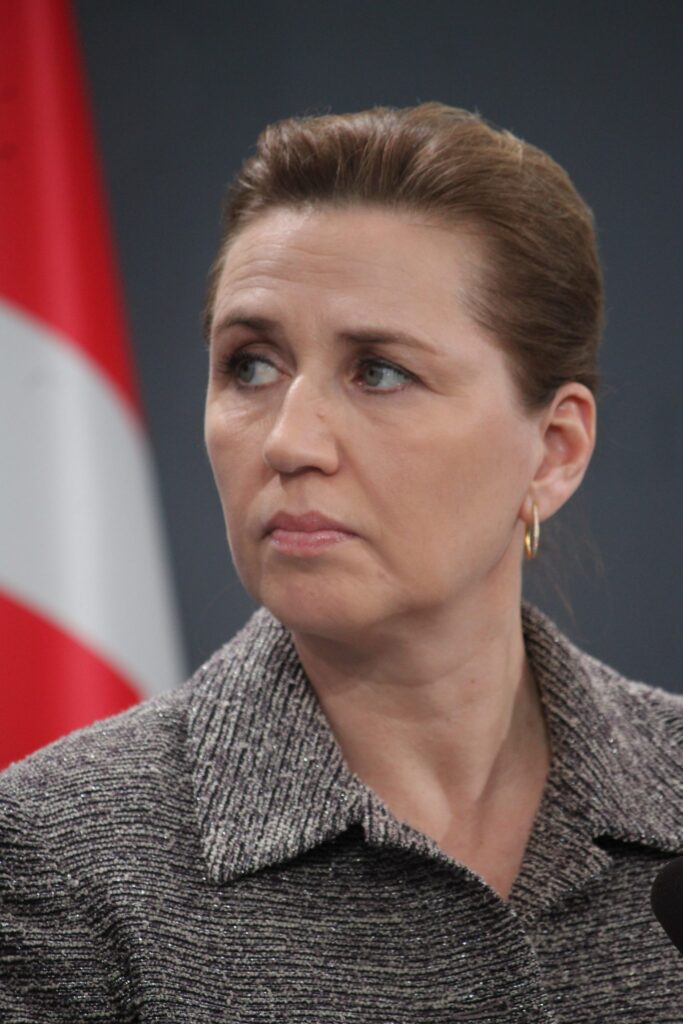
“All she had to do was say ‘No, we wouldn’t be interested.’” That was Donald Trump in August 2019, complaining to reporters at the White House about the Danish prime minister. Mette Frederiksen had just called his idea of buying Greenland “absurd”. He called her answer “nasty” and cancelled a state visit to Denmark, announcing it in a tweet on August 20, 2019. The trip had been set for September 2.
The row had started days earlier, after the Wall Street Journal reported that Trump had told aides to explore buying the island. He confirmed it and likened the idea to “a large real estate deal”. Denmark did not find that funny. Helle Thorning-Schmidt, a former prime minister, wrote “Is this some sort of joke?” on Twitter. Lars Lokke Rasmussen, who followed her in the job, remarked that it is no shame to stay away when you were never invited, but a different matter if you invited yourself. In Greenland, politician Aaja Chemnitz Larsen praised Denmark for rejecting “Circus Trump”.
Spending behind the position
Frederiksen’s refusal was not only rhetoric. In 2019 Denmark set aside 1.5 billion DKK in a supplementary defence agreement, and the Ministry of Defence later turned that money into a concrete package. Parties across much of the political spectrum signed on, from the Social Democrats to the Liberals, the Danish People’s Party, the Social Liberals and the Conservatives.
The package bought high-tech unmanned systems to track activity across the Arctic and the wider North Atlantic, more military presence, and a new basic military training course in Greenland run together with the Greenlandic government. Then defence minister Trine Bramsen put the reasoning plainly: foreign activity in the region was growing, and Denmark needed better surveillance “Not to escalate conflicts”, but to take the threats seriously. The ministry also stressed civilian uses, among them search and rescue and fisheries control.
The 2026 deal
The question did not go away. Trump’s second administration returned to Greenland’s security and mineral resources, citing national security, rare earth minerals and new Arctic shipping lanes. In January 2026, according to the Guardian, European Nato members sent military personnel to Greenland to show readiness, and eight European allies issued a joint statement on their commitment to Arctic security.
On September 19, 2026, Washington, Copenhagen and Nuuk announced a deal letting the United States build a significant military presence on the island, while barring US adversaries from building bases of their own. Trump said the US would have “permanent control over security” there. Copenhagen and Nuuk answered with a statement that the agreement would not compromise Greenland’s sovereignty. Jens-Frederik Nielsen, who leads Greenland’s government, said it recognised the territorial integrity of the kingdom and the right of Greenlanders to self-determination. Frederiksen had been in Nuuk with him on September 7.
Key details were still unpublished, including the size of the American presence and whether any power over foreign policy or resources would pass to Washington. Signing was pencilled in for the UN general assembly the following week. Mikkel Vedby Rasmussen, a political scientist in Copenhagen, told Reuters it was “probably not the end of President Trump’s ambitions for Greenland”.
Sources
- Trump Skips Visit To Denmark, Calls Danish Leader 'Nasty' For Greenland Sale Rebuff (NPR)
- New political agreement on Arctic Capabilities for 1.5 billion DKK (Danish Ministry of Defence)
- Denmark and Greenland say US military agreement will not compromise Arctic territory's sovereignty (The Guardian)




