
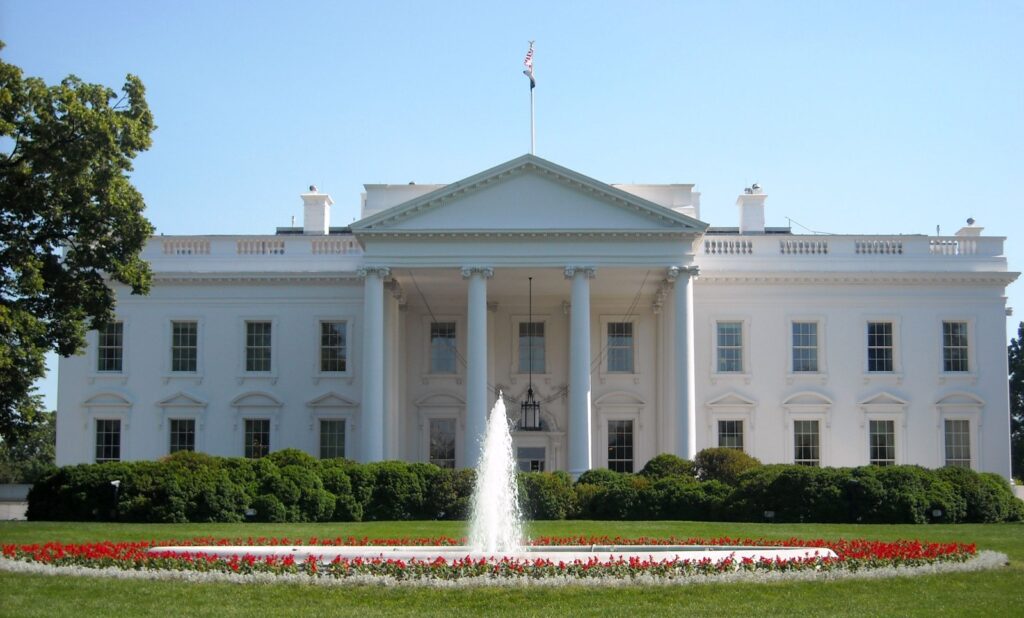
Six months into the Iran war, the U.S. bill stands above $37.5 billion, the Associated Press reported as the conflict hit the half-year mark on Friday. Iranian officials put their own damage, direct and indirect, at $270 billion.
The bottom line for President Donald Trump is time. He once told Americans the campaign would be a “little excursion” lasting weeks. Now he says the calendar does not matter. “I’m not in a hurry. I have no time schedule at all…whatever it takes,” he told Al Jazeera on Wednesday.
The numbers behind the claims
Trump says the Strait of Hormuz is open and counted 24 vessels through it on Wednesday. Before the war, about 130 went through every day.
He describes Iran as close to broke. “They’re not paying their troops. They’re in deep trouble. They have very little capacity,” he told reporters Thursday. On talks: “We don’t want to speak to them. We’re not looking to meet or anything.”
Iran was already struggling before the first strike. The International Monetary Fund pointed to surging inflation in the run-up to the war, and World Bank data show national income per person sliding from about $8,000 in 2012 to $5,000 in 2024.
From bombs to sanctions
On Monday, Trump announced an “economic D-Day” against Iran. The administration says economic pressure now comes ahead of military action, and the plan centers on punishing any country or company that keeps doing business with Tehran.
Treasury Secretary Scott Bessent unveiled the campaign, which the White House calls “Operation Economic Outcast.” So far it consists of warnings. No secondary sanctions have been announced. Bessent told reporters that countries should get time to move away from Iran and conceded the U.S. carries economic risk of its own.
Treasury did take one concrete step on Friday. It announced moves that could end with Banque Misr, Egypt’s second-largest bank, cut off from the U.S. financial system, and accused the bank of acting as a lifeline for Iran’s leadership.
China, Iran’s biggest trade partner and oil buyer, said it opposes “illegal unilateral sanctions.” Iran’s foreign ministry spokesman, Esmaeil Baqaei, accused Washington of “annihilating” international law and “systemic bullying.”
The shift also follows worries inside the administration about shrinking munitions stockpiles and what a long war means for U.S. readiness elsewhere.
Two readings of the pressure campaign
Aarathi Krishnan, a geopolitical risk analyst at RAKSHA Intelligence Future, agrees the strikes and decades of sanctions have hurt Iran badly. She argues that Tehran has adapted all the same, through discounted oil sales and opaque shipping and financial networks. “This administration has completely underestimated the Iranian resolve,” Krishnan said.
Richard Goldberg, who advised the National Security Council on Iran during Trump’s first term and now works at the Foundation for Defense of Democracies, wants more. He called for sealing “every escape hatch the regime has left.”
Trump insists the naval blockade is already working. “We have control and we have the blockade,” he said. “Iran is not getting anything. Nothing is going through.”
Diplomacy has stalled. A preliminary deal in June, meant to reopen the strait and start nuclear talks, fell apart within weeks once Iran began attacking ships. Qatar’s prime minister was in Tehran on Thursday. Israeli Prime Minister Benjamin Netanyahu, for his part, said, “I tell you — an agreement cannot be reached.”
Asked Thursday why he had not sanctioned Chinese banks, Trump gave this answer: “Who said I’m not? You don’t know if I’m doing it. I don’t have to announce everything, do I?”
Sources
- Trump says he’s ‘not in a hurry’ to end Iran war
- Trump Says He’s ‘Not in a Hurry’ for Iran Talks—Says US ‘Winning Very Big’ as Conflict Drags On




