
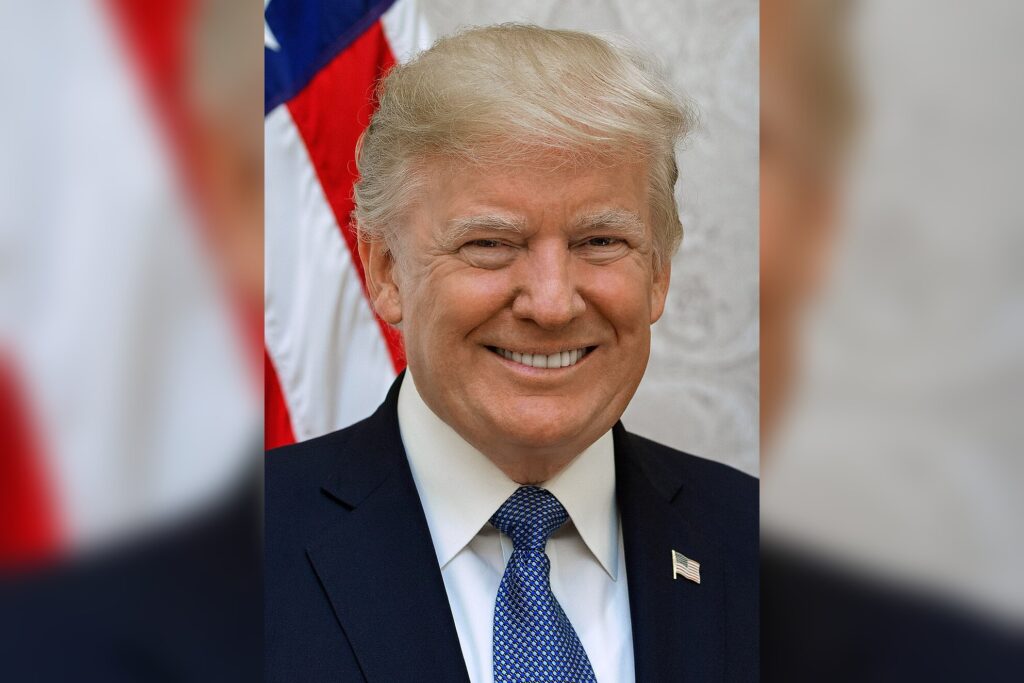
The prospect of the United States acquiring Greenland has returned to the forefront of political discussion, as President Donald Trump has revived a proposal first floated during his previous term. This renewed interest, reported in January 2025, signals that the notion is not a passing notion but a matter under active consideration with advisors. The conversation places the Arctic territory back at the center of a long-running strategic calculus, one that has seen multiple U.S. administrations explore the possibility of ownership over more than a century.
A Recurring Geopolitical Overture
The pattern itself is familiar. In August 2019, Trump first suggested purchasing the world’s largest island, describing it as “a large real estate deal.” That initial overture was met with swift rejection from both Danish and Greenlandic officials.
Then-Prime Minister Mette Frederiksen characterized the proposal as “absurd,” a response that led Trump to cancel a planned state visit to Denmark. Now, with Trump back in the White House, the administration has returned to the idea. The president reportedly discussed the matter with advisors, indicating that the interest is more than a fleeting curiosity.
The diplomatic response from Denmark came swiftly. On February 4, 2025, Frederiksen, still prime minister, addressed the subject by speaking about the need to defend NATO territory.
Greenland, while a self-governing territory, remains part of the Kingdom of Denmark, a founding member of the alliance. Her statement carried an implicit warning: any effort to acquire the island would be perceived as a challenge to NATO solidarity. On the ground in Washington, the conversation has shifted beyond mere real estate speculation to encompass Arctic security, the balance of power in a warming region, and the limits of diplomatic language.
Strategic Value and Historical Precedents
The United States has long understood Greenland’s strategic importance. The island’s location between the Arctic and Atlantic oceans, northeast of Canada, makes it a key piece of real estate for defense. The U.S. already maintains a military presence under a 1951 defense agreement with Denmark, operating Thule Air Base on the island since the early Cold War.
Beyond military posture, Greenland’s territory contains natural resources, though the extent and accessibility remain subjects of ongoing exploration. U.S. interest in acquiring Greenland is not new.
In 1867, Secretary of State William H. Seward explored the possibility during broader territorial negotiations, just after the Alaska Purchase. Nearly eight decades later, in 1946, President Harry S.
Truman offered $100 million in gold for the island, framing it as a defense asset in the postwar era. Both attempts were rejected, reflecting Denmark’s longstanding commitment to maintaining sovereignty over the territory.
These recurring proposals underscore Greenland’s enduring geopolitical significance — a remote but pivotal territory in an era of melting ice, rising military competition, and shifting Arctic trade routes. Greenland itself has been inhabited for centuries. Norse settlers arrived in the 10th century during the Viking Age, establishing scattered communities along ice-free coastlines.
Denmark consolidated control in the 18th century, integrating the island into its colonial administration and later its constitutional monarchy. By 1953, Greenland ceased to be a colony and became an integral part of the Danish realm.
A 1979 referendum granted home rule, and a 2008 vote expanded self-government, shifting authority over domestic affairs to local institutions while Denmark retained control over defense and foreign policy. The island, though geographically part of North America, remains politically tied to Europe through Denmark.
Diplomatic and Domestic Dimensions
For Greenlanders, the question of sovereignty carries deep meaning. The Self-Government Act of 2008 marked a turning point, enabling the territory to assert greater control over its future, including education, health care, and resource development. Yet Greenland remains economically dependent on Danish subsidies, which support public services and infrastructure. The island’s population is sparse, with most residents living along the ice-free southwestern coast, while the interior is dominated by the Greenland ice sheet, the second-largest ice body on Earth.
Nuuk serves as the capital. The Danish government has not softened its stance, and the Greenlandic government has made clear that the island is not for sale.
Any external attempt to acquire or influence the territory would intersect with these domestic priorities, raising questions about autonomy, identity, and the will of its people. By nightfall, the story remains unresolved. Trump’s interest has not faded, and diplomatic channels remain tense.
What happens next will depend on whether the administration pursues this as a serious negotiation or allows it to remain a rhetorical flourish. For now, the world watches a familiar pattern unfold — one that has, so far, always ended in rejection.
{“@context”: “https://schema.org”, “@type”: “NewsArticle”, “headline”: “Greenland Purchase Proposal Resurfaces in Trump Administration”, “description”: “WASHINGTON, July 8 — The prospect of the United States acquiring Greenland has returned to the forefront of political discussion, as President Donald Trump has…”, “datePublished”: “2026-07-08T09:30:00+00:00”, “author”: {“@type”: “Person”, “name”: “Ava Anderson”}, “publisher”: {“@type”: “Organization”, “name”: “InfoPulse Today”, “url”: “https://newsfeed.2bme.xyz/”}}




