
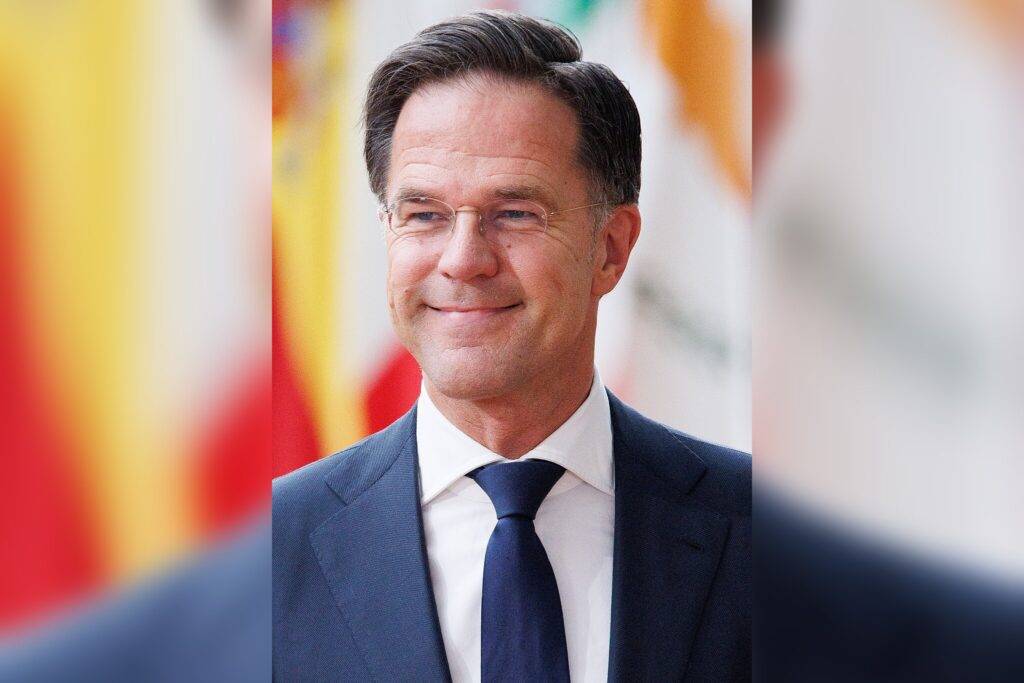
“All allies have a role to play.” That was the line coming out of a January 28, 2025 meeting between NATO Secretary-General Mark Rutte and Danish Prime Minister Mette Frederiksen, according to a source who spoke to Reuters. The subject was the Arctic, and the timing was no accident: President Donald Trump had been talking openly about acquiring Greenland, a Danish territory, and had not ruled out military or economic pressure to get it.
Rutte had taken the job only months earlier.
From The Hague to Brussels
NATO’s 32 member nations named Rutte, then the outgoing Dutch prime minister, as their next chief on June 26, 2024. Ambassadors signed off at the alliance’s Brussels headquarters. He took over on October 1, 2024, from Norway’s Jens Stoltenberg, whose time in the post had been extended more than once, partly to give the alliance continuity after Russia invaded Ukraine in 2022.
Holding the alliance together
Rutte also spent time calming talk of a split. On February 3, 2025, at NATO headquarters, he called the idea of European defence without the United States “a silly thought,” and Al Jazeera reported him saying that “we have to stay connected.” He did not pretend allies always agree. “There are always issues between allies,” he said. “It is never always tranquil and happy going.”
The pressure was real. Trump had pushed European members to spend 5 percent of GDP on defence, against a current 2 percent minimum, and Washington had put 25 percent tariffs on Canadian imports and threatened the European Union with similar measures. Rutte’s answer on Greenland was to turn the dispute into a joint project: if the Arctic mattered that much, NATO should defend it together.
Arctic Sentry
That idea took a formal shape a year later. On February 11, 2026, ahead of a defence ministers’ meeting, Rutte announced Arctic Sentry, a multi-domain activity meant to strengthen security in the Arctic and High North. NATO cited Russian military expansion and Chinese interests in the region as the reasons.
Joint Force Command Norfolk will lead it. The plan folds existing exercises into a single framework, starting with Denmark’s Arctic Endurance and Norway’s Cold Response, which together involve tens of thousands of personnel.
In the same remarks Rutte said allied defence investment “is up by tens of billions” and credited progress on commitments made at The Hague Summit. He also announced that senior posts in NATO’s command structure would be redistributed, giving European allies, including newer members, more responsibility. On Ukraine his message was blunt: “Ukraine cannot sustain this fight or secure the peace alone.” A NATO-Ukraine Council meeting with Defense Minister Mykhailo Fedorov was set for the next day.
Sources
- NATO appoints outgoing Dutch Prime Minister Mark Rutte as its next secretary-general
- NATO and Denmark agree allies must bolster defences in Arctic, source says (Reuters, via Global Banking & Finance)
- NATO chief says European defence without US 'will not work' (Al Jazeera)
- NATO Secretary General outlines new activity Arctic Sentry ahead of Defence Ministers meeting (NATO)




