
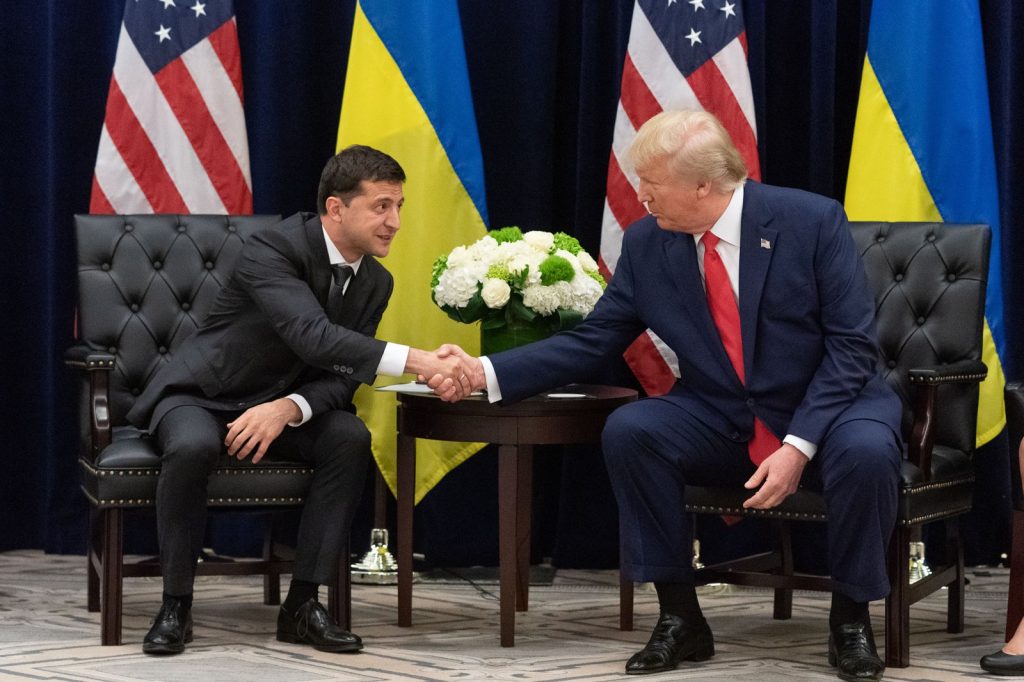
Relations between Donald Trump and Volodymyr Zelensky hit a new low after Trump tore up sanctions on Russia and struck a deal to buy Russian diesel, The Independent reported. Ukraine now faces another winter of Russian strikes, and Washington’s commitment to sharing intelligence and interceptor missiles is in question again. Special envoy Steve Witkoff met Zelensky in Oslo to try to mend ties.
This time Zelensky has not rushed to flatter. Where he once courted Trump with open praise and thanks, he has stood his ground.
A long record of friction
It began in July 2019, shortly after Zelensky was elected. In a phone call, Trump asked him to “do us a favour” and investigate Joe Biden, Hunter Biden and a discredited theory that Kyiv helped the Democrats in 2016. The call came shortly after the US froze nearly $400 million in aid to Ukraine. It led to Trump’s first impeachment by the House in December 2019, on abuse of power and obstruction of justice charges. Zelensky later said Trump had not tried to blackmail him, while Trump called it a “perfect call.” The Senate acquitted him in 2020.
After Russia’s full-scale invasion in February 2022, Trump, out of office by then, called it appalling, said he was praying for Ukrainians and described Zelensky as “brave” for staying in the capital. A few days earlier he had drawn criticism from Republicans for calling Putin’s moves “genius” and “pretty savvy.”
In February 2025, at their first face-to-face meeting after Trump’s return, the White House session blew up. Trump and Vice President JD Vance told Zelensky he had been disrespectful and had not thanked America. A US official said Zelensky was told to leave, and a minerals deal was left hanging. Within days Washington cut military aid and intelligence sharing. Between 2022 and the end of Biden’s term, the US had sent $33.8 billion in weapons from its own stockpile and $33.2 billion in further aid.
Ties recovered. Trump restored intelligence sharing, and by June 2025 US officials were helping Kyiv aim its strikes on Russian refineries better. Then came Alaska in August, where Trump met Putin without a clear agreement. A 28-point US peace plan in November asked Kyiv to give up its NATO ambitions and cede land; allies condemned it, and a 20-point revision followed in December. Trilateral talks in Geneva in February 2026 produced no breakthrough before the Iran war froze them.
Patriots, diesel and Starlink
In July, Trump said he would give Ukraine a license to produce its own Patriot interceptors, easing pressure on US stockpiles drained by the Iran war. By September, The Independent says, he had started to renege.
Rising energy prices before the November midterms sharpened the mood, and Trump pointed much of the blame at Ukraine’s strikes on Russian energy sites. In October he announced the deal letting Russia sell diesel. When Russia ignored his “energy ceasefire,” Ukraine resumed cross-border attacks and Trump hit out at Zelensky.
Ukraine then reported trouble with Starlink. Elon Musk said the military version used on the front lines belongs to, and is controlled by, the US government. Ukrainian officials said they no longer received reliable American warnings of incoming Russian attacks. The White House said nothing had changed in intelligence sharing.
Asked whether Trump was using him as a scapegoat for domestic troubles before the midterms, Zelensky smirked and said: “This is my answer.”




