
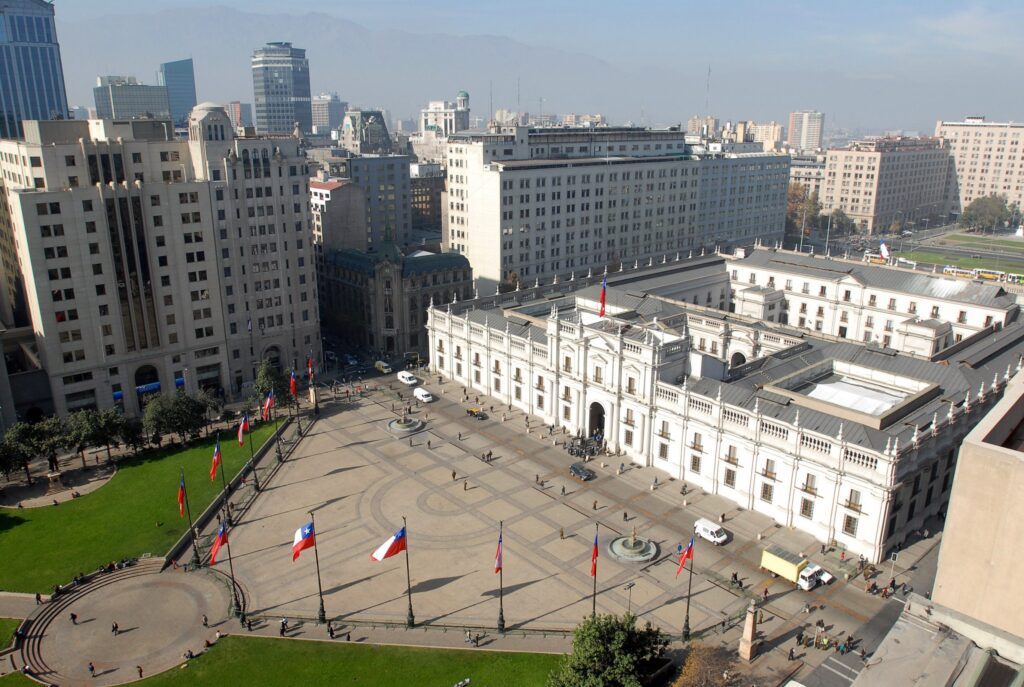
Thousands of demonstrators filled central Santiago on October 27 to voice opposition to Israel’s military operations in Gaza. The crowd, stretching through the capital’s main thoroughfares, waved Palestinian flags and carried signs demanding action. Chants of solidarity with Palestinians echoed through the streets, marking one of the largest such gatherings in the city in recent months. Chile has a well-established tradition of social activism, with organized networks that frequently mobilize during international crises.
The October 27 protest followed this pattern, but it carries higher stakes than typical demonstrations. The government has maintained diplomatic and economic ties with both Israel and the Palestinian Authority for years.
That balancing act now faces direct pressure from citizens who expect their government to take a clear position. The government has issued no public comment on the protest or the broader Gaza situation. Silence remains the official stance, but analysts say that position may prove unsustainable.
The crowd numbered in the thousands. Those demonstrators vote, organize, and maintain active social media networks.
They expect concrete steps, not just statements. If the government does not respond, activists will intensify their efforts. If it condemns Israel, relations with an existing diplomatic partner suffer.
Either path carries consequences. Chile is a nation of over 18 million people with a significant South American economy.
Its capital serves as a hub for trade and commerce, positioned between the Andes and the Pacific. When Santiago protests, the region takes notice. When its government shifts policy, markets and diplomats pay attention.
The October 27 gathering was part of a global wave of demonstrations over Gaza. Cities worldwide have seen similar crowds in recent days.
But Chile’s response matters more than many other nations due to its large Palestinian diaspora and strong tradition of human rights advocacy. Civil society groups and individuals have already flooded social media with expressions of solidarity. The pressure is active and immediate, not theoretical.
For the government, the risk is credibility. Prolonged silence may appear weak.
Condemning Israel would alienate a diplomatic partner. Condemning Hamas would anger protesters. There is no straightforward option. Each new report of casualties in Gaza fuels more anger.
Each day of official silence deepens the divide between the government and its activist base. For protesters, the risk is different.
They want Chile to use its diplomatic weight. If the government does nothing, the movement may grow and spill into other issues. Chile’s social fabric is already stretched by economic pressures and political divisions.
Adding a foreign policy crisis could shift internal dynamics in unpredictable ways. The crowd in Santiago made its position clear.
The government has not yet responded. That gap between popular sentiment and official policy is where the real story sits. It is not just a protest.
It is a test of how Chile’s government manages pressure from below. The outcome will matter far beyond the plaza where the banners flew.




