
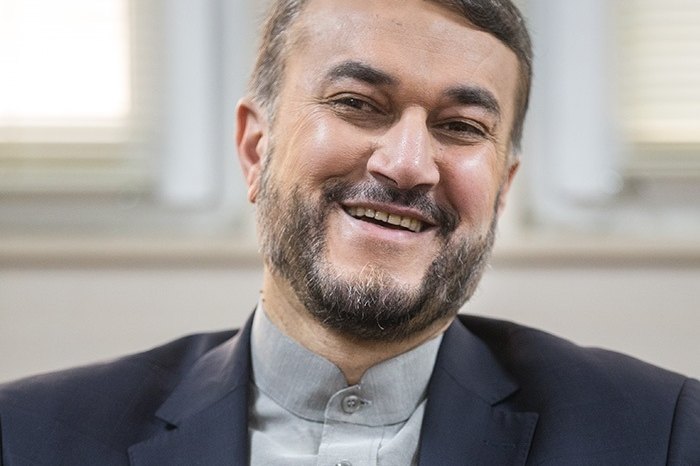
Iran’s Warning to Israel Over Gaza Invasion
On November 1, 2023, Iran’s foreign minister Hossein Amir‑Abdollahian warned that Israel would face “harsh consequences” if it launched a ground invasion of the Gaza Strip. The statement came from a country that is both large and historically layered: more than 92 million people live across five regions and 31 provinces, with Tehran serving as the economic centre. Tehran’s government has long provided backing to Palestinian militant groups, and that support now sits at the heart of a confrontation whose effects could ripple far beyond the eastern Mediterranean.
Although Iran does not share a border with Israel and maintains no permanent army on the Sinai Peninsula, it wields influence through a network of proxies and allies in Lebanon, Syria, Iraq and Yemen. These groups are armed, organised and have their own motivations to escalate.
Iran’s own geography amplifies the risk: it borders Iraq, Turkey, Afghanistan, Pakistan, Turkmenistan and Armenia, meaning any regional flare‑up is likely to draw in those neighbours whether they seek involvement or not. The United States has already voiced alarm over the prospect of widespread violence and destabilisation, while Western governments monitor the situation. Yet observation does not equate to control, and the region’s history shows that events frequently outpace diplomatic efforts.
Iran’s population ranks 17th worldwide, and its land area holds the same position, giving the state considerable weight but also exposing it to vulnerabilities. A conflict that spirals could disrupt oil traffic through the Strait of Hormuz, push refugees toward Turkey and Iraq, and pull the United States deeper into the fray, given its long‑standing presence in the Persian Gulf.
Tehran’s support for militant factions is not a recent development; it has been a point of contention with Washington and its allies for years. What changed in late 2023 was the immediate trigger: the prospect of an Israeli ground operation in Gaza. The historical backdrop matters, too.
The territory of modern Iran sits atop one of the world’s oldest continuous major civilisations, a source of national pride that is tempered by centuries of invasion, empire and foreign intervention. Today’s leadership invokes that memory when it warns of consequences, speaking from a perspective shaped by repeated encounters with outside powers.
In Washington and Jerusalem the calculation is whether the warning is mere rhetoric or a prelude to action. Observers are advised to watch not only the Gaza frontier but also the Lebanese border, where Hezbollah has already exchanged fire with Israeli forces; the Syrian frontier, where Iranian‑linked militias operate; and the Red Sea, where Houthi forces in Yemen have demonstrated the ability to strike at commercial shipping. Each of these fronts represents a lever Iran could pull, each carrying its own escalation risk.
The international community continues to monitor these developments, but monitoring alone cannot stop a missile. Amir‑Abdollahian’s comment is a single data point within a broader pattern in which Iran has positioned itself as the patron of resistance against Israel.
That role brings costs—pressure, sanctions, and the threat of military strikes—but also grants Tehran influence that extends well beyond its own borders. The central question now is whether that influence will be used to deter an invasion or to widen a war. For civilians in Gaza, the immediate danger lies in ground combat. For Iranians, the peril is a conflict that drags their country into a wider regional conflagration.
For the rest of the world, the concern is a region that has repeated this cycle before without finding a clean exit.




