
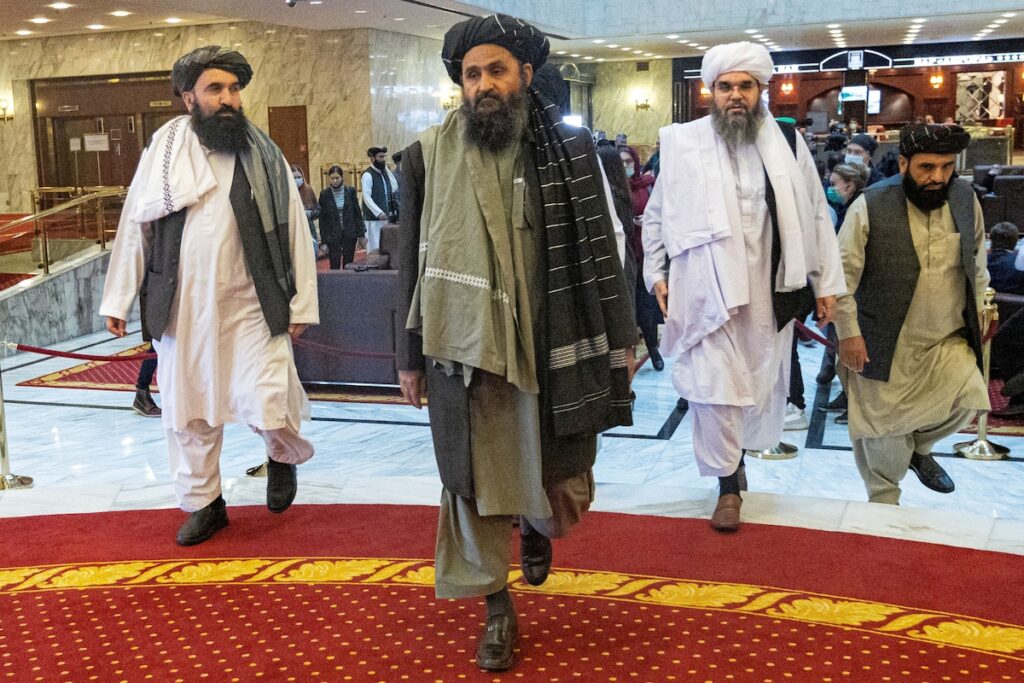
The Taliban began bombing targets inside Pakistan on Tuesday, marking a sharp escalation in a cross-border conflict that had previously been limited to a war of words. Taliban officials announced the operation earlier today, describing it as a direct response to what they called “ISIS sanctuaries” on Pakistani soil. Pakistan’s government has not yet issued an official statement confirming the attacks or offering its own casualty figures.
Cross-Border Strikes and Shifting Military Capacity
Military analysts tracking the region report that the Taliban are using small, fixed-wing aircraft and mortars to hit suspected hideouts of the Islamic State’s Khorasan affiliate (ISIS-K) in the rugged tribal belt along the Afghan-Pakistan border. The terrain in that area has long made it difficult for any single force to hold ground. The Taliban claim their intelligence network identified the targets, though whether those claims hold up under independent scrutiny remains an open question.
Researchers following the group’s military capacity have noted a curious shift in its capabilities. For years a guerrilla force fighting mainly with rifles and roadside bombs, the Taliban now operates a functioning air force of a sort.
The transformation began when the group captured a large cache of military equipment—including helicopters and small fixed-wing planes—abandoned by Afghan security forces as the Taliban seized Kabul in 2021. Some of those aircraft are now being used in these cross-border raids. The science behind their targeting remains crude, relying mostly on human intelligence and intercepted communications rather than satellite imagery.
The timing of the bombing campaign is intriguingly awkward. Pakistan has long been accused of harboring Taliban leaders, and now it finds itself on the receiving end of Taliban bombs.
The relationship between Kabul and Islamabad has always been complicated—part alliance, part rivalry—and this bombing campaign could fracture what remains of that delicate arrangement.
A Fractured History and Uncomfortable Position
Pakistan and the Taliban share a tangled relationship stretching back decades. Pakistan was one of the few countries that formally recognized the Taliban government in the late 1990s.
After the U.S.-led invasion of Afghanistan in 2001, many Taliban leaders found safe haven inside Pakistan’s border regions. For years, Islamabad denied sheltering them. That arrangement gradually frayed as cross-border attacks and mutual distrust grew.
The Islamic State’s regional affiliate, known as Islamic State Khorasan or ISIS-K, emerged in eastern Afghanistan around 2015. It quickly became a rival to the Taliban, staging brutal attacks on civilians and Taliban fighters alike.
The two groups have fought for influence and territory, especially in the rugged areas along the border—a contested strip of land that historically has been difficult for any central government to control. The current bombing campaign threatens to rupture an already fragile relationship between the two neighbors. For years, the Pakistani government called on the Taliban to prevent militant groups from using Afghan soil to launch attacks into Pakistan.
Now the Taliban are doing the reciprocal, striking what they claim are ISIS hideouts on Pakistani territory. That puts Islamabad in an uncomfortable position, caught between its historical ties to the Taliban and its own sovereignty concerns.
Counterterrorism or Power Projection?
ISIS-K has been a persistent threat to both the Taliban and Pakistan. The group has claimed responsibility for several high-profile attacks inside Afghanistan and Pakistan over the past year.
The Taliban insist they are serious about eliminating the group. Whether this bombing campaign is genuine counterterrorism or a convenient excuse to project power across the border is the question that will define the next phase of this conflict.




