
The Night Itself
The scene was set hours before the first blast. Missiles and drones rocked Kyiv early on Thursday, July 2, 2026, local time, in a Russian strike that set off fires and wounded at least five people that followed President Volodymyr Zelensky’s warning that Moscow was readying a “massive attack” His own return from Dublin, cut short on Wednesday over intelligence pointing to an impending strike, framed the night before it began.
AFP journalists in central and eastern Kyiv counted more than a dozen explosions and watched residents, children and pets among them, hurry down into metro stations serving as shelters. One AFP reporter saw an explosion in the city centre during an air-raid alert, then a column of smoke and flame, with firefighters and ambulances on the spot; roughly 50 minutes on, a second blast erupted near the first impact site and threw debris into the air.
The Mayor’s Ledger
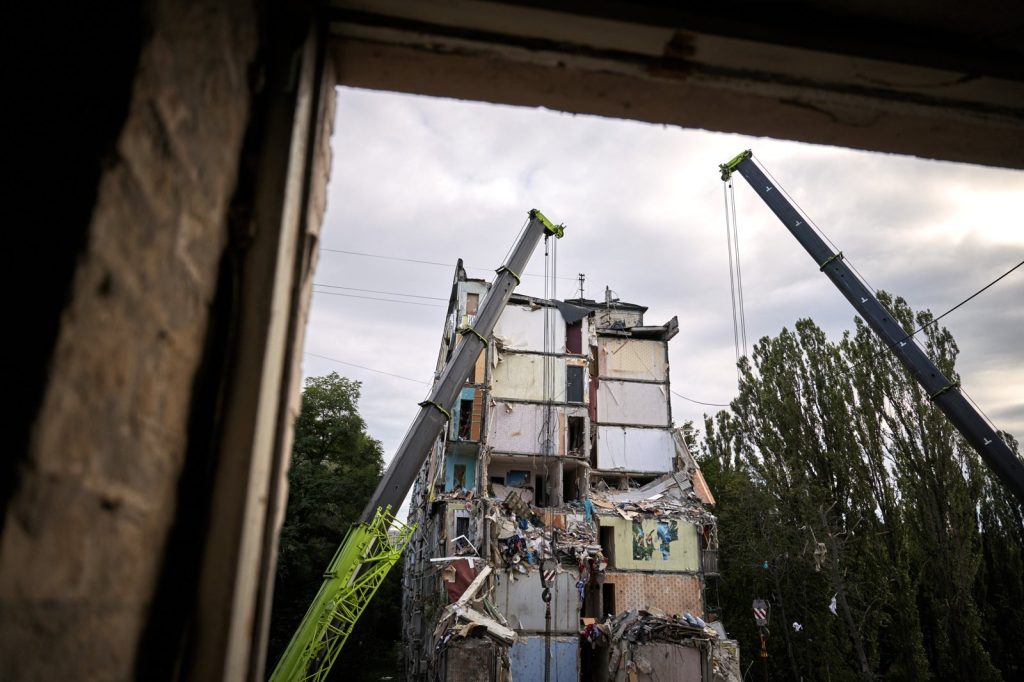
Against this backdrop, the details that matter are medical. “Kyiv is under attack from ballistic missiles and UAVs,” Kyiv Mayor Vitali Klitschko wrote on Telegram, noting blasts audible across the city, and in a later post: “The enemy continues to launch missiles at the capital,” Five healthcare workers were hurt in the Shevchenkivskyi district, one of them critically, the mayor said, while Tymur Tkachenko, head of Kyiv’s military administration, reported fires, a destroyed residential building and a damaged medical facility.
Warnings That Preceded It
What is at stake had been spelled out in advance. Zelensky said the attack had been planned “for some time”, and at a news conference he laid out the appeal he had brought home from Ireland: “I urge our people to be especially careful, to protect themselves, their children, and, of course, their families; to use shelters and heed air raid alerts in Ukraine – this is very important,” He added that Russian President Vladimir Putin “has been preparing this massive strike against Ukraine for some time now”.
The warning had substance on both sides: Ukraine has lately stepped up its own long-range drone strikes inside Russia against energy and military targets, Russian officials report repeated hits in border regions, and Moscow says its air defences have lately intercepted hundreds of Ukrainian drones.
The Wider Picture
The war itself grinds into its fifth year, the deadliest conflict in Europe since World War II. A study published Wednesday by the Centre for Strategic and International Studies, a US think tank, put the invasion’s military casualties above two million, with Moscow’s forces absorbing the larger share. American efforts to broker an end to the fighting have so far come to nothing, and Thursday’s skyline over Kyiv, lit by fires, was the practical proof.




