
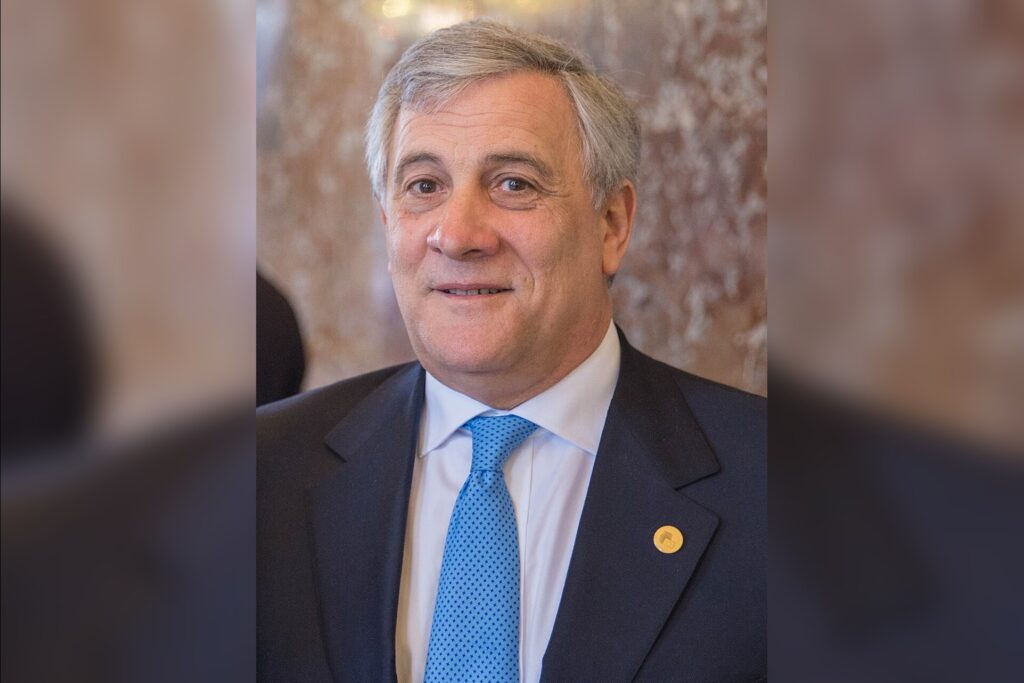
Antonio Tajani used an informal meeting of EU foreign ministers in Wicklow, Ireland, to say Russia may try to sway elections coming up in Europe. Italy’s foreign minister called it a problem for the whole continent, not just Rome. Attempts to condition votes in countries heading to the polls “cannot be ruled out”, he said, and governments should act early instead of cleaning up afterward.
He pointed to something that had already happened. Italy’s foreign ministry website was hit by a cyberattack during Volodymyr Zelensky’s first visit to Rome, and Tajani offered that as proof the threat to Italian institutions is real. He also referred to the Catalonia referendum, a warning that the same methods can be reused wherever public opinion is split.
In the European view, Russian interference works as a system, not a single break-in. Hacking is one piece. The others are doctored content in national debates, divisive stories pushed harder, pressure on infrastructure and an effort to turn war fatigue over Ukraine into political advantage. The EU Council has described Russia’s hybrid campaigns as persistent, coordinated and long-standing. NATO counts political interference, malicious cyber activity, economic coercion and subversion among Moscow’s tools.
The Vannacci question
The trigger at home was a Financial Times profile of Roberto Vannacci, the former general who leads Futuro Nazionale. The paper described him as a possible “Trojan horse” for Russian influence in Italy.
Tajani would not adopt the phrase. The FT was free to write what it wanted, he said, but such claims have to be proven, and he hoped they were “absolutely false”.
Reuters reported this week that Futuro Nazionale has moved ahead of Forza Italia in the polls, at 7.5%. That makes it Italy’s fourth-largest political force, only months after its launch.
A split in the coalition
Matteo Salvini took a different tone. Italians do not vote because of foreign influence, he said, and he warned against what he called an excessive “anti-Russian anxiety”. He conceded that Russia started the war, but argued that some Western capitals seemed to be looking for pretexts to prolong it. The exchange is not a government rupture. It does show how touchy the subject is in Italy, where trade ties with Russia were close before the war and the cost of sanctions is still argued over.
Across Europe the argument has moved past tanks and missiles to sabotage, cyber operations and disinformation. Reuters reported on Wednesday that the EU is preparing to raise pressure on Moscow after Germany blamed Russia for an explosives-laden drone incident at Leipzig/Halle Airport.
Tajani was careful about what he was not saying. His warning, he made clear, is preventive. It is not an accusation that the Italian vote has already been compromised.




