
Hay’at Tahrir al-Sham (HTS) announced the offensive on November 27, calling it “Deterrence of Aggression.” Within ten hours its fighters had taken 20 towns and villages in western Aleppo Governorate, and a government base, the 46th regiment’s, fell a few hours after that. By the end of the second day the rebels held around 40.
It was the first offensive by opposition forces since the March 2020 Idlib ceasefire froze the front lines. HTS led the push, backed by Turkish-supported factions of the Syrian National Army and a string of smaller Islamist groups. The group said it was responding to shelling of the rebel-held town of Ariha, where government artillery had killed and injured 16 civilians, mostly children, on November 26.
Aleppo falls
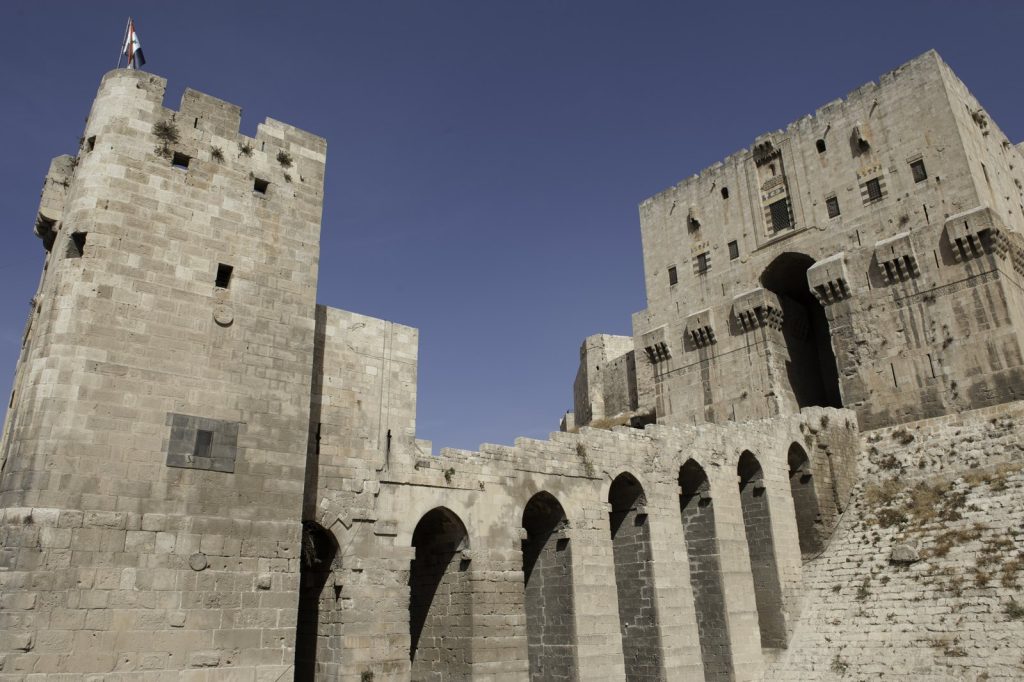
On November 29, rebels entered the Hamdaniya and New Aleppo districts after a double suicide attack with two car bombs, according to the Syrian Observatory for Human Rights. They took five city districts that day and reached the main square. Early on November 30 they captured the Citadel of Aleppo, the government headquarters in the city, along with more than half of the city. By morning most of Aleppo was in their hands and loyalist troops were pulling back toward as-Safirah.
Aleppo had been in Assad’s hands since 2016. Analysts Hassan Hassan and Michael Weiss wrote that government forces “suffered a complete breakdown in command and control and morale.” The 46th Regiment, the main army unit in the rebels’ path, “simply collapsed.” Troops lacked supplies, ranks were padded with “ghost soldiers,” and one army colonel said Hezbollah and Iranian officers who once commanded the garrison had largely left Syria by then.
The retreat left equipment behind. Among it were two T-90A tanks, a Pantsir-S1 system and a Buk-M2, and rebels also took helicopters and fighter jets at the Aleppo and Menagh air bases.
The fighting around the city
The Kurdish-led Syrian Democratic Forces moved into the Shaykh Najjar district and Aleppo International Airport as government troops left. Rebels later took the airport from them without a fight. About 10,000 civilians had fled toward the Idlib countryside during the first days of the offensive, and thousands more left Aleppo through the Khanasir Athriya intersection, mostly bound for Latakia and Salamiyah.
Air raids followed. A reported Russian airstrike killed 16 civilians and wounded 20 in the city, and another on Aleppo University Hospital on December 1 killed 12 people, eight of them civilians. By the monitor’s count on November 28, more than 130 combatants had died: 65 HTS fighters, 18 from allied factions and 49 regime troops.
Charles Lister of the Middle East Institute called it “a potentially transformative moment in Syria’s ‘frozen conflict’, which truthfully has never really been frozen.”
Toward Hama
The rebels did not stop at Aleppo. They pushed into northern Hama while still mopping up the city, and Hama itself fell on December 5. The Syrian armed forces acknowledged the loss of Aleppo and said they were redeploying to strengthen defence lines and “preserve the lives of civilians and soldiers.” Turkey’s foreign minister, Hakan Fidan, said his country was not involved in the fighting.
Abu Hassan al-Hamwi, head of HTS’s military wing, said the offensive had been planned for a year, and that even HTS leaders were surprised by how fast Aleppo went. “We had a conviction, supported by historical precedent, that ‘Damascus cannot fall until Aleppo falls,’” he said.
Sources
- Northwestern Syria offensive (2024) – Wikipedia
- Battle of Aleppo (2024) – Wikipedia
- Syrian war reignites as rebels launch surprise offensive against Assad




