
Andrii Sybiha walked into a meeting of NATO foreign ministers in Brussels in December 2024 holding a copy of a thirty-year-old piece of paper. Ukraine’s foreign minister told reporters the document had “failed to secure Ukrainian security and transatlantic security.” The paper was the Budapest Memorandum on Security Assurances, and its 30th anniversary had just passed.
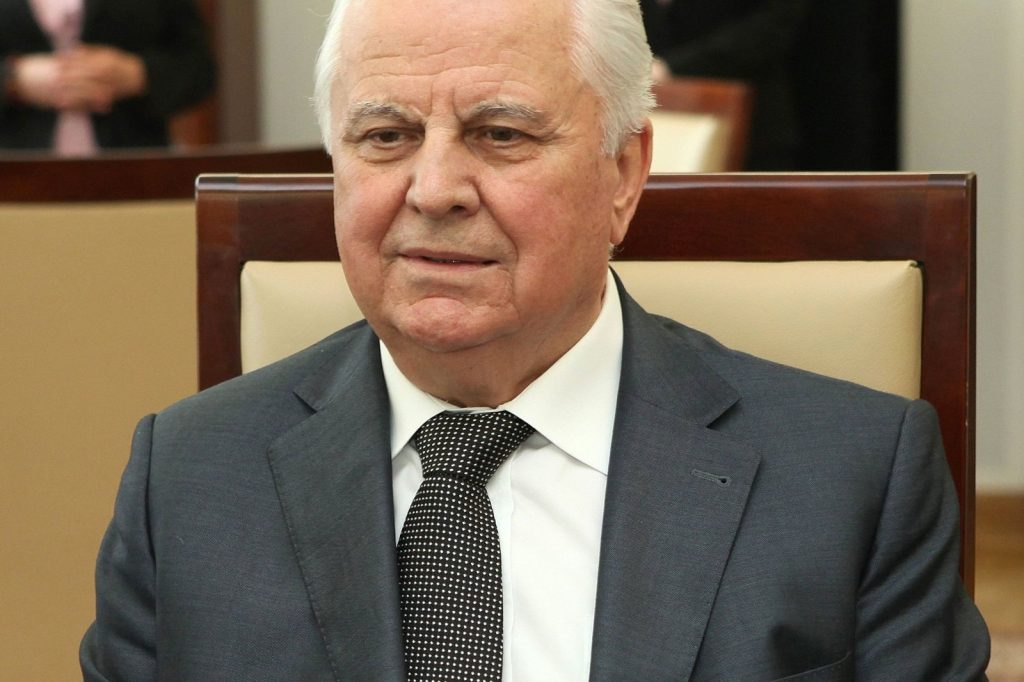
Voice of America, which marked the anniversary on December 5, 2024, laid out what the memorandum was. On December 5, 1994, Ukraine’s Leonid Kravchuk, Russia’s Boris Yeltsin, U.S. President Bill Clinton and British Prime Minister John Major signed it in Budapest. In exchange, Ukraine gave up the nuclear arsenal it had inherited from the Soviet Union, then the third largest in the world. It agreed to send the nuclear munitions on its territory to Russia for dismantlement and to decommission its missile launch silos.
What was actually promised
Steven Pifer helped negotiate the deal and served as U.S. ambassador to Ukraine from 1998 to 2000. He told VOA’s Ukrainian Service that Washington, London and Moscow committed to respect Ukraine’s sovereignty, independence and existing borders, and not to use or threaten force against it.
He also recalled how blunt the American side was in the early 1990s, when Ukrainian officials asked what would happen if Russia broke the agreement. “We said the United States will do things; we will take an interest,” Pifer said, but Washington made clear it would not necessarily send military force. That is why the title says assurances, not guarantees.
Crimea and after
Russia annexed Crimea in 2014 and fueled a separatist movement in eastern Ukraine. In February 2022 it launched a full-scale invasion. On December 3, 2024, Ukraine’s Foreign Ministry issued a statement calling the memorandum “a monument to short-sightedness in strategic security decision-making.” The ministry said the only real guarantee for Ukraine, and a deterrent to further Russian aggression, is full NATO membership.
Former president Petro Poroshenko, now in opposition, made a related argument to VOA: an invitation to join NATO should be seen as a continuing obligation of Ukraine’s partners under the memorandum. Russian officials take the opposite view. They accuse Ukraine and its partners of violating the memorandum by expanding NATO, which they say threatens Russia’s security interests.
Could the arsenal have deterred Russia?
Mariana Budjeryn, a senior research associate at Harvard Kennedy School’s Belfer Center, doubts it. The weapons Ukraine inherited, she said, were not a fully fledged deterrent it could simply pick up and use. They were part of an arsenal built by the Soviet Union for its own strategic aims. A credible deterrent would have needed heavy investment in an independent nuclear program, which Ukraine did not have.
She said Ukraine and its Western partners also failed to grasp the Russian threat at the time. The Cold War was over, and the issue of nuclear weapons felt like a thing of the past.
Pifer noted that the memorandum was not the only agreement Moscow signed and then broke. The 1997 Russian-Ukrainian Treaty on Friendship, Cooperation and Peace also recognized Ukraine’s 1991 borders. Budjeryn’s own conclusion was that no single document, however well written, is a sufficient basis for national security. A country, she said, has to invest in its own defense.




