
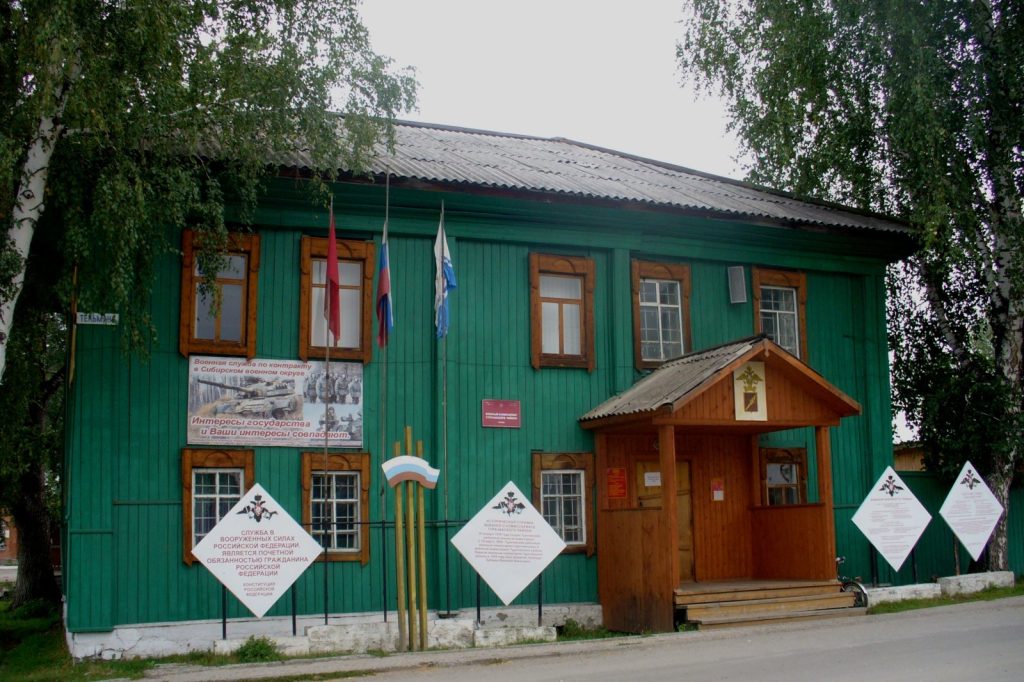
Every Russian man turns 18 and becomes eligible for conscription. What happens next runs through a single local office, the military commissariat, known in Russian as the voenkomat.
The mechanics here are simple. A drafted man goes through medical exams, and the voenkomat decides whether he is conscripted, deferred or exempted. Military representatives then pick conscripts according to need or technical skill, and each arm of service gets its share. Whether a conscript’s own preference about where to serve counts for anything depends on the staff at the voenkomat, according to a March 2025 report by the Danish Immigration Service and the Swedish Migration Agency.
The summons and its limits
The same report says a summons can legally be delivered only in person or by registered post. Formally, a summoned citizen cannot travel abroad and has to hand in a passport within five days. The catch is that the rule is not airtight: even after receiving a physical summons, the report says, a person can still leave Russia.
The offices also call in men who are not being drafted at all. The Moscow Times reported in August 2023 that enlistment offices in regions including Ulyanovsk, Perm, Krasnoyarsk, Kemerovo and Chelyabinsk sent residents summonses to appear “to make sure their personal details were up to date.” Offices can legally ask eligible men to confirm details such as marital status, education and place of residence. Missing the appointment carries a fine of 500-3,000 rubles. In at least one case, officers offered Defense Ministry contracts to people who turned up.
Reform on paper, workarounds in practice
Since December 2022, the draft age range has been extended from 18-27 to 18-30, the criminal code has been amended to allow earlier contract signing, and electronic summonses have been introduced. The electronic system’s launch was postponed to 1 January 2025 because of technical problems, the Danish and Swedish report says. The Moscow Times noted that recent legislation restricts draftees from leaving Russia once they get an online summons.
Deferrals are common, and academic study is a frequent reason. On the other side of the ledger, the report says corruption plays a significant part in the number of men exempted from service on medical grounds. Draft evasion is common too, though it has not risen significantly since the full-scale invasion of Ukraine. Several hundred cases are opened each year, and most end in fines.
Draft offices at the border
The voenkomat’s reach became visible in September 2022. After President Putin announced partial mobilization, authorities set up enlistment offices at border crossings to stop men of fighting age from leaving, according to The Globe and Mail. New offices opened at the Ozinki checkpoint in Saratov, on the Kazakhstan border, and were planned for Astrakhan. Makeshift centers had already appeared at the Verkhny Lars crossing into Georgia and the Torfyanka checkpoint on the Finland border.
More than 194,000 Russians had fled to neighboring countries by then. The Kremlin said it would call up about 300,000 people, though Russian media suggested the number could reach 1.2 million. Putin admitted that “mistakes had been made in the mobilization.”
Sources
- Russia: Conscription (Thematic COI report, Danish Immigration Service and Swedish Migration Agency)
- Russians issued military summonses for 'data verification'
- Russia opens more border draft offices amid call-up exodus




