
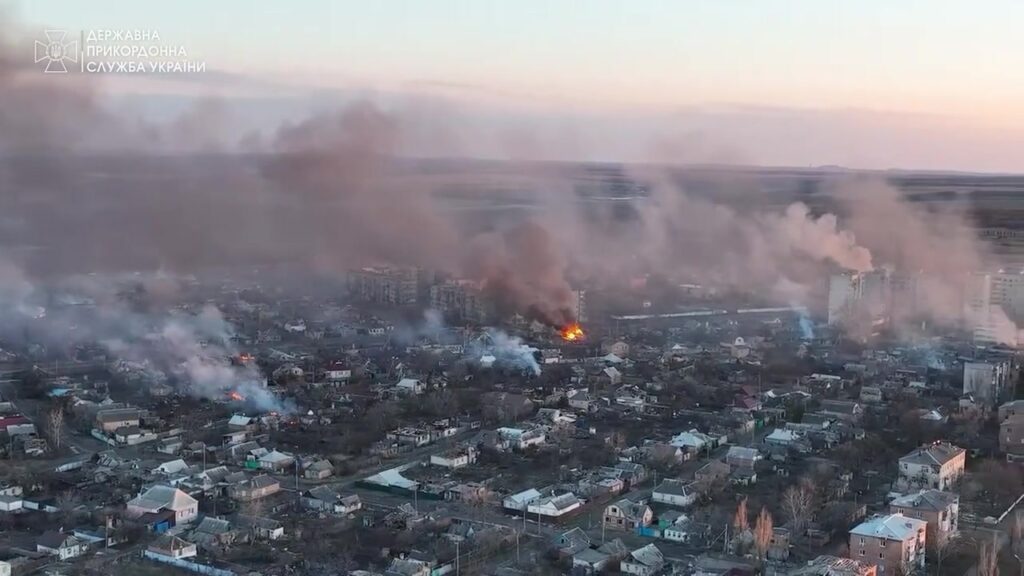
The battle for Bakhmut, a city in eastern Ukraine, has become a focal point of the ongoing Russo-Ukrainian war, with Russian forces intensifying their attacks in November 2022. The shelling of Bakhmut began in May 2022, and Russian offensives on the distant approaches to the city started in early July. This prolonged assault has been marked by the involvement of mercenaries from the Russian paramilitary organization Wagner Group, supported by regular Russian troops and reportedly Donetsk People’s Republic militia elements.
The main assault towards the city itself gained momentum after Russian forces advanced from the direction of Popasna, following a Ukrainian withdrawal from that front. The situation on the ground has been fluid, with both sides experiencing losses.
However, the Russian forces have maintained their offensive, despite facing challenges. The Bakhmut–Soledar front has become an important focus of the war, being one of the few front lines where Russia remains on the offensive, especially after Ukraine’s successful counteroffensives in Kharkiv and Kherson. As the conflict escalated, the city of Bakhmut has borne the brunt of the fighting.
The Russian forces have been reinforced by units redeployed from the Kherson front, together with newly mobilized recruits. This influx of troops has enabled the Russians to maintain their pressure on the city.
The involvement of the Wagner Group, a Russian paramilitary organization, has added a complex dimension to the conflict. Their presence has been reported to be significant, and their role in the battle has been noteworthy. The international community has been watching the developments in Bakhmut with concern.
The United States, under the leadership of President Biden, has been providing support to Ukraine in its efforts to defend its territory. The U.S. has been critical of Russia’s actions in Ukraine, and the ongoing battle in Bakhmut has only added to the tensions between the two nations. The European Union has also been vocal in its condemnation of Russia’s aggression, and the situation in Bakhmut has been a topic of discussion in various international forums.
The battle for Bakhmut has significant implications for the broader conflict in Ukraine. The city’s strategic location makes it a crucial prize for both sides.
If the Russians are able to capture the city, it would give them a significant advantage in their efforts to control the eastern part of the country. On the other hand, if the Ukrainians are able to hold their ground, it would be a major setback for the Russian forces. The outcome of the battle is still uncertain, and the situation on the ground remains fluid.
As the situation in Bakhmut continues to unfold, it is clear that the conflict in Ukraine is far from over. The international community will be watching the developments in the city closely, and the U.S. and its allies will likely continue to provide support to Ukraine in its efforts to defend its territory.
The battle for Bakhmut is a critical moment in the ongoing war, and its outcome will have significant implications for the future of the region. In the coming days and weeks, it will be important to watch for any shifts in the balance of power on the ground, as well as any potential responses from the international community.




