
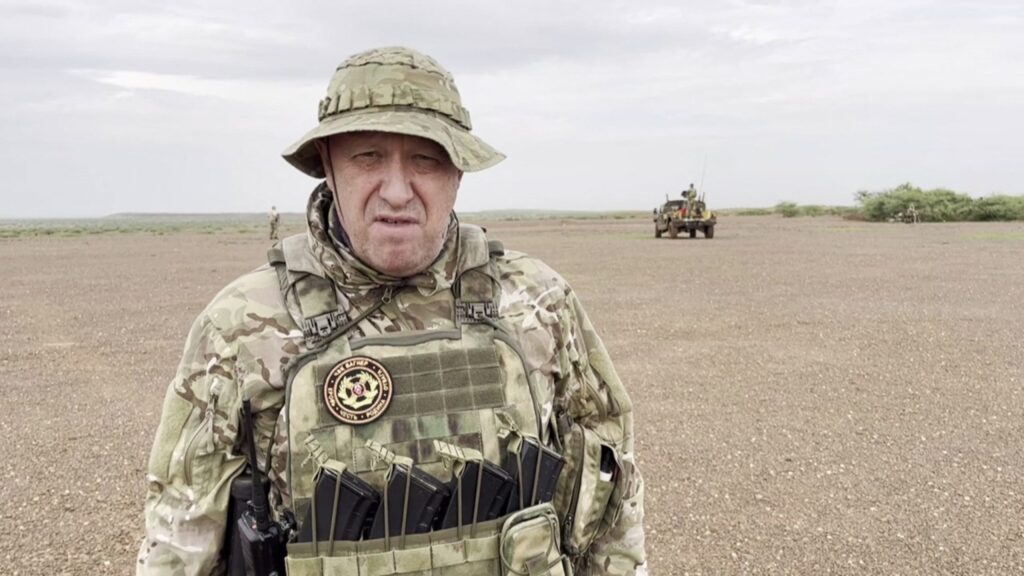
“There are 25,000 of us waiting as a tactical reserve and a strategic reserve.” Yevgeny Prigozhin, head of the Wagner Group, said that to supporters on the Friday of the June 2023 rebellion, according to CNN. By Saturday evening his fighters were pulling out of Rostov-on-Don and the revolt was over.
Stanford’s Freeman Spogli Institute dates the mutiny to June 23-25, 2023 and calls it the most significant threat to Vladimir Putin’s 23-year rule. Wagner forces took over military headquarters in Rostov-on-Don and pushed toward Moscow, then turned around under a deal arranged by Belarusian President Aleksandr Lukashenko.
A feud made public
The fight had been building for months. Prigozhin openly attacked Defense Minister Sergei Shoigu and the top general, Valery Gerasimov, accusing them of holding back ammunition and mishandling the war in Ukraine. On the Friday, he said Russian forces had struck a Wagner camp and killed many of his men. The Defense Ministry denied it and called the claim an “informational provocation.”
He went further than complaints about supply. Prigozhin declared that “Moscow invaded Ukraine under false pretenses devised by the Russian Ministry of Defense.” Wagner then occupied military facilities in Rostov-on-Don and Voronezh, and the FSB opened a criminal case against him over the threat of an “armed rebellion.”
The deal
Kremlin spokesman Dmitry Peskov announced the outcome on Sunday, June 25. “The criminal case will be dropped against him. He himself will go to Belarus,” he told reporters. Wagner fighters who had marched on the capital would face no legal consequences, and Peskov said they were heading back to their field camps “in accordance with the plan.” CNN reported that they were expected to sign contracts with the Ministry of Defense.
Putin had called the rebellion “a stab in the back of our country and our people.” The Kremlin tightened security, declared Monday a non-working day and suspended public events in the Moscow region through July 1. CNN said Prigozhin’s column halted 124 miles from the capital, with the stated aim of avoiding bloodshed.
Peskov credited Lukashenko’s 20-year personal relationship with Prigozhin for the breakthrough. “It was his personal proposal, which was agreed with Putin,” he said. Chechen leader Ramzan Kadyrov branded the revolt a “vile betrayal.” Ukraine launched counter-offensives in several directions on the Saturday.
What the experts saw
Analysts at Stanford read the episode as a sign of weakness. Kathryn Stoner argued that Putin’s system runs on “individual loyalties rather than institutionalized, transparent chains of command,” which makes it “inherently fragile,” and that the “carefully crafted myth of competence will be damaged.” Michael McFaul pointed to Putin’s own conduct: tough words first, then he “capitulates and starts to negotiate.”
Steven Pifer found the settlement itself odd. “Something does not add up,” he said, since Prigozhin accepted exile even though none of his demands had been met.
Sources
- Wagner Chief to Leave Russia for Belarus in Deal Ending Armed Insurrection (CNN)
- Understanding Prigozhin's Mutiny and What Is, and Isn't, Happening in Russia (Stanford FSI)




