
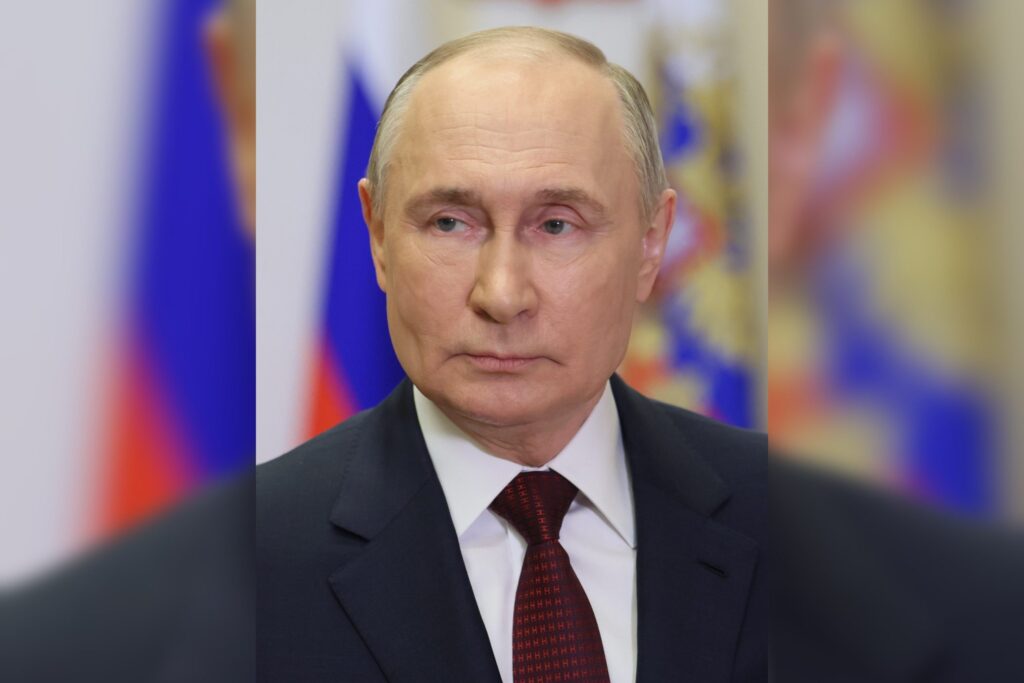
MOSCOW, August 14 — Russian President Vladimir Putin directed the Kremlin in 2018 to execute a long-term strategy to destabilize NATO and the European Union from within, according to classified documents and intelligence assessments obtained by The New York Times. The campaign, first reported on June 10, 2025, involves disinformation, political interference, and covert support for extremist groups across Europe.
Western intelligence officials, speaking on condition of anonymity, told the newspaper that the operation has been active for years, intensifying after Russia’s annexation of Crimea in 2014 and its full-scale invasion of Ukraine in February 2022. The strategy explicitly targets divisions within NATO and EU member states.
Russian efforts include amplifying far-right and far-left movements, funding political parties in France, Germany, and Italy, and launching cyberattacks against EU institutions and NATO communications.
Russian Agencies and State Media Involved
Multiple Russian intelligence agencies are implicated. The GRU and SVR, alongside state-backed media outlets RT and Sputnik, play central roles in the operation. Western intelligence agencies have tracked these activities, disrupting some operations.
But the scale and persistence of the effort remain a major concern for transatlantic security, according to the report.
What’s Next
The continued intensity of the campaign suggests further attempts to undermine European stability. The involvement of military intelligence and state media signals a coordinated, high-level push—one that Western officials continue to monitor closely. Western governments have long assessed that Russian influence operations are a core element of Moscow’s broader “hybrid warfare” approach, designed to weaken adversaries without direct military confrontation.
Such strategies typically seek to exploit existing social tensions, undermine trust in democratic institutions, and slow consensus-building within multinational alliances. By targeting NATO and the European Union as collective bodies, the reported plan reflects an effort to reduce the West’s ability to act cohesively on security and foreign policy matters.
The significance of these findings lies in their persistence and high-level coordination. Disinformation campaigns, cyber intrusions, and support for fringe political actors are generally difficult to attribute definitively, and they are often conducted below the threshold of armed conflict. Yet their cumulative effect can erode public confidence in elections, journalism, and international partnerships.
Analysts have noted that such activity tends to intensify during moments of Western crisis or when Moscow faces strategic setbacks abroad.
In response, NATO and EU institutions have steadily developed mechanisms to detect and counter foreign interference, including rapid-alert systems, election security cooperation, and sanctions targeting individuals and organizations linked to malicious cyber or influence activity. Intelligence-sharing among allied countries has also improved since Russia’s




