
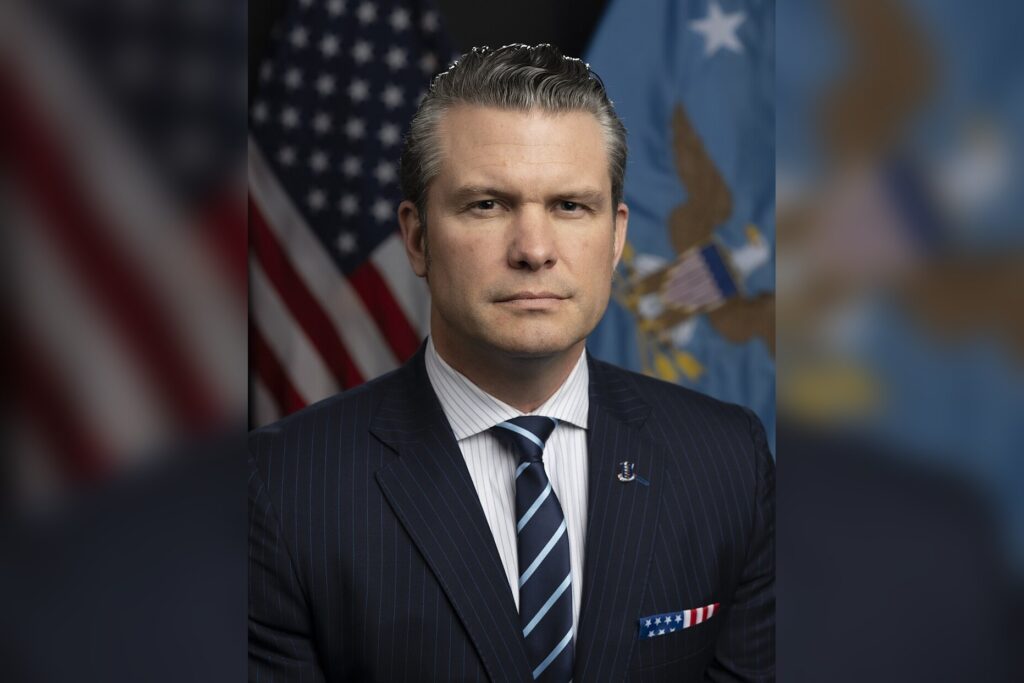
In early March, with the war against Iran still young, The Atlantic published an essay on America’s defense secretary that had nothing to do with troop movements and everything to do with tone. Its author, contributing writer Peter Wehner, watched Pete Hegseth’s Pentagon briefings and came away alarmed by what he called a moral unseriousness — a secretary who speaks of war, Wehner argued, without reverence or humility, and with something closer to relish.
The evidence came straight from the podium. At a Wednesday briefing, four days into what Hegseth branded Operation Epic Fury, the secretary announced: “I stand before you today with one unmistakable message about Operation Epic Fury: America is winning decisively, devastatingly, and without mercy,” He allowed that Iran was “toast, and they know it. Or at least soon enough they will know it.” and reached for a sports metaphor: “They don’t know what plays to call, let alone how to get in the huddle and call those plays.” What went unmentioned, in Wehner’s reading, was everything ahead — a nation of 90 million people bordering seven countries, the fragmentation and internal chaos that could follow, a dangerous insurgency, humanitarian emergency, regional shocks and worldwide economic disruption.
As ever, the press relations were their own weather system. Hegseth resented “fake news.” He grumbled that six American war deaths were getting front-page treatment, claimed the press “only wants to make the president look bad.” and accused Democrats of “rooting against the country.” Wehner’s sharpest charge concerned affect, not accuracy: the secretary’s visible delight, his talk of destruction raining from the skies, his glee in “punching them while they’re down, which is exactly how it should be.” At a Monday briefing he had mocked “our traditional allies who wring their hands and clutch their pearls, hemming and hawing about the use of force.” and promised “no stupid rules of engagement, no nation-building quagmire, no democracy-building exercise, no politically correct wars,” before closing with the shorter version: “We fight to win.” “We are not defenders anymore. We are warriors, trained to kill the enemy and break their will.”
Under the hood, Wehner traced a pattern older than this war. Last September, by his account, Hegseth summoned generals and admirals worldwide for a 45-minute lecture: “This administration has done a great deal since day one to remove the social justice, politically correct, toxic ideological garbage that had infected our department,” and “No more identity months, DEI offices, or dudes in dresses. No more climate-change worship. No more division, distraction of gender delusions. No more debris. As I’ve said before and will say, we are done with that shit.” At an event where President Trump signed an order renaming the department for war, he pledged to “restore the warrior ethos.” and pursue “maximum lethality, not tepid legality. Violent effect, not politically correct.” — a rhetorical run that led Seth Meyers to dub him “the secretary of white rapping.” The essay also revisits the Pentagon inspector general’s finding that Hegseth put US personnel at risk by discussing a sensitive strike on Signal, inadvertently including The Atlantic’s editor in chief; his “somewhat difficult past” and the financial-mismanagement, alcohol-abuse and sexual-misconduct allegations he denies; and his association with a pastor who calls himself a paleo-Confederate. Even a Christmas-era social media post of Franklin the Turtle targeting narco-terrorists, captioned “For your Christmas wish list …”, made the indictment.
The technical reality, in Wehner’s telling, is a contrast exercise. Dwight Eisenhower, supreme commander in World War II, carried an aversion to war into the presidency and used force with immense caution: “I hate war as only a soldier who has lived it can,” he said, “only as one who has seen its brutality, its futility, its stupidity.” Lincoln, in Lord Charnwood’s 1916 biography, grew more compassionate under the strain of civil war — “For perhaps not many conquerors, and certainly few successful statesmen, have escaped the tendency of power to harden or at least to narrow their human sympathies; but in this man a natural wealth of tender compassion became richer and more tender while in the stress of deadly conflict he developed an astounding strength.” Eisenhower and Lincoln were reluctant warriors, Wehner concludes; his worry is that the current secretary is anything but reluctant.




