
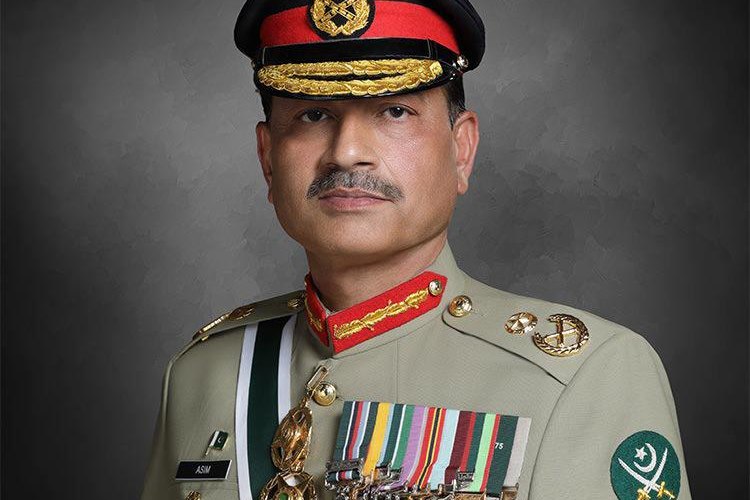
Date: 2026-05-22, A high-level diplomatic effort is underway as Pakistan Army field marshal Asim Munir visited Tehran, Iran, aiming to facilitate a ceasefire deal between Iran and the United States. This development comes as the international community seeks to de-escalate tensions between the two nations. The Pakistan Army, with its approximately 560,000 active duty personnel, has been actively engaged in regional diplomacy, leveraging its influence to promote peace and stability.
The Pakistan Army was officially established in August 1947, following the Partition of India, and has since grown into the largest component of the Pakistan Armed Forces. As the supreme commander of the army, the President of Pakistan oversees the military, while the Chief of Defence Forces (CDF) and the Chief of Army Staff (COAS) are responsible for the day-to-day operations.
According to the International Institute for Strategic Studies (IISS), the Pakistan Army is supported by the National Guard and the Civil Armed Forces, with Pakistani citizens able to voluntarily enlist in military service from the age of 17. U.S. the US Secretary of State has stated that the United States is open to diplomatic efforts to resolve the conflict with Iran, but emphasized that any agreement must address the concerns of the international community.
NATO Secretary General, Jens Stoltenberg, has also expressed support for a peaceful resolution, highlighting the importance of collective efforts to promote stability in the region. The AUKUS alliance, comprising Australia, the United Kingdom, and the United States, has been engaged in discussions to strengthen cooperation on defense and security issues, including the ongoing tensions with Iran.
Quad members, including the United States, Australia, India, and Japan, have been working together to promote a free and open Indo-Pacific region, with a focus on countering the influence of hostile actors such as Iran, China, and Russia. Indian Prime Minister, Narendra Modi, has emphasized the need for a peaceful and stable region, while Japanese Prime Minister, Fumio Kishida, has called for increased cooperation among like-minded nations to address common security challenges.
As the situation continues to evolve, the international community remains committed to finding a peaceful resolution to the conflict between the United States and Iran. The visit by Pakistan Army field marshal Asim Munir to Tehran, Iran, is seen as a significant development in the ongoing efforts to broker a ceasefire deal. With the support of the international community, including NATO, AUKUS, and Quad members, the United States is engaged in diplomatic efforts to address the concerns of all parties involved.
As U.S. Secretary of Defense, Lloyd Austin, has stated, the United States is committed to finding a peaceful resolution to the conflict, while also ensuring the security and stability of the region. The outcome of these efforts remains to be seen, but the engagement of key international actors is a positive step towards reducing tensions and promoting peace.
Australian Prime Minister, Anthony Albanese, has welcomed the diplomatic efforts, emphasizing the importance of cooperation among nations to address common security challenges. The United Kingdom’s Secretary of State for Defence, Ben Wallace, has also expressed support for the ongoing diplomatic efforts, highlighting the need for a peaceful resolution to the conflict. As the international community continues to engage in diplomatic efforts, the focus remains on finding a mutually acceptable solution that addresses the concerns of all parties involved, including the United States, Iran, and other regional actors.
The ongoing conflict between the United States and Iran has significant implications for regional stability, with the potential to impact the security and prosperity of nations across the Indo-Pacific region. The engagement of key international actors, including Pakistan, NATO, AUKUS, and Quad members, is critical to finding a peaceful resolution to the conflict.
As the situation continues to evolve, the international community remains committed to promoting peace, stability, and security in the region, with a focus on countering the influence of hostile actors and promoting cooperation among like-minded nations.




