
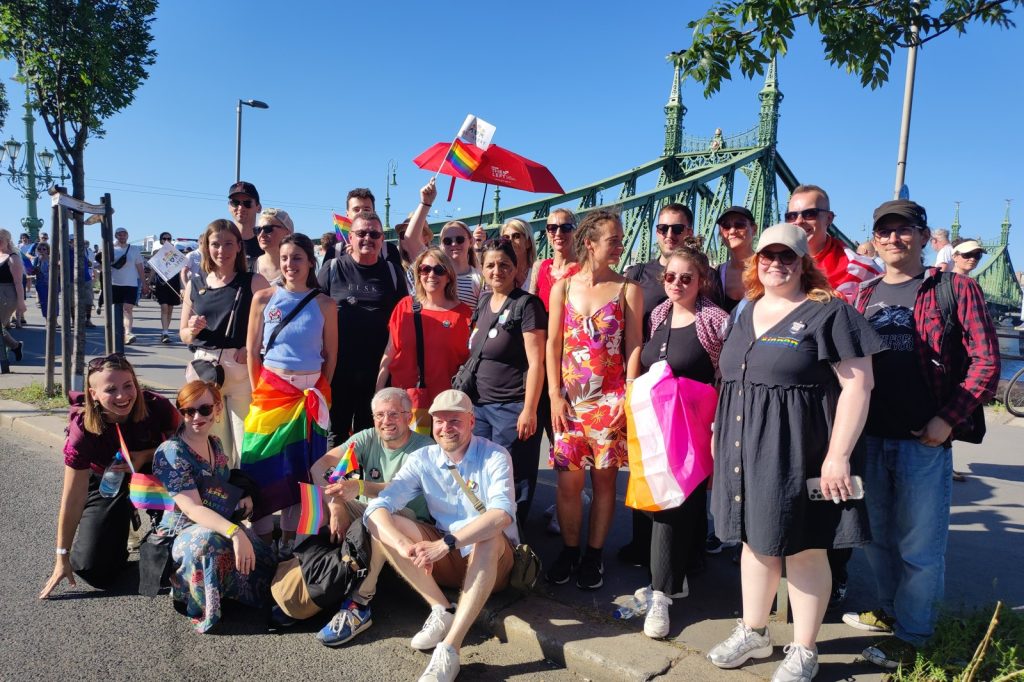
BUDAPEST — The rainbow flags that flew over Budapest on Saturday came down a different political sky than last year. More than 10,000 people marched in the city’s annual Pride parade, but the state that once tried to stop them was no longer in charge. Viktor Orban lost the April election to Peter Magyar’s centre-right Tisza party.
The ban on the march fell with him. So this year’s event was not a confrontation with the authorities.
It was a celebration of a door that had finally opened. Fanni Fajth, an 18-year-old student, described the mood as markedly more optimistic. “Everyone is just so much more uplifted,” she said.
Her hopes ran toward equal rights in adoption and marriage — rights Orban’s government had systematically stripped away. Orban cast himself as a defender of Christian values against Western liberalism.
Under his rule, Hungary passed laws ending the legal change of gender in personal documents. Same-sex couples could no longer adopt. Schools were banned from using materials that “promoted” homosexuality or gender transition.
Brussels condemned those policies. Human rights groups condemned them. But for years, they remained law.
Last year’s Pride march became a mass anti-government demonstration. Tens of thousands turned out, not just for LGBTQ+ rights but against the state that tried to silence them.
It was a protest in the streets. This year’s march was different. The obstacle was gone.
Mate Tarnai, a 51-year-old chemist, felt the shift personally. “The biggest change is actually the change in politics in the country,” he said.
“We feel more freedom personally as well, and also the atmosphere in the country is much more relaxed than last year.” He said he hoped for equal rights from Magyar’s government. Magyar has asked for patience when asked about those rights. He is a conservative.
The Tisza party is centre-right. Whether it will undo Orban’s anti-LGBTQ+ legislation — or keep it in place — remains an open question. But for one day in June, under record heat, the march went ahead without the threat of state obstruction.
Huge rainbow flags unfurled along the route. European Union flags flew beside them.
More than 10,000 people walked through the city. A year ago, that would have been illegal. A year ago, the state would have tried to stop them.
A year ago, the march was a battle. Now it was a parade.
The change in government did not erase the laws Orban passed. It did not restore the right to change gender on documents. It did not reopen adoption to same-sex couples.
It did not put books back in schools. But it lifted the ban on the march. And for the people who walked through Budapest on Saturday, that was enough to feel something they had not felt in years.
Optimism.




