
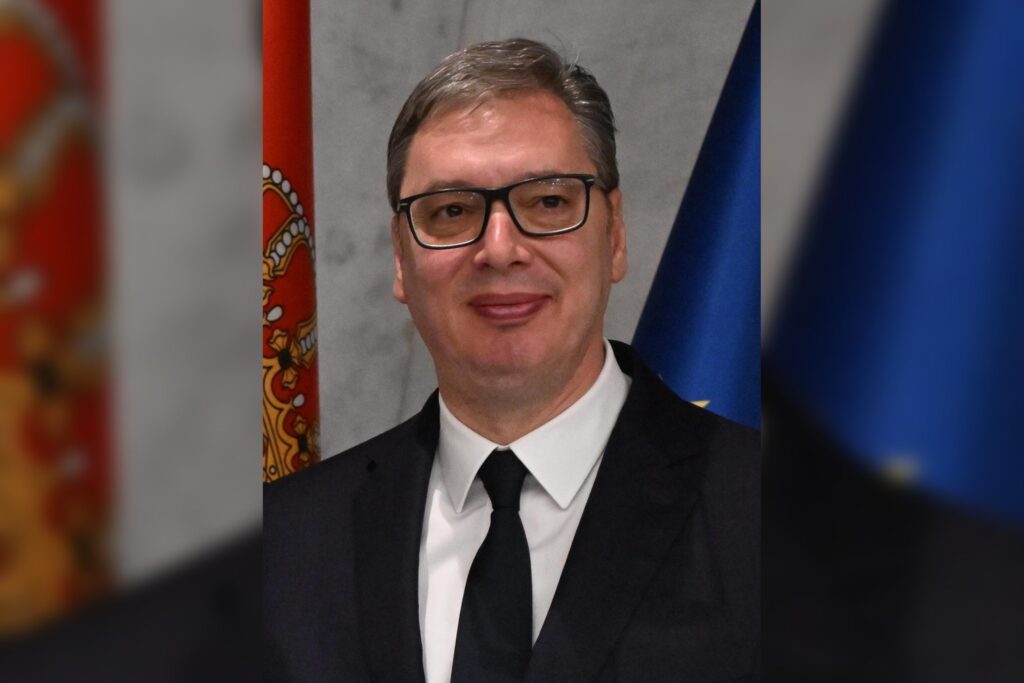
Thousands of supporters of the Serbian Progressive Party packed a Belgrade rally on June 27 expecting a campaign speech. They got a farewell instead, or the start of one. “These are my last days and weeks as the republic’s president. After that, I will resign,” Aleksandar Vucic told them.
He named no date for leaving office and none for the elections that will follow, early presidential and parliamentary ones. His second and last mandate was due to run out in 2027, so the exit comes early. Vucic said he had already told the party leadership that he wanted to “help us win the people’s trust for the next four years.”
The timing was not accidental. Days earlier, a student-led protest in Novi Sad had demanded snap general elections.
A protest movement that would not fade
The roots go back to November 1, 2024, when the roof of a railway station in Novi Sad collapsed and killed 16 people. Reports that corrupt practices had produced shoddy construction at the station, a flagship government project built by Chinese companies, stunned the country. Anti-government protests, mostly driven by students, have rolled on for more than a year and a half since. At their height, they were the biggest Serbia had seen since the street demonstrations that brought down Yugoslav leader Slobodan Milosevic 25 years ago.
On stage, Vucic offered the demonstrators a conversation. In the same breath he accused the movement of being shaped by foreign actors who, he claimed, are meddling in Serbian politics. He offered no evidence.
The president and his balancing act
Vucic began as an ultranationalist. He has been president since 2017, and over those years he recast himself as a reformer set on EU membership while keeping close ties to Russia and China. That is how he consolidated his hold on power.
He left no doubt that the balance would continue. If the ruling party wins again, he said, it will keep heading toward the EU and keep a “traditional partnership” with Moscow and Beijing. Belgrade, he added, would not “abandon friends when times are difficult.”
The EU road is already stuck. Some member states are uneasy that Serbia has not lined up with the bloc’s sanctions on Russia. Rising nationalist sentiment and controversial construction projects have added to the list of scandals in recent months.
One more detail drew attention. This time the party will run inside a wider coalition called United Serbia. The name echoes United Russia, the party Vladimir Putin uses to project his power across that country.




