
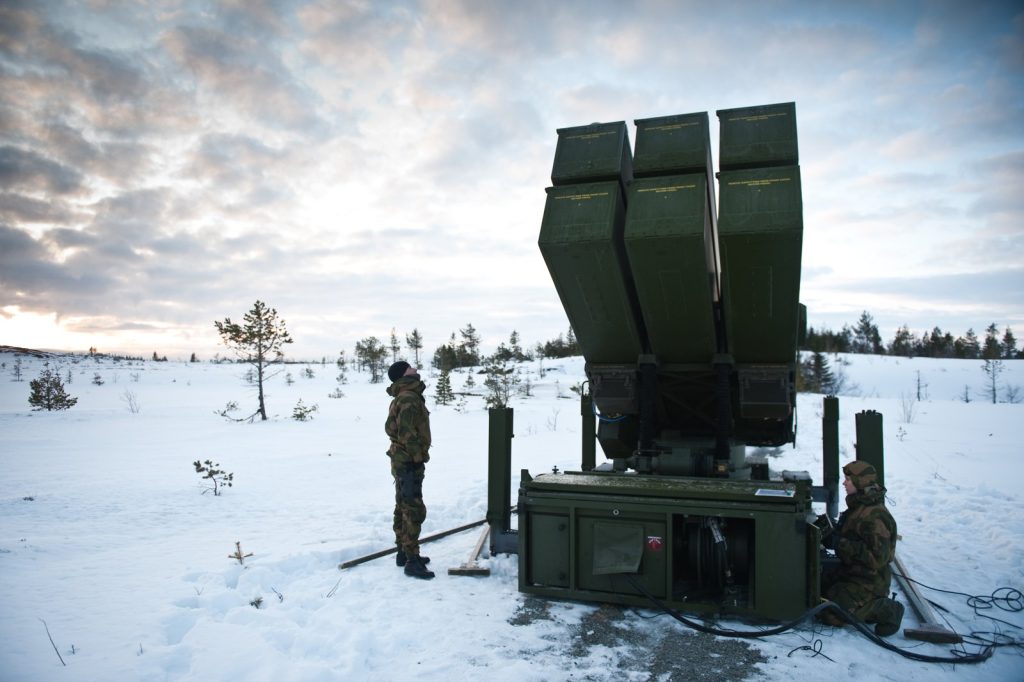
“This is a completely different level of firepower than what has been used before.” That is how Brig. John Olav Fuglem, who commands Norway’s Finnmark Brigade, described the unit’s expansion in a phone interview with Reuters from Porsangmoen, where the brigade has its headquarters.
Norway enlarged the brigade in August 2026. It was created last year as the country’s second brigade and the first formed since the Cold War ended. Both brigades are headquartered in the Arctic.
Until now, one of the Finnmark Brigade’s main jobs was to watch and patrol the 198-kilometer border Norway shares with Russia. It is gaining an artillery battalion, an air defense battery and a communications company. With those pieces it can hit land targets about 40 kilometers away and coordinate fire with aircraft and ships from both Norwegian and NATO forces.
Porsangmoen sits roughly 180 kilometers from the Russian frontier. On the other side is a major military hosting area that includes Russia’s Northern Fleet. Defence Minister Tore Sandvik was blunt in the same interview. “We will answer every threat and attack on Norway and NATO. We will defend every centimeter,” he said.
Spending and the wider push
The brigade is one piece of a larger build-up. Norway, like the other Nordic countries, has sharply raised its military budget since Russia invaded Ukraine. NATO figures put its defense spending this year at an estimated 3.17% of GDP, up from 1.5% in 2014. That places it among the alliance’s top spenders measured by share of GDP.
Politico reported separately that Oslo is moving to strengthen its naval and intelligence capabilities to protect NATO’s northern flank, out of concern that relations with Russia could worsen. On Spitsbergen, local authorities are investing in critical infrastructure and have drawn up an evacuation plan. Sandvik said tensions in the region are rising and that Spitsbergen has come under closer attention as part of the broader security picture.
Moscow’s view
Russian Foreign Minister Sergey Lavrov addressed the Arctic in August. He said NATO’s growing military presence there directly affects Russian security interests. He pointed to Arctic Sentry, an operation the alliance launched in February 2026 to expand its activity in the High North. Lavrov also noted that NATO exercises in the region include countries that are not Arctic states, and said the alliance keeps building new command and staff structures there.
Sources
- Norway Boosts Arctic Military Presence Amid Russia Tensions
- Norway boosts defense footprint with Arctic expansion – The Watch




