
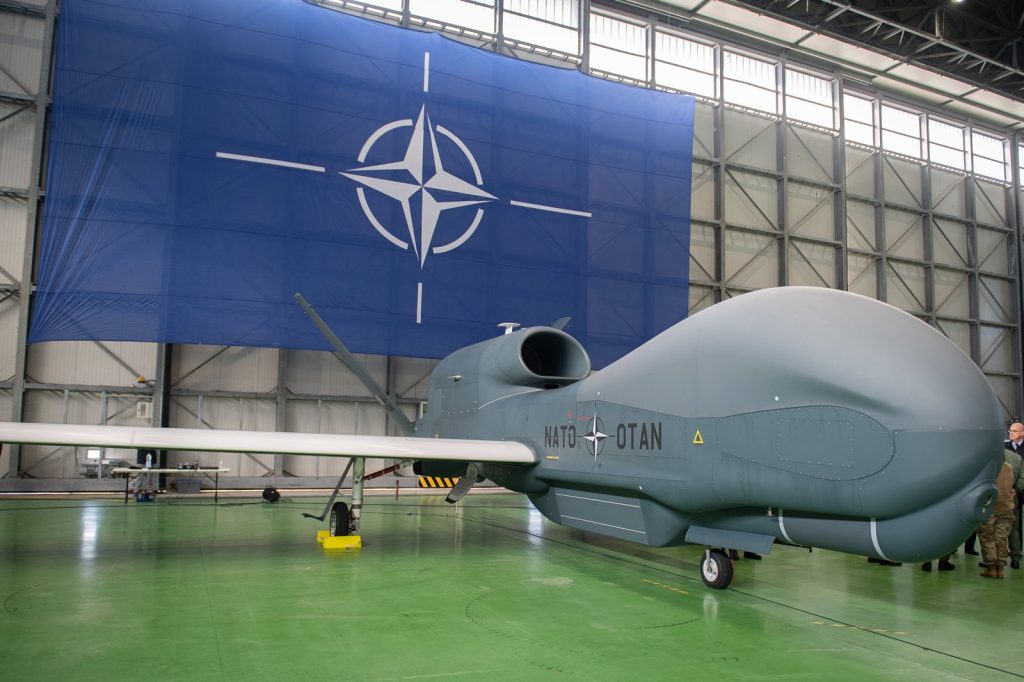
Finland joined NATO in 2023 and Sweden in 2024. Both had spent years as Partnership for Peace participants first, which is the clearest example of what the alliance’s partner network can become.
NATO today keeps relations with 35 non-member countries, according to its own count. The Konrad-Adenauer-Stiftung, a German think tank, counts more than 40 once international organizations such as the United Nations and the European Union are included. The partners fall into several groups.
Partnership for Peace
Launched in 1994, the programme lets each Euro-Atlantic partner build its own relationship with NATO and set the pace itself. Today it has 16 participants: Armenia, Austria, Azerbaijan, Bosnia and Herzegovina, Georgia, Ireland, Kazakhstan, Kyrgyzstan, Malta, Moldova, Serbia, Switzerland, Tajikistan, Turkmenistan, Ukraine and Uzbekistan. Belarus and Russia are suspended.
The work covers defence reform, military training, civil-emergency response and scientific cooperation. NATO calls it “virtually every field of NATO activity.” Each partner agrees a four-year plan with the alliance and picks from a menu of about 1,400 activities. The Euro-Atlantic Partnership Council, which replaced an earlier forum in 1997, supplies the political framework.
Many graduates now sit at the NATO table. Czechia, Hungary and Poland entered in 1999, seven more countries in 2004, Albania and Croatia in 2009, Montenegro in 2017 and North Macedonia in 2020.
The Mediterranean and the Gulf
The Mediterranean Dialogue brings in seven countries: Algeria, Egypt, Israel, Jordan, Mauritania, Morocco and Tunisia. Four Gulf states, Bahrain, Kuwait, Qatar and the United Arab Emirates, take part in the Istanbul Cooperation Initiative. Since April 2011, every Partnership for Peace activity has been open to these groups and to the global partners as well.
Partners beyond any region
Australia, Colombia, Iraq, Japan, Mongolia, New Zealand and South Korea sit outside the formal structures and are listed as global partners. Afghanistan’s partnership is suspended. Russia, Belarus and Afghanistan are the three suspensions the Konrad-Adenauer-Stiftung points to.
Some partners go deeper. Australia, Georgia, Jordan and Ukraine use the Partnership Interoperability Initiative, which brings regular consultation on security matters and easier access to exercises.
What partners actually do
Cooperation ranges from consultation on shared security concerns to joint research on capabilities, defence institution building and contributions to NATO-led missions. About 1,400 training and education events are held each year. NATO also works alongside the EU, the OSCE and the UN.
The alliance argues the network pays off at home: in its words, it “strengthens security outside NATO territory, which makes NATO itself safer.” For partner countries, the practical effect is training, exercises and a standing channel to NATO. The Konrad-Adenauer-Stiftung says the partnerships support policy development, stronger defence capacity and crisis management.
Sources
- NATO's partnerships (NATO)
- Partnership for Peace programme (NATO)
- Global Europe Illustrated: NATO Partnerships (Konrad-Adenauer-Stiftung)




