
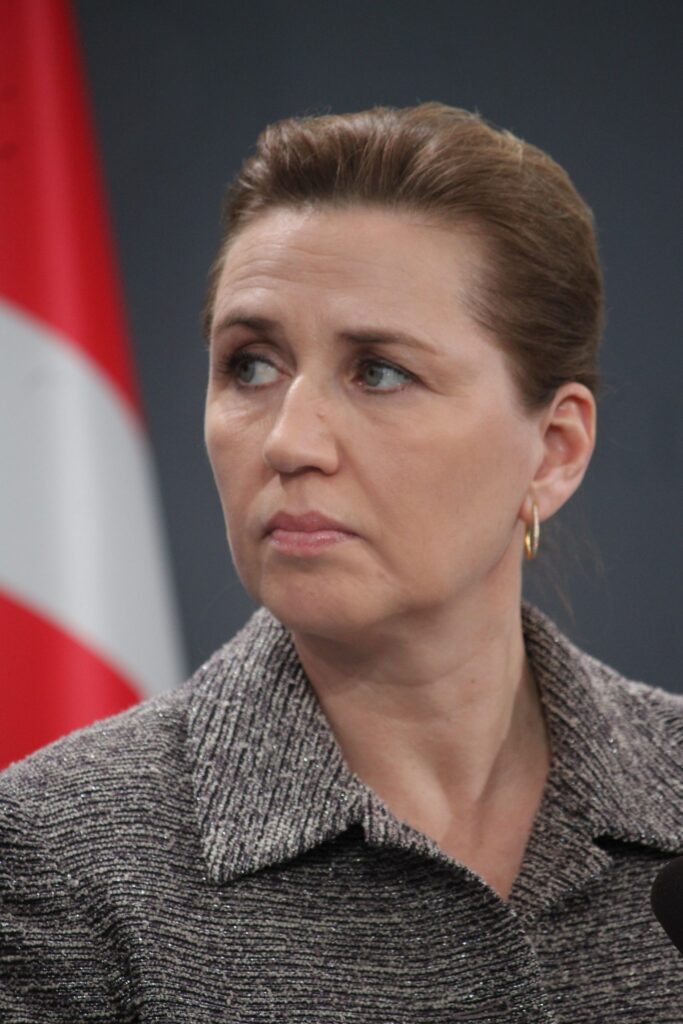
“We stand firm when the winds blow. And it has been blowing around our kingdom.” Mette Frederiksen posted that on Instagram on Tuesday, election day in Denmark, while she spent part of it in Aalborg, her stronghold in the northwest, with Greenlanders living in Denmark.
The Social Democrat prime minister, in office since 2019, went into the vote as the favorite. The shift is her standing at home: she gained support for refusing Donald Trump’s repeated demands to annex Greenland, the autonomous Danish territory he says the United States needs for national security.
A tight race for 179 seats
The latest polls gave the left-wing bloc, which Frederiksen leads, a nine-seat lead over the right. Neither side was projected to win a majority of the 179 seats in the Folketing. The four seats Denmark’s autonomous territories hold overseas, two for Greenland and two for the Faroe Islands, could tip the balance if the result is close.
Politiken analyst Elisabet Svane told AFP that voters see Frederiksen as the right leader even if they do not especially like her. “People may not really like her, but they see her as the right leader,” Svane said. Her campaign slogans included “a prime minister you can count on.” Svane described her as “a unifying figure in a world full of insecurity,” in a country anxious about Greenland, Ukraine and the mystery drones that flew over Denmark last year.
Voting in Nuuk
More than 3,000 kilometers away, voters in Greenland’s capital, Nuuk, queued as soon as polling stations opened. More than 20 candidates ran for the territory’s two seats. Greenlandic Prime Minister Jens-Frederik Nielsen called it “the most important election for the Danish parliament in Greenland in history.” He said: “We are in a time where we have a superpower trying to acquire us, take us, control us.”
Greenland’s main parties all want independence from Denmark but disagree about how fast. Not every voter saw unity. A lawyer who gave only his first name, Lars, told AFP: “Everybody is fighting. Greenlanders are fighting. It’s terrible.” The centrist Moderate party, led by Foreign Minister Lars Lokke Rasmussen, a two-time former prime minister, could end up kingmaker.
Domestic issues led the campaign
In Denmark itself the Greenland row was not the main theme. Voters heard more about inflation, the welfare state and high nitrate levels in water from agriculture. Pia Olsen Dyhr, leader of the Green Left, blamed the centre government for failing to secure clean water.
Immigration was also a hot topic, with the Social Democrats advocating tighter rules. Frederiksen defended as “fair” a proposal to deny non-essential health care to people of foreign origin who threaten medical personnel.
Three populist parties were running and polls put them at around 19 percent combined. The most established is the far-right Danish People’s Party, which slumped in 2022 and has recovered in the polls. Its leader, Morten Messerschmidt, said: “I want a new beginning for Denmark, and that requires a strong Danish People’s Party.”
Turnout in Danish elections is high; 84.1 percent of eligible voters cast ballots in 2022. Polls closed at 8:00 pm, 1900 GMT, with exit polls due just after.




