
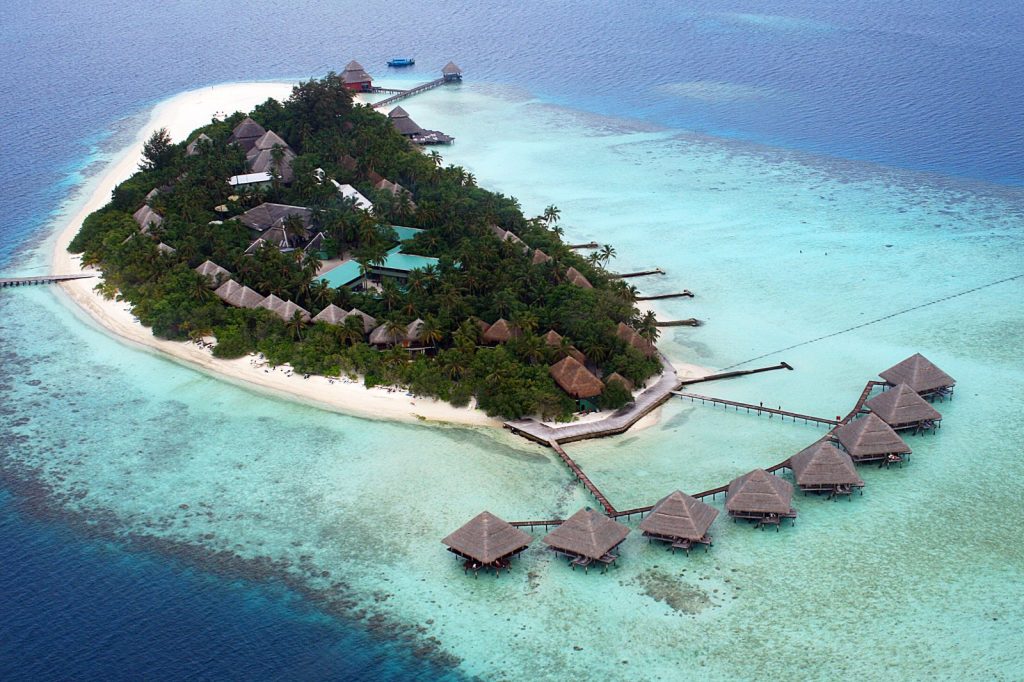
The island nation of the Maldives, composed of 26 atolls that stretch across roughly 90,000 square kilometres of the Indian Ocean, announced an immediate prohibition on entry for holders of Israeli passports. The decree applies from the northernmost Ihavandhippolhu Atoll to the southernmost Addu Atoll, covering the entire archipelago without exception or a grace period.
Although the country’s land area totals just 298 square kilometres, its foreign‑policy posture has long reflected a clear alignment with the Palestinian cause. The new travel restriction is presented as a tangible manifestation of that longstanding stance, moving beyond diplomatic statements to a concrete measure of solidarity.
Tourism accounts for the bulk of the Maldivian economy, with its famed white‑sand beaches, over‑water villas and coral reefs attracting visitors from around the world, including Israel. The ban is therefore expected to have a measurable impact on visitor numbers and related revenue, although the precise scale of the loss has not been quantified in the available report. In a nation where the sea underpins both daily life and economic activity, any reduction in tourist arrivals is felt keenly.
The decision arrives at a moment when the Maldives, the smallest Asian country, navigates a delicate geopolitical environment. Historically, it has balanced influences from regional powers such as India and China while maintaining a partnership with the United States. Washington’s close ties to Israel mean that the ban introduces a point of tension in U.S.–Maldives relations, potentially prompting a reassessment of diplomatic engagement given the strategic location of the archipelago in the Indian Ocean.
Officials in Male have not indicated any forthcoming exceptions for Israeli travelers already in the country or those with imminent travel plans, underscoring the abrupt nature of the policy shift. While the move aligns with prior expressions of Maldivian support for Palestine, the speed and finality of the ban mark a notable escalation.
Other small, tourism‑dependent states are likely monitoring the development, as it illustrates the trade‑off between political positioning and economic considerations. The Maldives’ action demonstrates a willingness to accept possible financial repercussions in order to reinforce its diplomatic message.
Despite the new restriction, the Maldives continues to welcome tourists from other nations, and its atolls remain open to the global visitor market. The immediate effect, however, is a clear directive that Israeli passport holders are no longer permitted to enter the country.
As the ban takes effect, analysts anticipate that the ripple effects will extend from the capital, Malé, to Washington, where policymakers will weigh the implications for bilateral ties and regional strategy. Whether the political capital gained by the Maldives will offset the economic risks remains an open question, but the policy is now in force and will shape the nation’s diplomatic and tourism landscape in the months ahead.




