
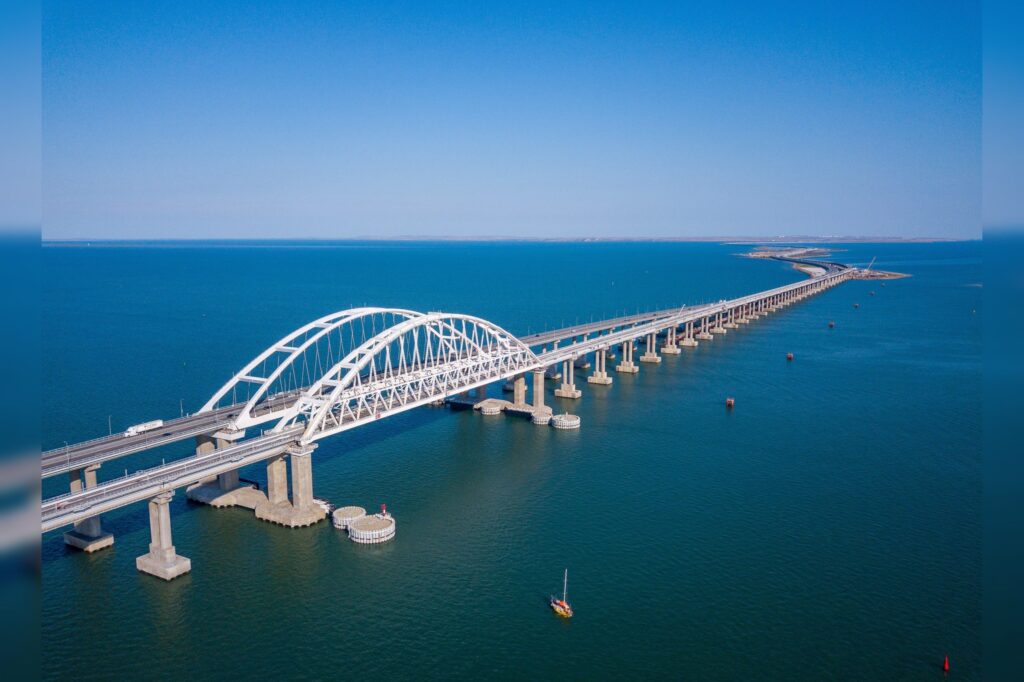
The Kerch Strait is about 45 km long and, at its narrowest, only 3 to 5 km wide. It is the one link between the Black Sea and the Sea of Azov, and it lies between the Kerch peninsula in Crimea and the Taman peninsula in Russia’s Krasnodar Krai. Whoever controls it decides who gets into the Azov coast. Moscow and Kyiv have read that fact very differently since 2014.
A treaty both sides still cite
The legal starting point is a bilateral agreement signed on December 24, 2003, in Kerch, by Leonid Kuchma and Vladimir Putin, after a row over the island of Tuzla and a Russian dam being built toward it. Under the treaty, the waters of the Azov Sea and the strait are “historically internal waters” of both states, and merchant and naval vessels flying either flag enjoy freedom of navigation there.
Annexation changed the picture. A Ukrainian naval officer, writing in 2018, argued that Moscow takes recognition of Crimea as Russian to hand it the waters around the peninsula, Kerch Strait included, although Russia has made no official statement to that effect. In his account the Black Sea Fleet in practice controls the strait. Ukraine’s own position is that the border runs along the old administrative line between the Ukrainian and Russian Soviet republics. Russia, before 2014, had favored a midline equidistant from both coasts.
Ukraine took the matter to arbitration in September 2016 under UNCLOS, the UN maritime law treaty. Its claims were understood to include the bridge Russia was building across the strait and limits on the passage of Ukrainian ships.
The bridge and the 2018 clash
Russia’s road and rail bridge across the strait, 19 km long, was built on Putin’s orders and opened in 2018. A Ukrainian naval officer wrote that it went up without consultation or coordination with Kyiv. In November that year Russian border patrol ships stopped three Ukrainian naval vessels sailing from Odesa toward Mariupol. The Moscow Times reported that Russia had placed a cargo ship under the bridge to block the passage. The FSB opened fire, rammed one of the vessels and seized all three. Russia’s ombudsman said 24 Ukrainian sailors were detained. Ukraine’s navy said six of its sailors were injured, while the FSB, as cited by Russian state media, put the number at three. Ukraine answered with martial law for 60 days, and NATO called on Russia to allow unhindered access to Ukrainian ports on the Azov Sea.
Two attacks on the bridge
Around 6am on October 8, 2022, an explosion brought part of the road span down into the strait just as a train was passing on the rail line alongside, and the train caught fire. Russia’s investigative committee blamed a truck bomb and said three people had died. The Guardian noted that Kyiv did not directly claim the attack, though senior officials celebrated it. Russia repaired the bridge, and Putin later drove a Mercedes across it.
Then came July 17, 2023. A road section split and sloped to one side, and Russian officials called it an “emergency.” Two people were killed, the parents of a girl who was injured, according to Belgorod governor Vyacheslav Gladkov. Russia blamed Ukraine, and Ukraine’s security service, the SBU, later claimed responsibility, saying it had used waterborne drones, according to i News.
George Barros of the Institute for the Study of War warned that if Ukraine could cripple the bridge, Russia’s only land route left for supplying or pulling out its large forces in occupied Kherson and Crimea would be the Azov coastal highway.
Sources
- The Meaning of the Sea of Azov for Ukraine (Hromadske)
- Ukraine v. Russia: Passage through Kerch Strait and the Sea of Azov (Voelkerrechtsblog)
- Russia and Ukraine Clash Over Kerch Strait, Explained (Moscow Times)
- Key bridge linking Crimea to Russia hit by huge explosion (Guardian)
- Underwater drones blew up key bridge linking Russia to Crimea (Yahoo News/Reuters)
- Crimea Bridge attack live (i News)




