
On September 7, 1977, in Washington, General Omar Torrijos of Panama and President Jimmy Carter put their names to the agreements that would hand the Panama Canal back to Panama. The deal took more than a decade of stalled talks to reach, and one military coup that nearly buried it.
Why the talks stalled
The United States won the right to build and run the canal in the early 1900s under the Hay-Bunau-Varilla Treaty of 1903, which set up a permanent American-controlled Canal Zone. The waterway opened in 1914. Many Panamanians never accepted the bargain. A 1964 riot over flag-flying in the Zone soured relations, and in 1967 the two governments settled on three draft treaties.
Then came 1968. Torrijos, a National Guard officer, led the coup that ousted civilian President Arnulfo Arias, and the draft treaties went nowhere.
Bunker, Linowitz and a reluctant president
Washington came back to the table in 1973, when Richard Nixon appointed Ellsworth Bunker as chief negotiator. By 1976 his team had drafts in hand. Henry Kissinger put the stakes bluntly: “If these negotiations fail, we will be beaten to death in every international forum and there will be riots all over Latin America.”
Carter himself did not start out in favor of giving up control. Sol Linowitz and Cyrus Vance, soon to be secretary of state, talked him around, and once in office he made the treaties a priority and named Linowitz co-negotiator alongside Bunker.
What was signed
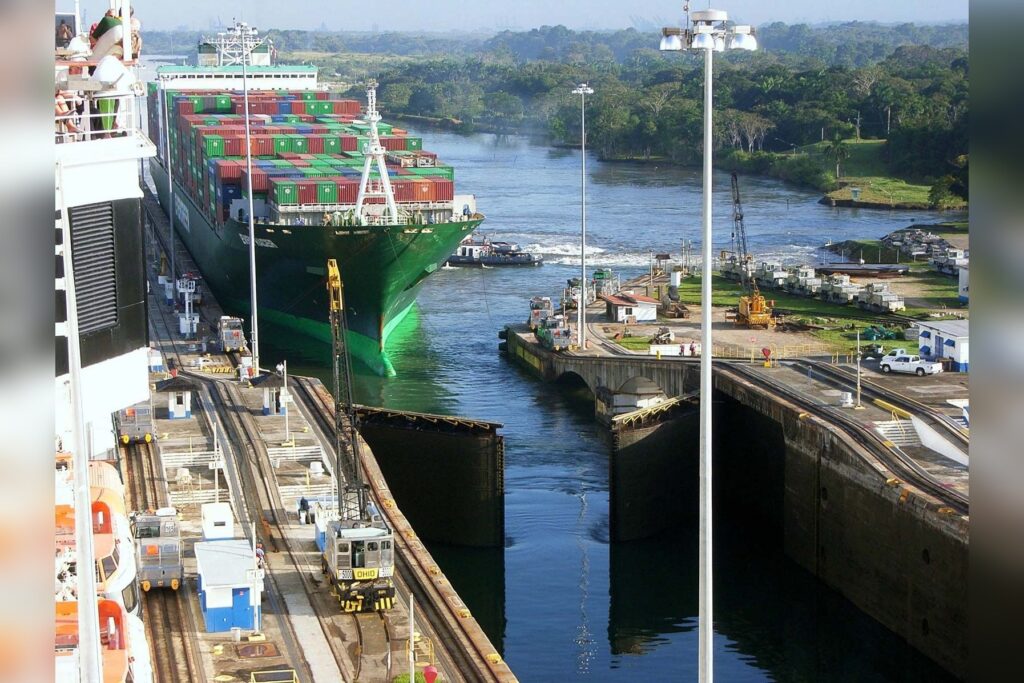
Two treaties went to the Senate. The Neutrality Treaty let the United States use military force to defend the canal’s neutrality. The Panama Canal Treaty ended the Canal Zone on October 1, 1979 and set the transfer of the canal to Panama for December 31, 1999. Under the implementing agreement, Panama also took ownership of the Balboa and Cristobal ports and the Panama Railroad, and U.S. employees’ housing areas were to shrink on a schedule: at least 20% returned within five years, 30% within ten and 60% within twenty.
The Senate fight
Ratification needed two-thirds of the Senate, and many senators distrusted Torrijos, whom they saw as sympathetic to communism. Strom Thurmond of South Carolina warned that “the loss of this canal would contribute to the encirclement of the United States.” The Carter administration answered with hundreds of public forums. Torrijos invited U.S. senators to Panama to make the case that he was no communist, and the actor John Wayne, a conservative and a friend of the general, spoke up for the talks.
The Senate approved the Neutrality Treaty on March 16, 1978, by 68-32, and the Panama Canal Treaty on April 18, 1978, by the same margin. Carter signed the implementing legislation on September 27, 1979.
The crash
Torrijos had given up the title of head of state in 1978 but still commanded Panama’s 4,500-member National Guard. In 1981, aged 52, he boarded an air force Twin Otter bound for the village of Coclesito to inspect a lumber facility. The plane went down on Cerro Julio mountain, not far from Penonome, killing all seven aboard. Maj. Domingo Ocalagan, the Guard’s public relations chief, said “a storm during the take-off… swept the aircraft off course and thrust it into a mountainside.”
Carter called Torrijos “a wise and effective leader” and spoke of “the untimely death.” Colonel Florencio Florez Aguilar took over the Guard.
Relations between the two countries soured after his death, and in 1989 President George H.W. Bush authorized the invasion that removed Manuel Noriega. By 1999, ties had recovered enough for Panama to take over full administration of the canal.
Sources
- Panama Canal Treaties, Milestones in the History of U.S. Foreign Relations
- Gen. Omar Torrijos, the Panamanian strongman who negotiated the Panama Canal Treaties (UPI)
- Torrijos-Carter Treaty (Panama Canal Authority)




