
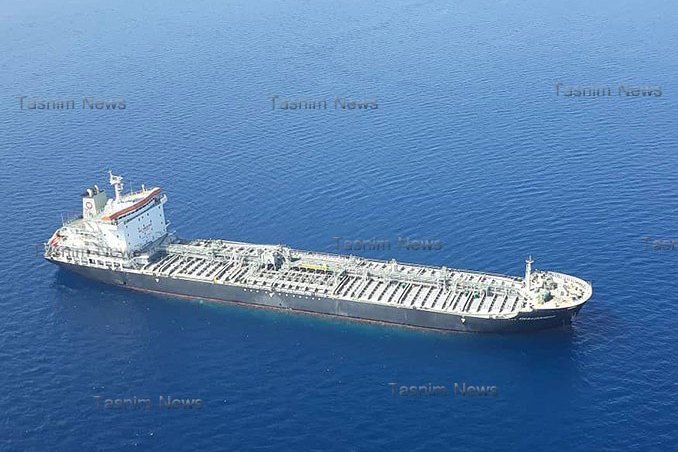
The account begins with two ships and a fire. On June 13, 2019, in the Gulf of Oman near the Strait of Hormuz, the tanker Front Altair, owned by Norway’s Frontline and with a cargo of 75,000 tonnes of naphtha bound for Taiwan, was hit at about 4am GMT, according to Taiwan’s state refiner CPC. The Kokuka Courageous, under Bernhard Schulte management with a methanol cargo bound from Saudi Arabia to Singapore, sustained hull damage in the same window. One vessel was left ablaze, the other adrift. It was the second incident of its kind inside a month near the world’s most important oil gateway, and, officials said, the crews came first: 44 sailors were taken off both ships, all of them brought to the Iranian port of Jask.
According to state and international reports of the day, the response cut across the divide that would define the story. Iranian vessels conducted the rescues, and Allahmorad Afifipour, head of ports in Iran’s coastal province of Hormozgan, told the Tasnim news agency the fires on both tankers had been contained and that Iran had dispatched experts to assess whether crews could safely return. On the other side, one Kokuka Courageous sailor, burned on the hands, received treatment from a US Navy medical team, and the US 5th Fleet, based in Bahrain, assisted in the evacuation.
On the question of blame, the record separated claim from confirmation, and nothing bridged the gap. The US military released aerial video it said showed an Iranian patrol boat pulling alongside a tanker and a man on the prow removing an object from the hull, along with a photo it claimed showed a limpet mine and blast damage on the Kokuka Courageous; it was never made explicit whether the allegation was that Iranian sailors were recovering the mine to destroy evidence. The cause itself was never established: CPC suspected a torpedo, other reporting pointed to a mine, the ship’s operator suggested a missile, and a shipping broker told Reuters a magnetic mine was the likeliest explanation. Iran denied responsibility, its foreign minister suggesting others might be trying to provoke a conflict between Tehran and Washington, and officials dismissed the American accusations as lacking “a shred of factual or circumstantial evidence”, calling instead for an end to what Iran described as “false flag operations” in the Gulf.
The regional history around the blasts was already dense. A month earlier, on May 12, four tankers, two Saudi-flagged, one Norwegian, one Emirati, were damaged by explosions off the UAE; Abu Dhabi called them “acts of sabotage”, and a UAE-led inquiry published June 7 found it “highly likely” that limpet mines placed by trained divers from fast boats were used, blaming an unidentified state actor. The US accused Iran; Iran called the charge “ludicrous” and blamed US “warmongers”. The weeks either side brought a Houthi drone strike that put a Saudi oil pipeline out of service, a rocket near the US embassy in Baghdad, an airport attack in Abha that wounded 26 people, and a US presidential warning that if Iran wanted to fight, “that will be the official end of Iran. Never threaten the United States again!”
What gave a morning of smoke at sea such weight was geography. The strait, in the US Energy Information Administration’s judgment the world’s worst “chokepoint”, carried 18.5m barrels of crude a day in 2016, against 16m for the Strait of Malacca and 5m for the Suez canal. The United States had 10,000 military personnel at a base in Qatar, and after the June 13 blasts Central Command sent a destroyer to the region. A year earlier, the Trump administration had withdrawn from the 2015 nuclear accord and restored sanctions; Iran, for its part, had threatened to disrupt oil shipments if Washington tried to strangle its economy.
How the summer ran on is part of the record too: Iran shot down a US drone it called a “spy” aircraft, with the two governments disputing whose airspace it was in; Trump reportedly approved retaliatory strikes and pulled back; the two presidents traded a “mental disorder” and a threat of “obliteration”; and by July 19 Iran had seized the British-flagged Stena Impero. But the June 13 attacks themselves were never attributed to anyone’s satisfaction in the public record. The account indicates two tankers, 44 rescued sailors, a mine or a torpedo or a missile depending on who was asked, and two governments certain of opposite things. That, seven summers on, is where the file still stands.
Sources
- A visual guide to the Gulf tanker attacks | Middle East and north Africa | The Guardian
- Fire on Both Oil Tankers Attacked in Gulf of Oman Contained – Iranian Official – 14.06.2019, Sputnik International




