
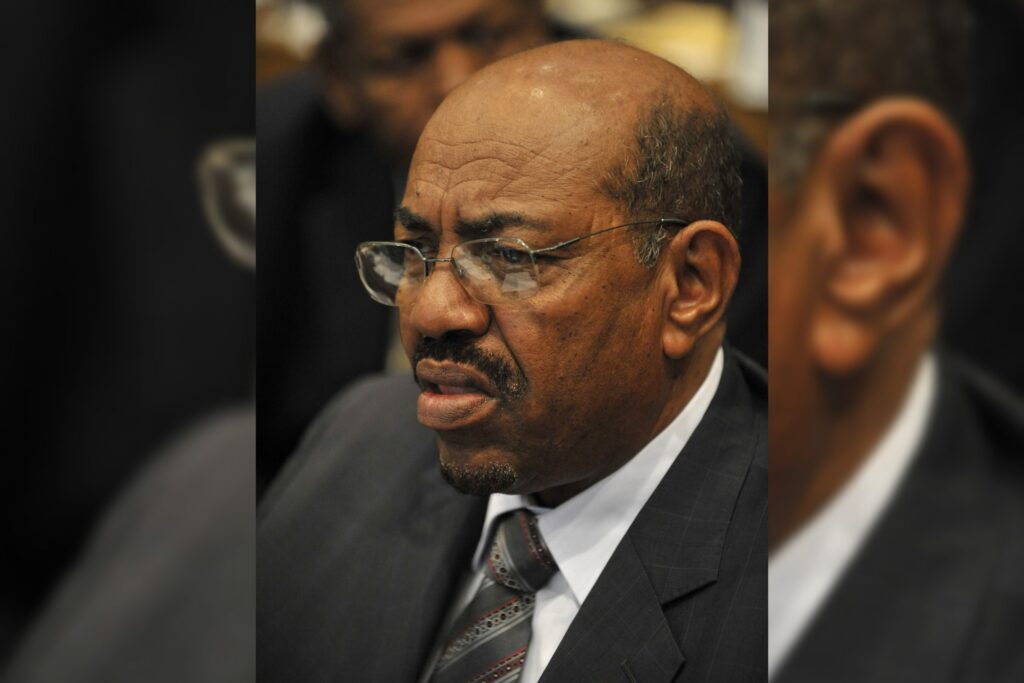
On 3 June 2019, more than 120 people were reportedly killed in a massacre in Sudan, many of the bodies dumped in the River Nile. The force accused of carrying it out was the Rapid Support Forces, the RSF. Its roots lead straight back to the government of Omar al-Bashir, who was pushed from power in April of that year.
Where the Janjaweed came from
The word Janjaweed describes armed groups of the Arabs of Darfur and Kordofan in western Sudan, who call themselves fursan, or horsemen. Writing in The Conversation, the scholar Tsega Etefa traced the militia to the mid-1980s. Darfur was then suffering neglect from Khartoum, a severe drought and famine in the Sahel, civil war between north and south, arrivals from Chad and the military activities of Chadian rebels and Libya. Law and order collapsed, and Darfurians armed themselves. Famine and lawlessness also gave the groups a chance to grab land and restock lost animals.
The label spread to all Arab armed groups, whatever their origin. Most were Abbala camel herders of north Darfur.
Bashir turns militias into a weapon
The turning point came in 2003. Rebels from the Sudan Liberation Army and the Justice and Equality Movement escalated attacks on government positions in April, and the government unleashed the Janjaweed against Fur, Zaghawa and Masalit villages. Etefa writes that recruitment was stepped up, signing up criminals, convicts and prisoners and appointing new village chiefs. The army fought alongside the militia and gave it air and ground support.
Alex de Waal, writing for the BBC, says Bashir’s government mobilised Arab herders against black African insurgents that year. The core fighters were camel-herding nomads from the Mahamid and Mahariya branches of the Rizeigat. During the 2003-2005 war the most notorious leader was Musa Hilal, chief of the Mahamid. Bashir later formalised the fighters as the Border Intelligence Units.
Hemedti and the birth of the RSF
One young fighter in a southern Darfur brigade was Mohamed Dagalo, nicknamed Hemedti. In 2007 his troops mutinied over unpaid wages, then returned to Khartoum for back pay, ranks for his officers and a cash payment. They were placed under the National Intelligence and Security Service.
In 2013 a new paramilitary force was formed under Hemedti and named the RSF. De Waal says it answered to Bashir himself, who nicknamed Hemedti “Himayti”, meaning “My Protector”. Etefa adds that it was constitutionally accepted as a regular force a year later, and that Human Rights Watch said the RSF committed war crimes in Darfur in 2014 and 2015, with civilians displaced, raped, looted and killed.
Gold, money and power
Gold changed the balance. After a find at Jebel Amir in North Darfur in 2012, Hemedti’s rivalry with Hilal sharpened. By 2017, de Waal writes, gold sales accounted for 40% of Sudan’s exports. In November 2017 Hemedti’s forces arrested Hilal and the RSF took over the most lucrative mines. Hemedti became the country’s biggest gold trader.
The force grew tenfold after the United Arab Emirates struck a deal with Hemedti to send RSF fighters to Yemen. De Waal puts it at 70,000 men and more than 10,000 armed pick-up trucks, enough to control the streets of Khartoum.
When Bashir fell, Dagalo became deputy chairman of the Transitional Military Council, chaired by Lieutenant General Abdel Fattah al-Burhan. Etefa notes that many believe Dagalo held the real power.
Sources
- Explainer: tracing the history of Sudan’s Janjaweed militia
- Sudan crisis: The ruthless mercenaries who run the country for gold




