
The Record
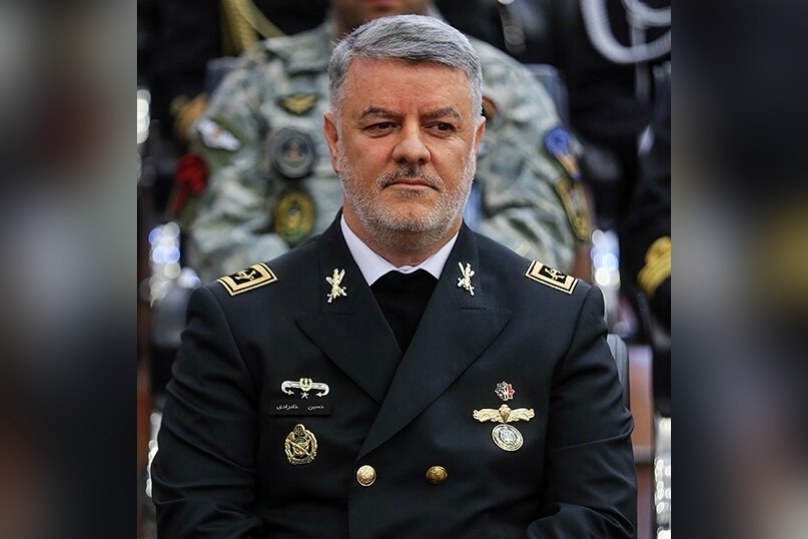
The document on the timeline is a dispatch from Fars News Agency, Iran’s state news service, republished by Eurasia Review on August 2, 2018. It records two days of public statements by Rear Admiral Hossein Khanzadi, Iran’s Navy Commander, and the record shows a deliberate claim: that Iran’s navy together with the Islamic Revolution Guards Corps, known as the IRGC, holds responsibility for security in the Strait of Hormuz.
The first statement came on a Wednesday evening in Noshahr, a northern city far from the waterway in question. There, according to Fars, Khanzadi framed the strait’s security as leverage. “The security of the Strait of Hormuz will have influence those who threaten Iran by using their petrodollars,” Rear Admiral Khanzadi said, in the Fars rendering of his remarks. The phrasing, as translated, is blunt: security in the chokepoint is presented as something that reaches the wallets of Iran’s adversaries.
He sharpened the point with an image drawn from plumbing. “If any oil faucet in the region is turned on and the petrodollars go to the pocket of those who threaten Iran, it will definitely have impacts on the security of the Strait,” he said. The admiral’s argument, as recorded, treats the flow of oil revenue and the safety of shipping lanes as a single connected system, one his forces could influence.
The Chain of Command
Khanzadi also placed the claim inside Iran’s constitutional structure. Security across the region, in his account, rests with the IRGC and the Army, and Iran’s Supreme Leader, Ayatollah Seyed Ali Khamenei, has instructed both services to go on supplying it. Naval conduct in the strait is thereby tied to the Supreme Leader’s standing orders.
The day before, on the Tuesday, Khanzadi had held a press conference in Tehran that ran along the same lines. There he called the Strait of Hormuz a component of Iran’s national interests and predicted that American sanctions would take a toll on how the strategic oil lifeline functions. The Strait, he said, would keep working as before, on Iran’s terms. “The Strait of Hormuz is part of the Islamic Republic of Iran’s interests and the Navy has so far established security in the Strait of Hormuz and its security will be maintained from now on too,” he added, in the agency’s translation.
A Conditional Guarantee
On the timeline, the most consequential line is the conditional one. As Fars paraphrased him, how well the waterway functions depends on what the international community does, measured against its undertakings in agreements with Iran, together with the requirement that Iran’s national interests be met. Security, in this telling, is not a standing commitment to the world; it is a service contingent on other parties’ behavior.
The admiral closed the loop on decision-making. “We assess the US measures but they do not affect our decisions, and our decisions are based on the orders of the Commander-in-Chief of Armed Forces (Supreme Leader).” That placed naval decision-making, in his account, above any American pressure. Photographs distributed with the dispatch carry a Fars News Agency credit. The statements date from August 2018, eight years before this re-examination, and they remain a clear statement of the Iranian naval command’s position as it was delivered that week in Noshahr and Tehran.




