
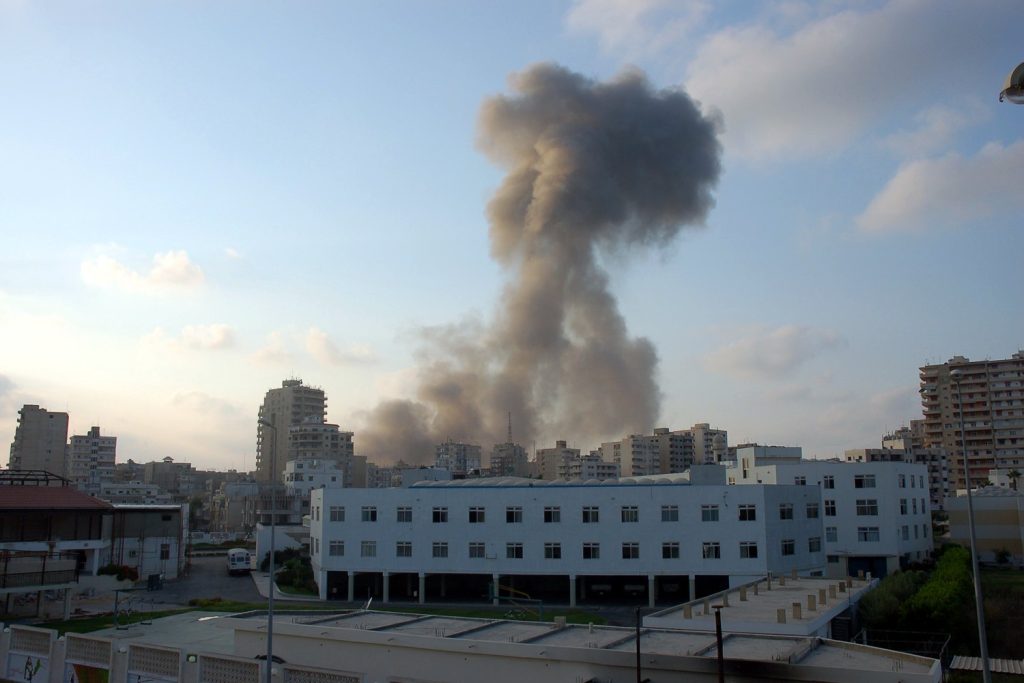
For nearly 12 months, Israel and Hezbollah traded fire across the Lebanese border. In September 2024 the exchange turned into a war that lasted about 10 weeks.
How it began
Hezbollah joined the conflict shortly after Hamas attacked Israel on October 7, 2023, saying it stood with the Palestinians. It launched rockets into northern Israel and the Israeli-occupied Golan Heights, and said it wanted to force Israel to fight on two fronts. It offered an immediate ceasefire if one also took hold in Gaza. From 8 October 2023 to 20 September 2024, Hezbollah launched 1,900 cross-border attacks, and Israel launched another 8,300. The fighting killed 564 people in Lebanon, 133 of them civilians, and 52 in Israel, 27 of them civilians. Communities on both sides were emptied.
Israel had asked Hezbollah to implement United Nations Security Council Resolution 1701 and pull its forces north of the Litani River. Diplomacy led by US envoy Amos Hochstein and France had not worked by 18 September 2024.
September
On 17 and 18 September, thousands of Hezbollah pagers and walkie-talkies exploded in a coordinated series of attacks. The blasts killed 42 people and injured at least 3,500, civilians among them. An unnamed Hezbollah official told Reuters 1,500 fighters were taken out of action, many blinded or missing hands. Israel denied involvement, but unnamed Israeli sources told Reuters and other media that Mossad and the military were behind it. Hezbollah called the attack a possible declaration of war and fired rockets at northern Israel a few days later.
Ibrahim Aqil was killed in an Israeli strike in Beirut on 20 September, along with other senior commanders of his unit. Airstrikes began on 23 September. In the first week they killed over 800 people and injured more than 5,000. IDF spokesperson Daniel Hagari urged civilians near Hezbollah sites to “immediately evacuate for their own safety”.
On 27 September, an Israeli airstrike on an underground headquarters beneath residential buildings in Haret Hreik, south of Beirut, killed Hezbollah secretary-general Hassan Nasrallah and other senior leaders, including southern front commander Ali Karaki.
Invasion and ceasefire
Israel told the United States on 30 September that it planned a ground operation to clear Hezbollah infrastructure along the border. That evening the Lebanese Armed Forces and UNIFIL pulled back 5 kilometres from the border. On 1 October, the IDF crossed the Blue Line, the sixth Israeli invasion of Lebanon since 1978. The IDF ordered residents of 25 villages in the south to move north of the Awali River.
Israel and Lebanon signed a ceasefire on 26 November, mediated by France and the United States, and it took effect the next day. Israel reported 56 of its soldiers and 2,762 Hezbollah militants killed in the invasion; Lebanon’s government said Israel killed 2,720 people, mostly civilians. Israeli forces were due out by 26 January 2025, then by 18 February 2025. They withdrew from villages but kept five outposts on highlands in southern Lebanon.




