
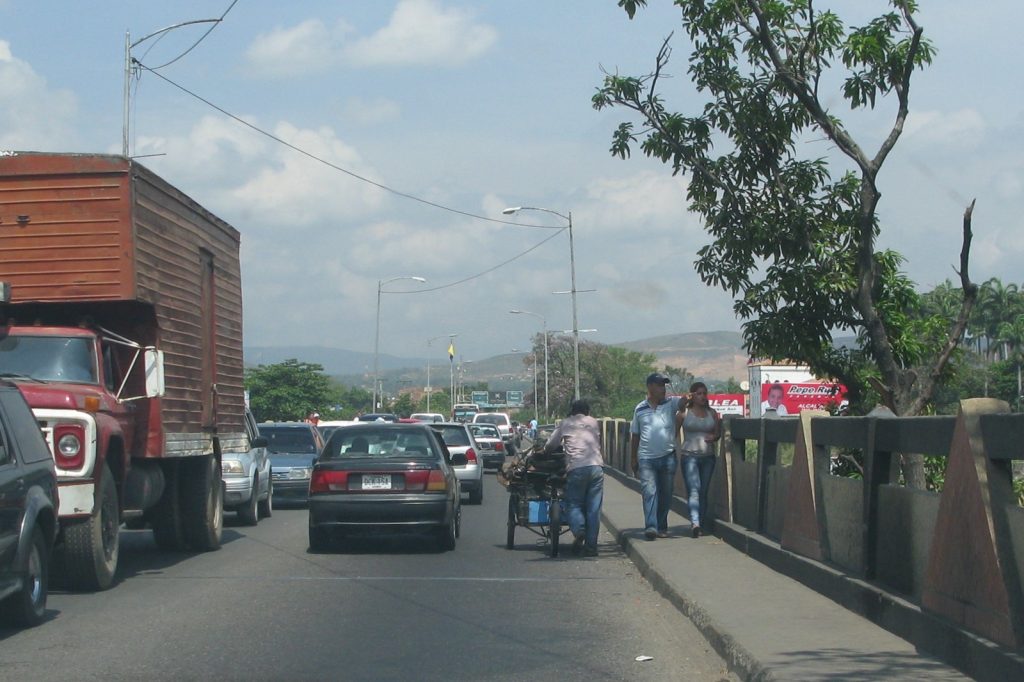
In June 2022, 6 million Venezuelans had left their country. By September 2024 the Carnegie Endowment for International Peace put the figure at 7.7 million, the largest refugee and migration crisis in the world, bigger than Ukraine or Syria. UNHCR’s more recent count, updated in December 2025, is nearly 7.9 million.
How it started
Venezuela was once among the top economies in Latin America. Turmoil built through the 2000s, and in 2014 the oil price collapsed. Falling energy revenue, economic mismanagement and a slide toward authoritarianism did the rest, Carnegie wrote, and people began leaving in large numbers around 2015. The count passed 3 million by the end of 2018 and topped 4 million by March 2020, when the pandemic hit.
The early exodus stayed mostly in the region. South American governments did not build camps. Most let Venezuelan children into schools, and favorable nationality laws gave children born to Venezuelan parents the citizenship of their host countries. Colombia took in around 2 million by 2020. Ecuador, Peru, Chile and Brazil took millions more.
Where the strain comes from
The pandemic broke that pattern. Venezuela’s gross domestic product contracted by 20 percent. The hosts suffered too. From 2019 to 2021, per capita GDP fell 4.6 percent in Colombia, 5.3 percent in Peru, 2.8 percent in Ecuador and 11.7 percent in Brazil. Migrants were among the first to lose work.
Many moved on. Carnegie described Venezuelans and others braving the Darien Gap, the dense jungle between Panama and Colombia, with criminal organizations ready to profit from the crossing. “Soon, nearly every country in the region was overwhelmed,” the report said.
UNHCR says more than 6.9 million Venezuelans are still hosted in Latin America and the Caribbean, and describes the host countries as “increasingly overstretched.” Several have launched large-scale regularization programs so migrants are documented and can reach services, but UNHCR says those efforts need financial support to work.
The needs are basic. A UNHCR assessment found that half of all refugees and migrants in the region cannot afford three meals a day and lack adequate housing. Some resort to survival sex, begging or debt. People without papers or jobs keep moving on, often along dangerous routes. UNHCR counts more than 1.3 million Venezuelan asylum-seekers and over 395,000 recognized refugees.
Sources
- The Los Angeles Declaration Continues to Shape the Regional and Global Migration Response | Carnegie Endowment for International Peace
- Venezuela situation | UNHCR




