
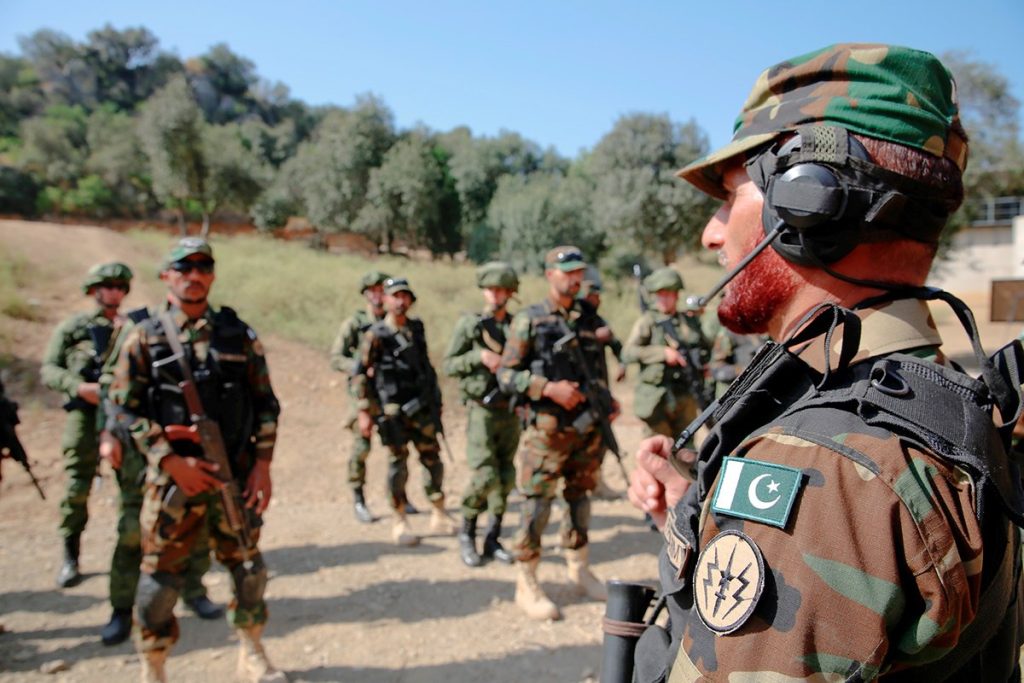
The deaths of nine soldiers in Pakistan’s tribal regions on September 20 were not the result of a single, unified operation. Military sources describe the events as “separate incidents,” a distinction that carries significant implications. Rather than a single militant group executing one large-scale assault, the evidence points to multiple cells or attack teams operating simultaneously across a broad area of Khyber Pakhtunkhwa.
This pattern presents a security challenge that is both deadly and widely dispersed. North and South Waziristan, located directly along the Afghan frontier, have been the target of sustained military campaigns for more than ten years.
The terrain is difficult, the population is thin, and militant organizations have established deep roots in the region. The ability of attackers to carry out multiple strikes in a single day, resulting in the deaths of nine soldiers, demonstrates that these networks remain active. They have not been eliminated.
At best, they have been temporarily weakened. The Pakistan Armed Forces rank as the seventh-largest military globally in terms of active personnel, encompassing the Army, Navy, Air Force, and paramilitary units such as the National Guard and the Civil Armed Forces.
Despite this substantial manpower, the Waziristan incidents illustrate that troop strength alone does not guarantee total control. The border zones stay permeable. Militants continue to move through them, conducting reconnaissance, planning operations, and launching attacks. The Chief of Defence Forces, who also holds the position of Chief of Army Staff, will inevitably face difficult questions.
Reports indicate he will likely encounter “intense scrutiny.” The use of the word “intense” suggests this will go beyond a standard briefing. It signals that the military’s own leadership recognizes the seriousness of this setback.
Nine fatalities in a single day represent a major tactical loss, one that typically forces a strategic reassessment. The international dimension adds further complexity. The United States has been a longstanding ally of Pakistan, providing considerable military assistance.
According to the report, the recent attacks may lead to a review of bilateral counter-terrorism cooperation. The US President has repeatedly emphasized the importance of regional stability, but the events of September 20 were anything but stable.
They involved violence that was carefully planned and executed. While the US will likely reaffirm its commitment to supporting Pakistan’s counter-terrorism efforts, American aid comes with conditions. If the Pakistani military cannot prevent the loss of nine soldiers in a single day, questions will arise about the effectiveness of that assistance.
The soldiers who died were not caught in random crossfire. They were specifically targeted.
Such operations require the attackers to possess intelligence, conduct reconnaissance, and coordinate their actions. Militants capable of this are not an undisciplined mob; they are an organized fighting force. Khyber Pakhtunkhwa has experienced this pattern repeatedly: attacks, reprisals, offensives, periods of relative calm, and then more attacks.
The September 20 violence fits this established cycle. The critical question is whether the military’s response will break that cycle or simply perpetuate it.
The Chief of Defence Forces must make that decision, and it will shape the next phase of the conflict. The United States will be observing. So will the families of the nine fallen soldiers, who bear the human cost of an ongoing war.




