
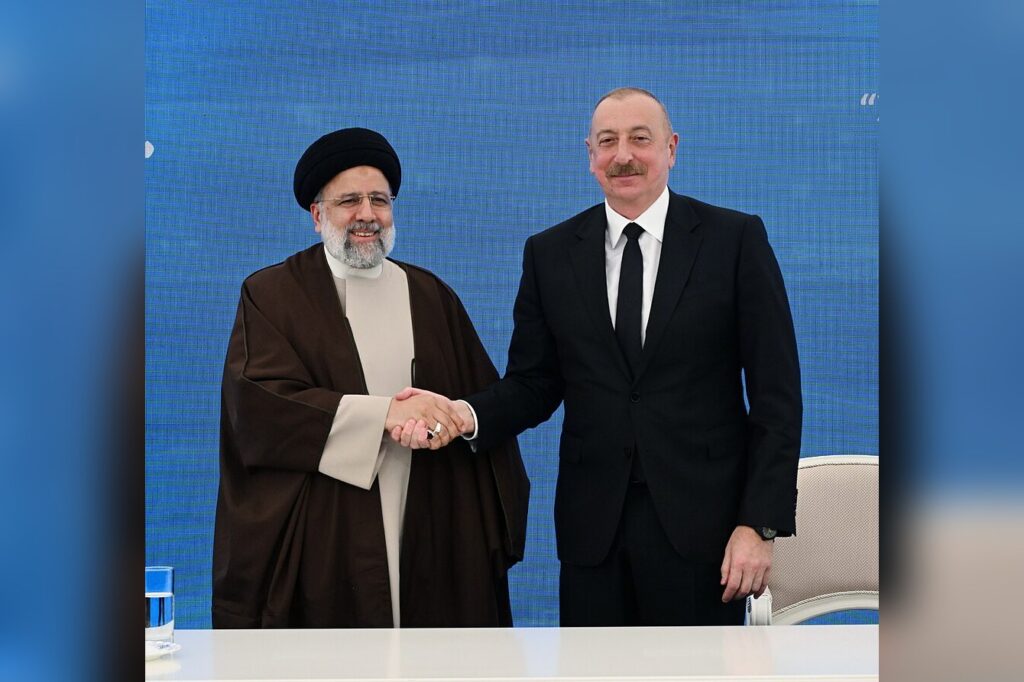
“It’s non-negotiable.” That was Ebrahim Raisi on Iran’s ballistic missile programme, three days after he won the presidency. Asked on live television on Monday, 21 June 2021, whether he would meet Joe Biden, he answered with one word: “No.”
The press conference in Tehran was the president-elect’s first since the vote, and the AP account of it read as a blunt preview of what Iran’s dealings with the world might look like over the next four years. Raisi, 60, a cleric and protege of Supreme Leader Ayatollah Ali Khamenei, had taken nearly 62% of 28.9m votes. Turnout was the lowest in the Islamic Republic’s history, and in Tehran province it fell to 34%, roughly half that of previous years. Serious rivals had been blocked from standing.
Sanctions yes, limits no
Raisi said he would salvage the 2015 nuclear deal if it meant relief from US sanctions. He ruled out any curbs on Iran’s missiles or on its support for regional militias, two shortcomings of the agreement that the Biden administration wanted addressed. Washington, he said, was “obliged to lift all oppressive sanctions”.
The backdrop was grim for diplomats. Donald Trump had pulled the US out of the deal in 2018, and Iran had since dropped every limit on enrichment. By June 2021 enrichment stood at 60%, the highest Tehran had reached, though weapons-grade is 90%. Talks in Vienna were grinding on.
The AP noted another oddity. Raisi would be the first Iranian president already under US sanctions on entering office, partly because of his record leading the judiciary. Trips abroad and addresses at bodies like the United Nations could get awkward.
The question he would not answer
At that same news conference, Raisi was pressed on live television for the first time about the mass executions of political prisoners in 1988, as the Iran-Iraq war wound down. He gave no specific reply, calling himself a “defender of human rights”. Reuters later reported that rights groups say he sat as a young Tehran prosecutor on a panel overseeing hundreds of executions in the capital. Amnesty International’s minimum estimate for the whole country was 5,000 killed. Iran denies torturing prisoners.
The record that followed
Reuters described how the hardline posture carried into domestic life. A year after the election, Raisi ordered tighter enforcement of Iran’s “hijab and chastity law”. Within weeks Mahsa Amini, a young Iranian Kurd, was dead in custody after the morality police detained her. Months of nationwide protests followed, among the gravest challenges to clerical rule since 1979. Rights groups said hundreds were killed, including dozens of security personnel. “Acts of chaos are unacceptable,” Raisi said.
His election had brought every branch of power under hardliners loyal to Khamenei, then 85. Reuters wrote that Raisi saw a chance to win broad sanctions relief for only modest curbs on an increasingly advanced nuclear programme, and the talks with six major powers had become moribund. In April 2024, after a missile attack killed senior Revolutionary Guard officers at Iran’s embassy in Damascus, Iran launched an unprecedented but largely unsuccessful direct aerial bombardment of Israel.
The Reuters profile appeared on Sunday, 19 May 2024, the day his helicopter came down in mountainous terrain. It called him a contender to succeed Khamenei, a man the Chatham House analyst Sanam Vakil described as someone Khamenei trusts.
Sources
- Iranian President Raisi: A hardliner on morality, protests and nuclear talks
- cont.
- cont. 2
- Raisi sets out hardline stance in first remarks since winning Iran election




