
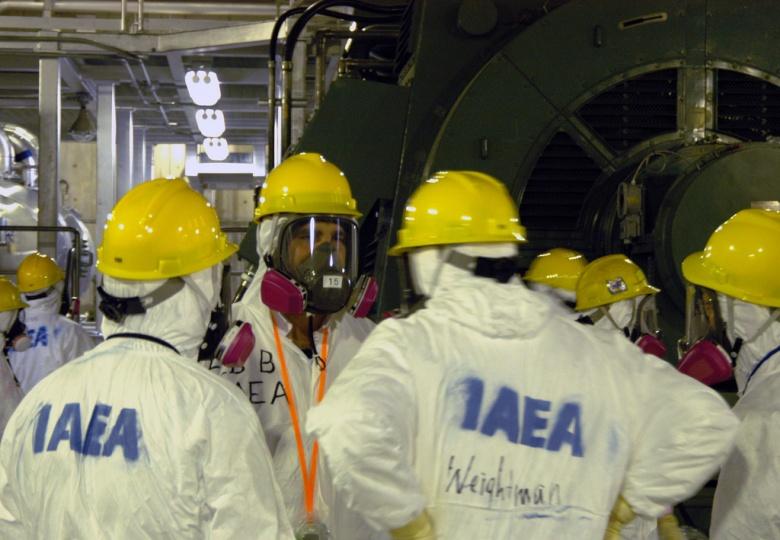
The International Atomic Energy Agency cannot say how much enriched uranium Iran has, where it is, or what shape it is in. The agency’s own words, in its quarterly safeguards report dated June 4, 2026: it “cannot provide any information on the current size, composition or whereabouts of the stockpile of enriched uranium in Iran.”
An analysis of that report and the companion Verification report, both dated June 4, 2026, paints a picture of almost total and continuing loss of monitoring. Iran suspended access nearly a year ago, and the IAEA continues to declare the country in violation of its Nuclear Non-Proliferation Treaty safeguards agreement.
What the inspectors last saw
The last full count came before the June 2025 strikes. The IAEA then verified 440.9 kg (U mass) of uranium enriched up to 60 percent U-235, 184.1 kg (U mass) enriched up to 20 percent, 6024.4 kg (U mass) enriched up to 5 percent and 2391.1 kg (U mass) enriched up to 2 percent.
The 60 percent material draws the most concern. The analysis describes it as 99 percent of the way to weapon-grade uranium, and says it can be used directly in a nuclear explosive. About 40 kg would be enough for an implosion-type weapon, and 80 kg for a gun-type device. The same analysis says the strikes badly damaged Iran’s ability to build such a weapon. Before them, it estimates, Iran could have produced its first non-missile deliverable weapon within months. Today it would need more than a year.
Where the material may be
After the June 2025 strikes, Director General Rafael Grossi said the agency believed most of the highly enriched uranium, though less than 70 percent of it, sat inside the tunnel complex at Esfahan. In February 2026 the IAEA reported regular vehicle traffic around the entrance to that complex, where uranium enriched up to 20 percent and 60 percent had been stored, and it asked Iran to arrange access.
The analysis calls the report thin. It gives less detail on the location of the uranium than Grossi has offered in media interviews. It says nothing on other candidate sites where material may be buried, among them Fordow, a tunnel site built in 2007 at Natanz, and Pickaxe Mountain near Natanz.
A year of closed doors
The IAEA withdrew all its inspectors by the end of June 2025 for safety reasons. Iran formally suspended cooperation in July 2025. A Cairo Agreement on inspection procedures followed on September 9, 2025, and Iran terminated it on November 20, 2025.
The agency warned Iran in a letter on January 29, 2026 that without more cooperation it could not conclude that no declared nuclear material had been diverted. Iran replied on February 2, 2026 that “normal implementation of safeguards is legally untenable and materially impracticable.” After February 28, 2026, according to the Verification report, the IAEA stopped conducting verification activities in Iran under the safeguards agreement.
Iran has denied access to 20 declared nuclear sites and one location outside facilities. The exception is the Bushehr reactor, where the agency oversees refueling and two new units under construction. An inspection took place there between June 1 and 3, 2026. The IAEA says Iran is the only non-nuclear-weapon state party to the treaty to have produced and accumulated uranium enriched up to 60 percent, and calls the lack of verification “a matter of proliferation concern.”
A draft resolution reportedly sponsored by the United States and the European Union would demand “precise information on nuclear material accountancy and safeguarded nuclear facilities” and full access for inspectors “without delay.” The analysis also urges the Board of Governors to tell the IAEA to report more on what it observes at Iran’s sites. In the meantime, the agency relies on commercial satellite imagery to track them.
Sources
- Analysis of IAEA Iran Verification and Monitoring and NPT Safeguards Reports — June 2026
- Nuclear program of Iran â Grokipedia




