
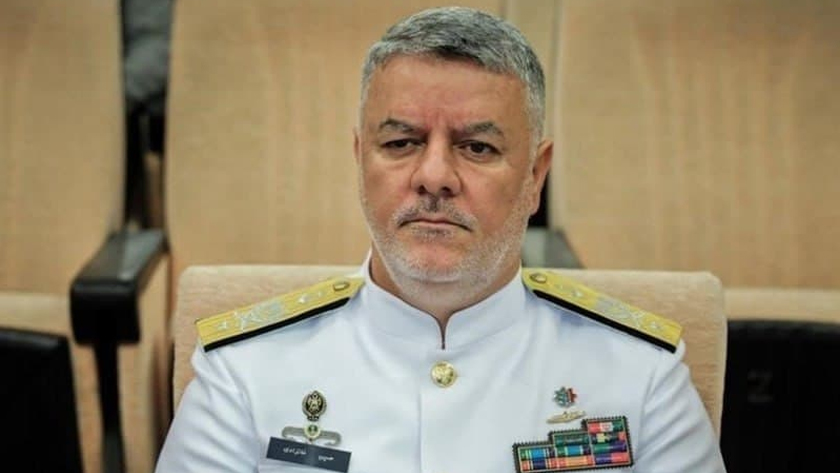
In August 2021, Iran’s supreme leader signed a decree and, without explanation, ended Admiral Hossein Khanzadi’s time at the head of the country’s navy. Rear Admiral Shahram Irani took over. Middle East Monitor reported that the order told Irani to improve the navy and gave no reason for the change.
Khanzadi had held the post since 2017. Those were years when a sailor’s worst day could begin around Hormuz or elsewhere in the Gulf, where Iran, the United States and Britain were circling each other.
The Russia connection
The clearest picture of what Khanzadi did comes from a trip to Russia in July 2019. Radio Farda, citing IRNA, reported that he said Tehran and Moscow had agreed to hold joint naval drills, with the Indian Ocean, the Arabian Sea, Hormuz and the Persian Gulf all named as possible locations. He hoped they would take place within months. He also said a deal to expand military cooperation had been signed, and that it covered the Caspian Sea too. He called the agreements unprecedented.
The timing mattered. Washington had imposed heavy sanctions on Iran, including on its oil exports, and Tehran had responded with defiance: it shot down a U.S. drone and seized a British oil tanker. Britain, for its part, asked European navies to band together over commercial shipping in the Gulf.
A navy short on money
Not everyone saw strength. The Iran Transition Council, an opposition outlet, argued that Khanzadi commanded during a stretch when a lack of funds meant home-built equipment was replacing advanced naval gear. It pointed to the loss of the IRIS Damavand, built at Bandar Anzali, which hit a breakwater and sank. It also said the IRIS Sahand and the converted Bandar-Mokran, both built by the maritime defense industries, sailed to a Russian naval exercise in the Black Sea, and suggested their age next to Russian ships may have embarrassed the admiral.
That is one critic’s reading. Iranian state media gave no reason for his replacement. The council noted that his predecessor, Admiral Habibullah Sayyari, ran the navy for ten years and then moved to a senior armed forces post, while Khanzadi’s next assignment was unannounced.
His successor
Irani, according to Middle East Monitor, had run operations for the Army’s First Naval District, based at Bandar Abbas, and had commanded some of the navy’s most important missions, among them the 1991 crossing of the Suez Canal. He took over while tension was climbing around the Arabian Sea, Hormuz and the Gulf.
Sources
- Iran's Khamenei appoints new navy commander (Middle East Monitor)
- Iran Naval Commander Claims Agreement With Russia For Joint Sea Exercises (Radio Farda)
- Ayatollah Khamenei replaced the Commander-in Chief of the Iran Navy – why? (Iran Transition Council)




