
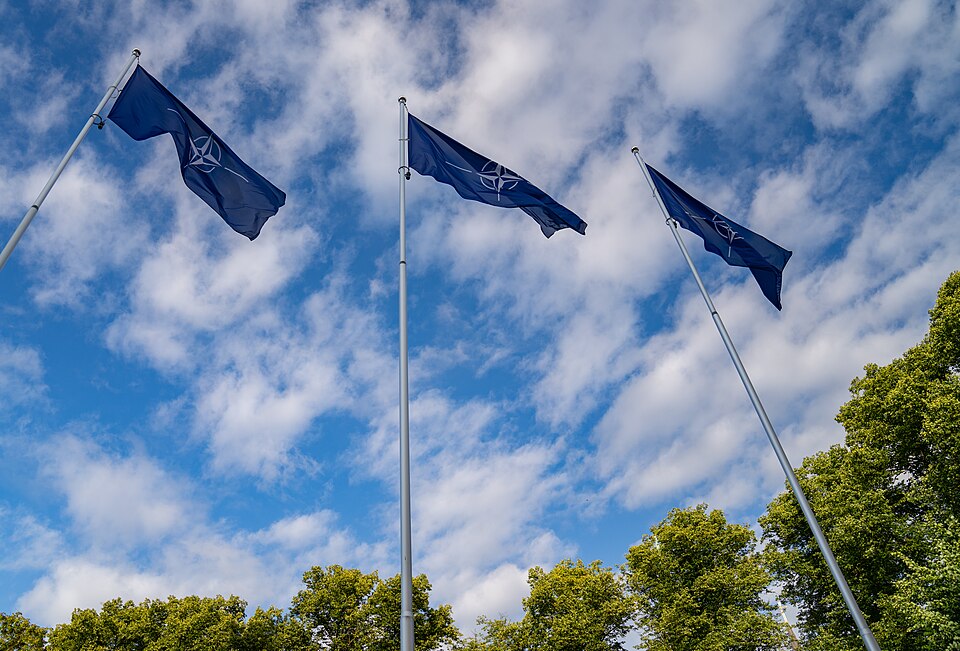
The United States has quietly withdrawn its rotational battalion-sized task force from Estonia, scaling back the American component of the NATO battlegroup stationed in the Baltic state since 2016. The move reduces the U.S. footprint in the United Kingdom-led Enhanced Forward Presence battlegroup, but alliance officials stress that the broader deterrent framework remains intact. The shift marks the first significant change in the composition of a multinational force that NATO established directly in response to Russia’s 2014 annexation of Crimea and the outbreak of war in eastern Ukraine.
A Thinner Tripwire on the Baltic Frontier
The U.S. contribution to the Estonia battlegroup had always been rotational, with American troops cycling through on six-month deployments rather than being permanently based. That rotational cycle has now been halted, at least for now.
The UK-led battlegroup continues to operate in Estonia with contributions still coming from the United States, France, and other allied nations. NATO has consistently framed the Enhanced Forward Presence as a key element of its deterrence posture, designed to demonstrate the alliance’s collective defense commitment under Article 5. The bloc has stated that additional forces remain available for reinforcement if needed.
The message from both Washington and NATO headquarters is that the tripwire still exists, even if the wire is a little thinner. The trend underneath the tactical adjustment is about burden-sharing and signal-sending among allies.
The immediate question is whether other NATO members will adjust their own rotational deployments to fill the gap left by the U.S. withdrawal, or whether this becomes a pattern across the other eFP battlegroups in Latvia, Lithuania, and Poland. The four multinational battlegroups were created simultaneously in 2016 as a visible but limited presence meant to deter further Russian aggression after the seizure of Crimea and the conflict in eastern Ukraine.
The Evolution of NATO’s Rapid Response Capability
NATO’s response forces have undergone significant structural changes since the Cold War, when the alliance relied primarily on rapid reinforcement of Europe by American troops stationed across the Atlantic. The idea of a standing high-readiness force gained new urgency after the September 2001 attacks, when NATO invoked Article 5 for the first time in its history and sought ways to act within days rather than weeks.
In 2002, allied leaders meeting in Prague approved the creation of the NATO Response Force, an alliance-wide pool of troops, ships, aircraft, and special-operations units designed to deploy on short notice for missions ranging from disaster relief to combat. The NRF was formally stood up the following year, marking a shift from static defenses to a more agile deterrent posture. The NRF is not a permanent standing army but a rotating cadre of units drawn from member states and partner nations, trained to common standards and held at high readiness.
The force was activated only once before 2022—during the 2011 Libya intervention—before its most consequential use came in February 2022, when Russia’s full-scale invasion of Ukraine prompted NATO to deploy elements of the NRF as part of the alliance’s immediate response. Now, the NRF’s successor, the Allied Reaction Force, is taking shape at a moment when NATO’s eastern flank faces sustained pressure.
The alliance has steadily increased the speed and scale of its reinforcements since 2014. Those events led directly to the creation of the eFP battlegroups in the Baltic states and Poland. The NRF’s broader capabilities—airlift, sealift, command structures, and specialized troops—remain the backbone for any larger reinforcement if deterrence fails.
As troop rotations shift and defense plans are updated, the readiness of these forces will determine whether NATO can respond faster than it did during earlier crises. The challenge is not just to maintain the tripwire on the alliance’s eastern frontier, but to ensure that reinforcements can arrive before any conflict escalates.




