
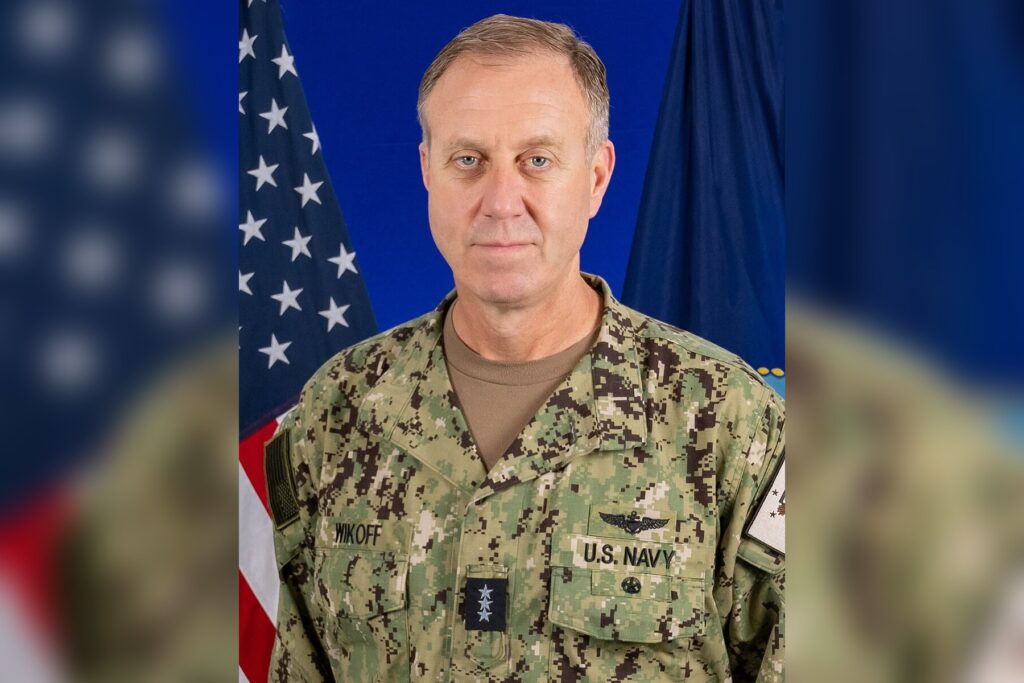
The handover took place on a Sunday at U.S. Naval Support Activity Bahrain. Vice Admiral Curt Renshaw took command of U.S. Naval Forces Central Command and the 5th Fleet from Vice Admiral George Wikoff, with Admiral Brad Cooper, head of U.S. Central Command, presiding. Stars and Stripes reported the ceremony on October 6, 2025.
Wikoff had held the post since February 2024, a stretch in which Iran-backed Houthi militants kept attacking commercial ships in the Red Sea and the Gulf of Aden. He was confirmed for promotion to admiral and a move to U.S. Naval Forces Europe-Africa and Allied Joint Force Command Naples. At the ceremony he said “the sum is better than the parts and the consequences of collective failure are catastrophic.”
Renshaw arrived with more than 30 years of service. He had already worked in Bahrain as deputy commander for NAVCENT from 2019 to 2021.
The other side of the Gulf
Across the water, the opposite number during Wikoff’s tenure was Alireza Tangsiri, who commanded the Islamic Revolutionary Guard Corps navy. Al Jazeera described him as “instrumental in shaping the country’s naval doctrine” and said he held the job for years. He was “responsible for developing drones for military maritime use” and sat at the center of Iran’s Strait of Hormuz strategy.
The IRGC navy is not Iran’s regular fleet. RFE/RL reported in March 2026 that the Guards’ naval units run fast-attack boats, unmanned surface vessels and drone systems from positions near the islands of Qeshm, Hengam and Larak, along the shipping lanes. The strategy has deep roots: Iran adopted its asymmetric naval doctrine after the U.S. Navy destroyed roughly half its conventional fleet in April 1988, shifting toward tactics built for the shallow waters of the Persian Gulf.
Euronews noted that the strait historically carried roughly one-fifth of the world’s oil supply before the 2026 conflict began.
What happened to the Iranian command
Tangsiri did not outlast the war that started on February 28, 2026. Israel’s Defence Minister Israel Katz announced on March 26 that he had been killed in a strike, saying the commander “was directly responsible for the terrorist operation of mining and blocking the Strait of Hormuz to shipping.” Al Jazeera reported that he had been based in Bandar Abbas in recent weeks, directing the control of shipping through the strait.
By then, RFE/RL said, U.S. forces had reported sinking 60 Iranian vessels. Analyst Sascha Bruchmann called Iran’s regular navy “largely combat ineffective,” while the IRGC navy “remains able to harass shipping.”
Sources
- 5th Fleet Changes Command After Intense Stretch of Naval Combat
- Iranian naval commander Alireza Tangsiri killed in attack, Israel says
- Iran's Navy Is Largely Gone. The Threat To The Strait Of Hormuz Is Not. (RFE/RL)
- IRGC navy chief Alireza Tangsiri killed (Euronews)




