
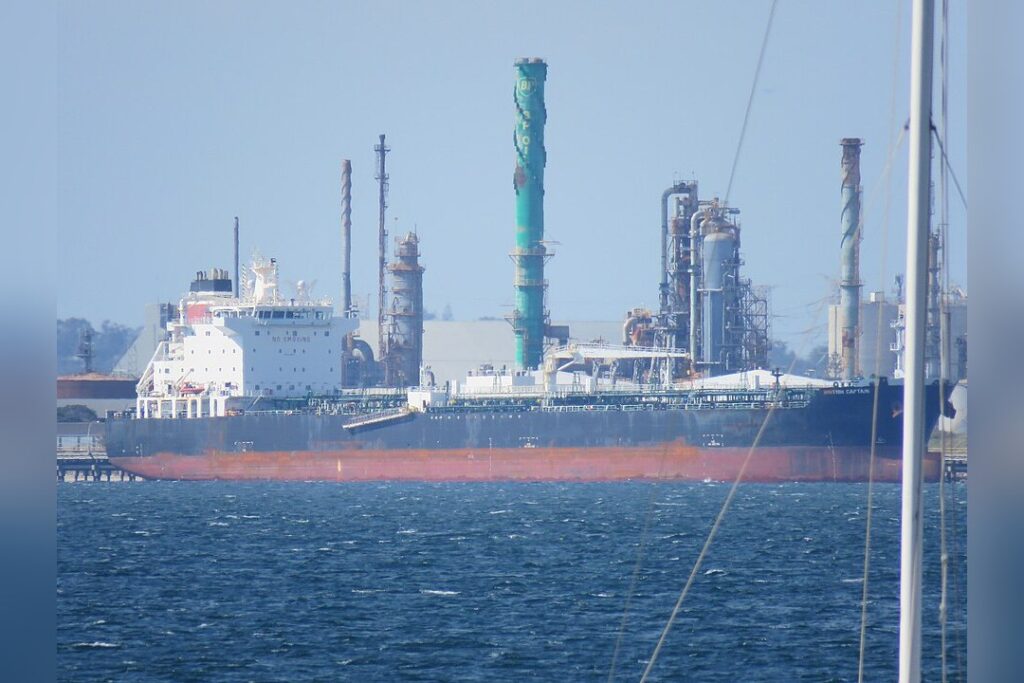
WASHINGTON, July 11 — In a rare moment of backchannel candor, Iran privately admitted to advisers of former President Donald Trump that its elite military force had blundered when it seized a British oil tanker in the Strait of Hormuz. The admission came through unofficial communications to Trump’s inner circle, including then-National Security Advisor John Bolton and Secretary of State Mike Pompeo, according to a 2019 Reuters report citing two unnamed sources.
The message was blunt: the Islamic Revolutionary Guard Corps “made a mistake.” Here’s what that means in plain terms. The Strait of Hormuz is a critical chokepoint for global oil shipments.
Think of it like a narrow funnel connecting the Persian Gulf to the Gulf of Oman, through which about 20% of the world’s petroleum passes daily. The U.S. Fifth Fleet, based in Bahrain, patrols the area. When a military force with a history of hostility toward the West makes an operational error in that corridor, the ripple effects are felt in global energy markets and naval strategy alike.
The incident that triggered the private message unfolded on July 19, 2019. The IRGC seized the British-flagged oil tanker Stena Impero as it transited the Strait of Hormuz.
It was a direct retaliatory move: just two weeks earlier, on July 4, 2019, British Royal Marines had seized an Iranian tanker, the Grace 1, off the coast of Gibraltar. That vessel was suspected of carrying oil to Syria in violation of European Union sanctions. The practical upshot was a sharp escalation in an already tense region.
The Trump administration had withdrawn from the Joint Comprehensive Plan of Action — the 2015 nuclear deal — in 2018 and imposed a campaign of maximum economic sanctions on Iran. The IRGC itself had been designated a terrorist organization by the United States in April 2019, just months before the tanker seizure. The backchannel message acknowledged that the IRGC’s action was a mistake.
The Reuters report did not specify the exact date of the private communication, nor did it detail the precise wording of the message. But the fact that Iran’s leadership felt compelled to send such a message through unofficial channels — rather than through formal diplomatic protocols — speaks to the gravity of the miscalculation.
The Stena Impero was held by Iran for over two months. It was finally released on September 27, 2019. The Strait of Hormuz remains a flashpoint.
Any miscalculation there — whether by the IRGC, the U.S. Navy, or regional actors — carries outsized consequences. The 2019 episode demonstrated that even Iran’s own commanders recognized when they had overstepped.
The question that lingers is whether that recognition translates into restraint the next time tensions flare.




