
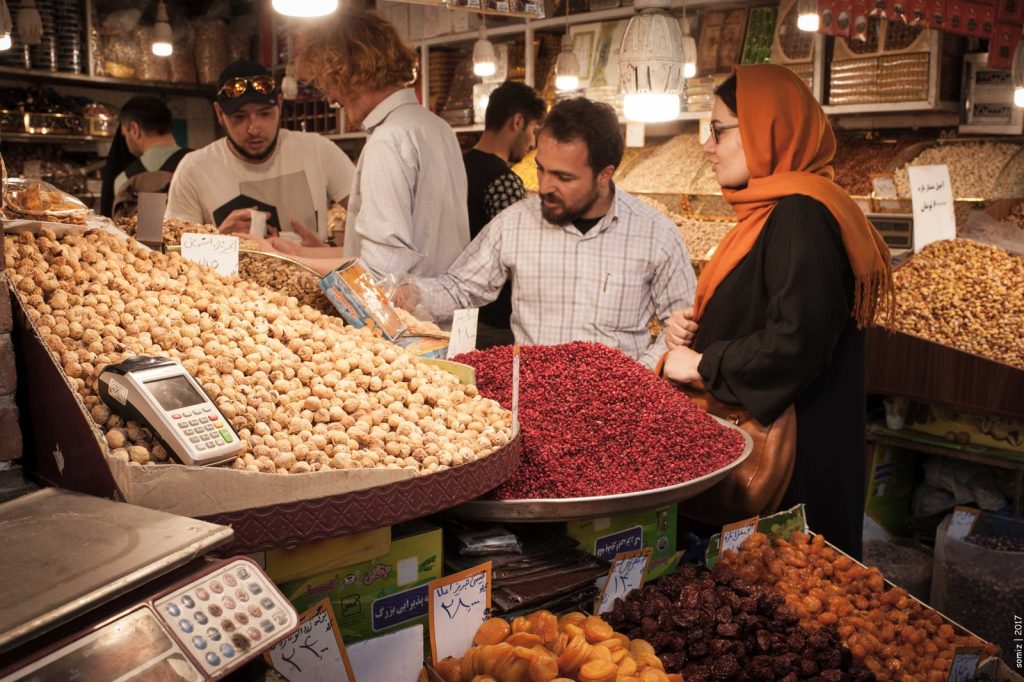
Inflation in Iran hit 66% in July. Compared with a year earlier, consumer prices are up 87.9%, and food costs have climbed 128%, according to the country’s Statistical Centre. President Masoud Pezeshkian did not hide it last week: “Our problems have multiplied several times over, while our income has also fallen.”
That is the squeeze on ordinary households six months after US and Israeli forces attacked Iran on February 28, killing the supreme leader and badly wounding his son and successor. The government still holds power. It also believes time is on its side.
A new phase, fought over money
Washington announced fresh measures on Monday that move the fight from missiles and airstrikes to Iran’s oil revenue, its banks and its trading partners. Treasury Secretary Scott Bessent says the United States will cut off the financial lifelines that keep Iran’s economy running, while a US-led naval blockade limits oil exports and access to hard currency.
State Department spokesperson Tommy Pigott put it bluntly. “The Iranian economy is in free fall and the regime’s military has been decimated,” he said. “President Trump holds all the cards.”
Not everyone agrees. Aaron David Miller, a former US diplomat now at the Carnegie Endowment, said Bessent compared the move to D-Day, but “this isn’t D-Day. It’s Desperation Day.” Alan Eyre, who worked on Iran as a US diplomat, doubts Washington has the allies or the bureaucratic machinery to make the penalties stick. The campaign before the 2015 nuclear deal was multilateral, he said. This one leans on public threats.
Tehran bets Washington will blink
The weak point in the American plan is China and India, the countries keeping Iran afloat. Tehran is wagering that Trump will stop short of punishing them with secondary sanctions. A senior Iranian official told Reuters that China would not drop its cooperation with Iran just to serve US interests, and that the “maximum pressure” campaign of Trump’s first term failed and would fail again.
“If the pressure increases, Iran’s approach will change too,” the official said.
Michael Knights of the advisory firm Horizon Engage thinks the blockade may matter more than the sanctions. Iran, he said, has spent decades adapting to such pressure, and its challenge now is to break out of it. One way would be to copy its Houthi allies in the Red Sea, with periodic attacks and on-and-off talks aimed at shipping, ports or energy sites, until Gulf states tire of the cost.
Fear of unrest at home
For Iran’s rulers, the bigger worry may be the street. Economic anger has driven nationwide protests before. In January, the Revolutionary Guards and the Basij militia crushed demonstrations over hardship, and thousands were killed. This month Hossein Taeb, an architect of earlier crackdowns, took over the Basij, which a former reformist official read as one of the clearest signs yet that the leadership fears a new wave.
The Gulf states are caught in the middle. They would rather see economic and diplomatic pressure than another round of war. What they dread is an ending in which Iran claims victory and can still disrupt traffic through the Strait of Hormuz, the oil route Tehran has effectively blocked, pushing up global prices. Abdulaziz Sager of the Saudi-based Gulf Research Center said Gulf governments doubt sanctions alone will change Iranian behavior quickly, and that the collapse of the clerical leadership is unlikely to come soon.
Each side wants something the others will not give. Washington wants Iran to give up its leverage over Hormuz without handing Tehran a role in running the waterway. Iran wants the blockade lifted without looking beaten. The Gulf states want the fighting contained and no clear winner in Tehran.




