
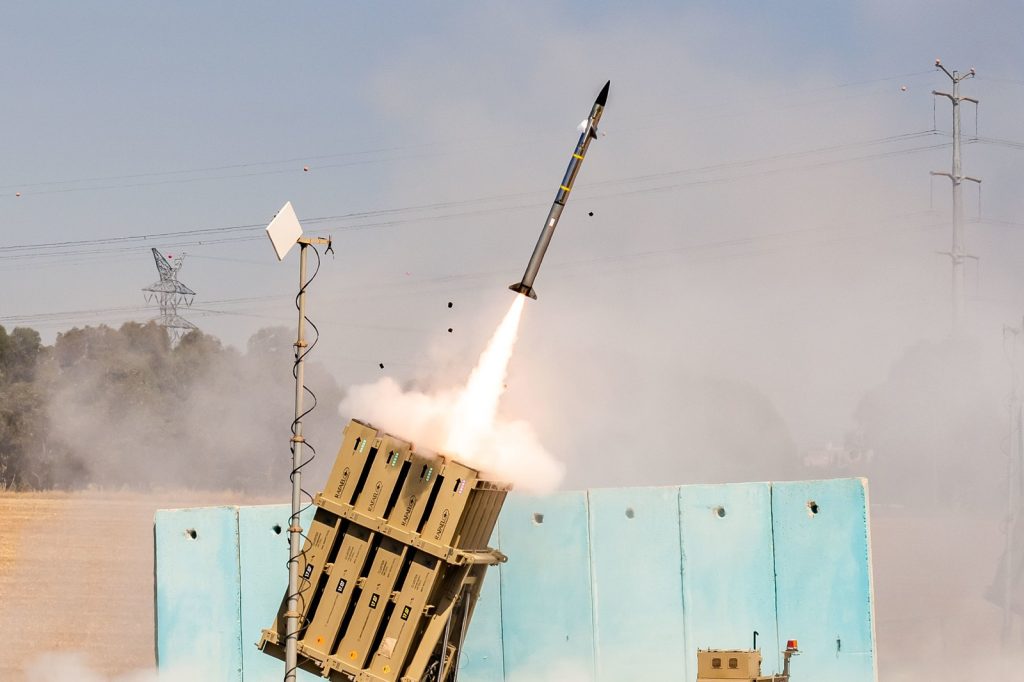
On April 13, 2024, Iran sent more than 300 drones and missiles toward Israel. About 99 percent never arrived, shot down on the way. It was the first time Tehran had hit Israel from its own territory, and it set off a run of direct exchanges that ended the long era of shadow war between the two countries.
The trigger was an Israeli air raid on an Iranian diplomatic compound in Syria, which Al Jazeera dated to April 1. It killed seven Revolutionary Guard members. Iran said its barrage was the answer.
A message sent in kind
Israel waited six days. Then, in the early hours of April 19, explosions were reported near Isfahan, in central Iran, and air defenses were activated over Tabriz in the northwest. Iranian state media said defenders had downed three small drones above Isfahan, and some unconfirmed reports pointed to small quadcopters. Flights were briefly suspended in several regions, including Tehran, then resumed about four hours later. No casualties were reported.
Isfahan matters. The province holds Iran’s uranium conversion facility and sits close to the Natanz enrichment site, and the city is home to the country’s largest nuclear research complex. The International Atomic Energy Agency said the complex was undamaged.
Analysts read the strike as a calibrated one. Gregory Brew of the Eurasia Group said Tehran was treating it “sort of as a nothing-burger”. Ali Vaez of the International Crisis Group said Israel had wanted to show Iran what it could do without openly provoking it. Alex Vatanka of the Middle East Institute described both sides as “demonstrating capacity to hit the other”. Western allies had urged restraint beforehand. British Foreign Secretary David Cameron hoped any action would be “as limited and as targeted and as smart as possible”, though Prime Minister Benjamin Netanyahu said Israel would “make its own decisions”. CNN, citing American officials, reported that Washington was told in advance but did not approve the strike.
October: nearly 200 missiles
The restraint did not last the year. On October 1, 2024, nearly 200 Iranian missiles flew toward Israel, a move the Revolutionary Guards tied to the killing of the Hezbollah chief. Sirens sounded across Israel, residents were sent to shelters and explosions shook Tel Aviv and the Jerusalem area. After about an hour the Israeli military said the threat had passed and that a “large number” of missiles had been intercepted. No casualties were reported at first. President Joe Biden ordered the American military to help intercept the missiles.
Israel’s army spokesman, Rear Adm. Daniel Hagari, left no doubt: “This attack will have consequences. We have plans, and we will operate at the place and time we decide.” Airspace shut across Israel, Iraq, Lebanon and Jordan, and Iran halted flights at Tehran International Airport.
The October attack was only Iran’s second direct strike on Israel. The first, in April, had followed the Damascus raid. The pattern was now set: a blow, a calibrated answer, then a larger blow.
Sources
- Iran Shrugs off Israeli Strike, Allaying Escalation Fears-for Now
- Has Israel attacked Iran's Isfahan province? What we know so far
- Iran fires nearly 200 missiles into Israel; Israel vows retaliation




