
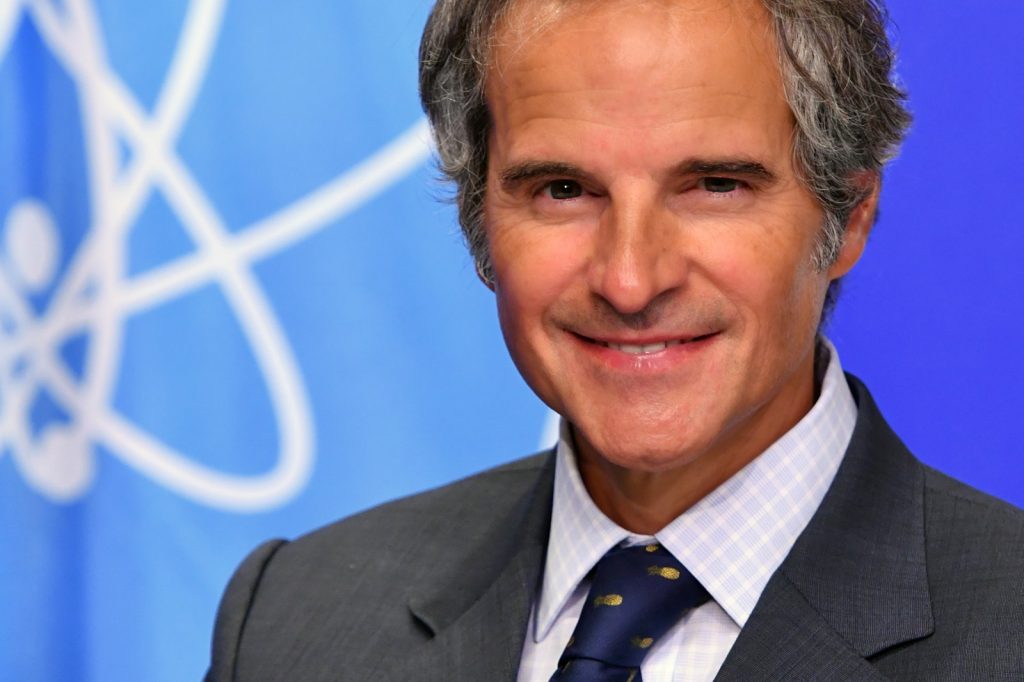
The International Atomic Energy Agency became a legal reality on July 29, 1957, when its statute took effect. Its author, in practice, was Washington.
An American idea with a UN badge
The story starts four years earlier. In 1953 Dwight D. Eisenhower stood before the UN General Assembly, looking for a way out of the arms race with Moscow, and floated an “International Atomic Energy Agency” that would hold a pool of nuclear material and steer it toward peaceful use. The safeguards that were supposed to keep that material out of bombs did not exist yet. Even the Soviets found the “Atoms for Peace” pitch hard to attack.
The United States then did the heavy lifting. It opened negotiations, picked the first group of participating countries, put a working draft on the table and steered it to a UN conference held that September, in 1956. Signatures were invited from October 26, 1956. A preparatory commission settled the practical questions: the headquarters would sit in Vienna, and the commission chose the first director general.
The founding text tried to serve two masters. The agency was told to “accelerate and enlarge” atomic energy’s contribution to peace, health and prosperity, while making sure, “so far as it is able,” that nothing it touched furthered a military purpose. Those goals pull against each other, and the tension has never gone away. To police the second one, the agency could set up safeguards covering plutonium and highly enriched uranium, backed by an international inspectorate working on site.
Who answers to whom
On paper the agency is a UN body. It reports to the Economic and Social Council, like other specialized agencies, and because its work touches war and peace it also reports to the General Assembly. The route that matters most runs to the Security Council, which can instruct it and is where cases of broken safeguards deals end up. Inspectors can verify. Enforcement is someone else’s job.
The treaty that gave inspectors a purpose
The Non-Proliferation Treaty, negotiated in the late 1960s, handed the agency its real mission. The 1968 treaty, in its Article III, makes every non-nuclear-weapon state sign a comprehensive safeguards agreement. Yet the agency had been at this for years by then. Canada signed the first such deal in 1959. Two years later the Board of Governors approved a paper setting out the principles.
The catch is who is exempt. The treaty does not oblige China, France, Russia, Britain or the United States to accept safeguards. All five have signed voluntary offer agreements that let inspectors look at civilian material in selected facilities, and all five have additional protocols. India, Pakistan and Israel stand outside the treaty, but each has put some civil nuclear facilities under item-specific agreements, and New Delhi also has an additional protocol in effect.
The system has real reach. As of September 2024, 182 states had comprehensive safeguards agreements. Four treaty members had yet to negotiate one.
What Iraq exposed
Reach is not the same as sight. Inspectors checked only what a state declared, and Iraq, a treaty member, exploited exactly that. Secret programs there and in North Korea showed the weakness, and in 1993 the agency began a reform drive called Program 93+2 to close the “undeclared facilities” loophole. The name reflected a plan drafted in 1993 and meant to be running within two years. It took longer. The first measures added environmental sampling, no-notice inspections at key measurement points and remote monitoring.
Sources
- Unleashing the Nuclear Watchdog: Strengthening and Reform of the IAEA (Trevor Findlay, CIGI Special Report)
- IAEA Safeguards Agreements at a Glance (Arms Control Association)




