
DOHA, July 21 — In the skies over the Middle East, two very different philosophies of air power are playing out every day. The United States and Iran have both conducted hundreds of strike sorties in the current conflict, targeting military bases, infrastructure, and research-and-development sites. But the hardware each side brings to the fight tells a story of divergent priorities: one built around surgical precision, the other around reach and volume.
For the U.S. military, the core of any airstrike is the Joint Direct Attack Munition, or JDAM — a kit that turns an unguided bomb into a GPS-guided smart weapon with accuracy measured in the range of 10 to 15 feet. That kind of precision is the result of decades of engineering and a doctrine that emphasizes low collateral damage.
The aircraft that deliver these munitions operate from a network of bases in Qatar, the UAE, Kuwait, and Bahrain, as well as from the decks of aircraft carriers like the USS Dwight D. Eisenhower, currently stationed in the Persian Gulf. When a target is beyond the range of manned aircraft, Tomahawk cruise missiles come into play.
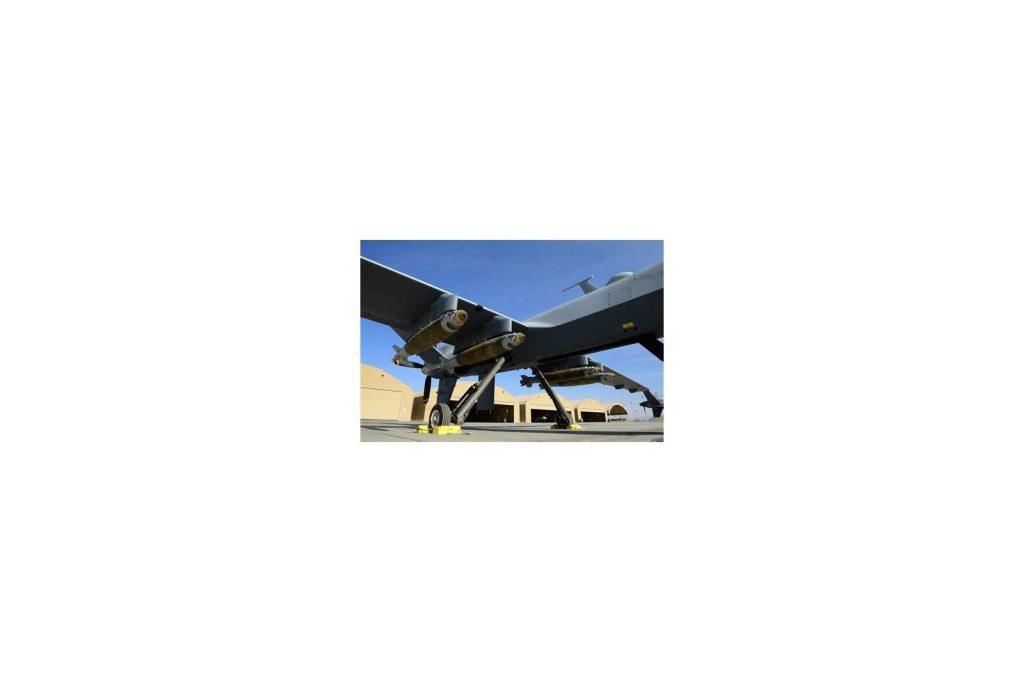
Fired from submarines and destroyers, these missiles can travel up to 2,500 kilometers and strike with the same guiding principle: hit what you aim at, miss what you don’t. Smaller targets are often engaged from drones — the MQ-9 Reaper, for example, fires AGM-114 Hellfire missiles.
Iran’s Reach
Iran approaches airstrikes from a different technological heritage. Its ballistic missile forces, operated primarily by the IRGC Aerospace Force, are built around models like the Shahab-3, which has a range of 1,000 to 2,000 kilometers, and the improved Emad, which adds a maneuvering reentry vehicle and reaches about 1,700 kilometers. Both can hit targets in Israel and parts of Europe.
In the January 2020 retaliatory strikes against U.S. forces, Iran used Fateh-110 short-range solid-fuel missiles and Qiam missiles. But accuracy has historically been a different story.
Older Iranian ballistic missiles have a Circular Error Probable — the radius within which half the warheads land — measured in hundreds of meters. Newer models, the Emad among them, claim a CEP under 10 meters, though independent verification remains limited. Iran also fields a growing drone arsenal.
The Shahed-136 is a single-use loitering munition with a range up to 2,000 kilometers, designed to circle over a target area until it finds something to strike. The Mohajer-6 is a multi-role drone with up to 12 hours of endurance.
The Arash-2 is an explosive-laden drone.
The Defenses and the People Behind Them
Air defense is the other half of the airstrike story. The United States relies on Patriot and THAAD systems deployed across the region to intercept incoming missiles. Iran fields Russian S-300 batteries, acquired in 2016, and its own domestically produced Bavar-373, which is comparable to the S-300.
Short-range systems fill the gaps. The current conflict has seen both sides conduct hundreds of strike sorties.
The targets are military bases, infrastructure nodes, and research-and-development sites.
Sources
{“@context”: “https://schema.org”, “@type”: “NewsArticle”, “headline”: “U.S., Iran munitions strike targets in airstrike analysis”, “description”: “DOHA, July 21 — In the skies over the Middle East, two very different philosophies of air power are playing out every day. The United…”, “datePublished”: “2026-07-21T09:30:00+00:00”, “author”: {“@type”: “Person”, “name”: “James Roberto”}, “publisher”: {“@type”: “Organization”, “name”: “InfoPulse Today”, “url”: “https://newsfeed.infopulsetoday.com/”}, “citation”: [{“@type”: “CreativeWork”, “url”: “https://en.wikipedia.org/wiki/Airstrike”}]}




