Of 101 shadow fleet vessels sailing under false flags in October 2025, only 45 were still doing so by the end of June 2026. That is the count from the Center for Research on Energy and Clean Air, and it looks like a win for European enforcement. Follow the ships, though, and the catch appears.
Flag-hopping
France, Sweden, Belgium and the UK have boarded suspected shadow fleet tankers in their waters, and registries in Barbados and Palau have purged sanctioned vessels. Panama cut its sanctioned tonnage by nearly two-thirds from May 2025. The tankers did not stop sailing. They changed registries. CREA found that 107 ships joined the Russian flag between January 2025 and June 2026, and that 87% of the newly Russian-flagged vessels were already under sanctions. The Russian registry grew 36% to 382 vessels.
The reason is mechanical. A Russian flag shields a ship from the boardings European navies use against false flags, which in CREA’s words “renders obsolete the sanctions mechanism European navies have used to interdict them.” One researcher called it “whack-a-mole” and said “Most of the fleet is under sanctions but sanctions themselves do not stop them from sailing.”
Windward, a maritime analytics firm, reached the same direction by another route. More than one in five of the 1,000+ Western-sanctioned tankers now fly the Russian flag, and about 69 ships moved there after November 2025. Russian state-owned insurers have widened coverage for these vessels, and the Russian Maritime Register of Shipping has started classifying tankers it previously ignored. Elsewhere the paper trail is messier. Windward found tankers flying flags from 23 countries that lack recognized ship registries, which makes them stateless. Of 38 sanctioned tankers in Equatorial Guinea’s registry, 36 arrived in 2026. A cluster of 38 tankers expelled from Cameroon’s registry in May had changed flags as many as seven times.
Boarding the suspects
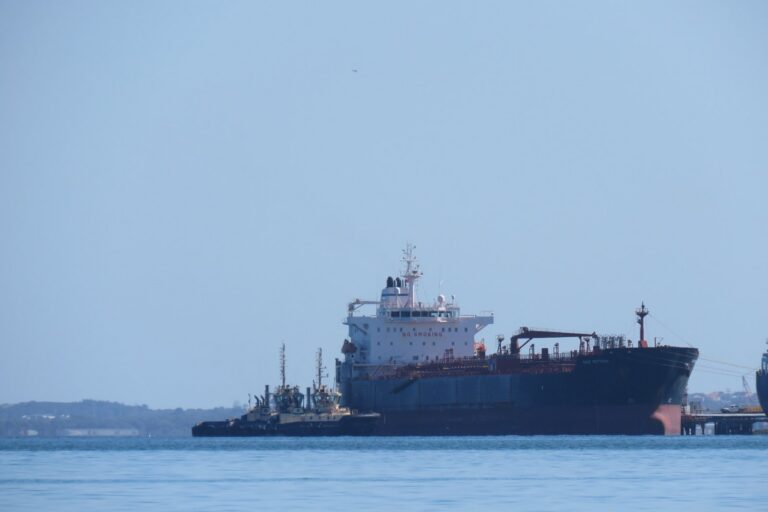
Europe is not standing still. On July 20, 2026, forces assigned to the EU’s Operation IRINI boarded the tanker SOUTH STAR to check its flag. EU foreign policy chief Kaja Kallas said the ship was “suspected of sailing under false flag in breach of international maritime law” and added: “We’re turning up the pressure on Russia’s shadow fleet.” The boarding relied on Article 110 of the UN Convention on the Law of the Sea, which allows warships to board when a flag claim looks fraudulent. IRINI received authorization for such visits in March 2026.
Ukraine hits the ships directly
Kyiv has chosen a blunter tool. Reuters reported on July 7, 2026 that Ukrainian drone forces attacked a dozen shadow fleet tankers over two days while they were delivering fuel to Crimea. Eight were struck in the Sea of Azov, each weighing approximately 7,000 metric tons, and two more were hit later the same day. Two other vessels in the area had been attacked the day before.
The drone forces said that “striking the enemy’s naval logistics complicates the supply of fuel and ammunition” for Russian operations in occupied areas. Fuel shortages in Crimea have led authorities there to declare a state of emergency. Kyiv’s top drone commander, Robert Brovdi, told Reuters the month before that he intended to cut Crimea off from Russia through systematic strikes.
Not every target was what Kyiv called it. A Reuters review found that only two of seven initially identified vessels were under international sanctions.
Sources
- Ukraine strikes Russian 'shadow fleet' tankers supplying Crimea (Reuters, Dan Peleschuk)
- Europe's Shadow Fleet Crackdown Shows Results (CREA report, via Yahoo News)
- Russia Is the Leading Flag for Shadow Fleet Tankers (Hellenic Shipping News, Windward analysis)
- EU Naval Force Boards Sanctioned Russian Shadow Fleet Tanker Over Suspected False Flag (gCaptain)