
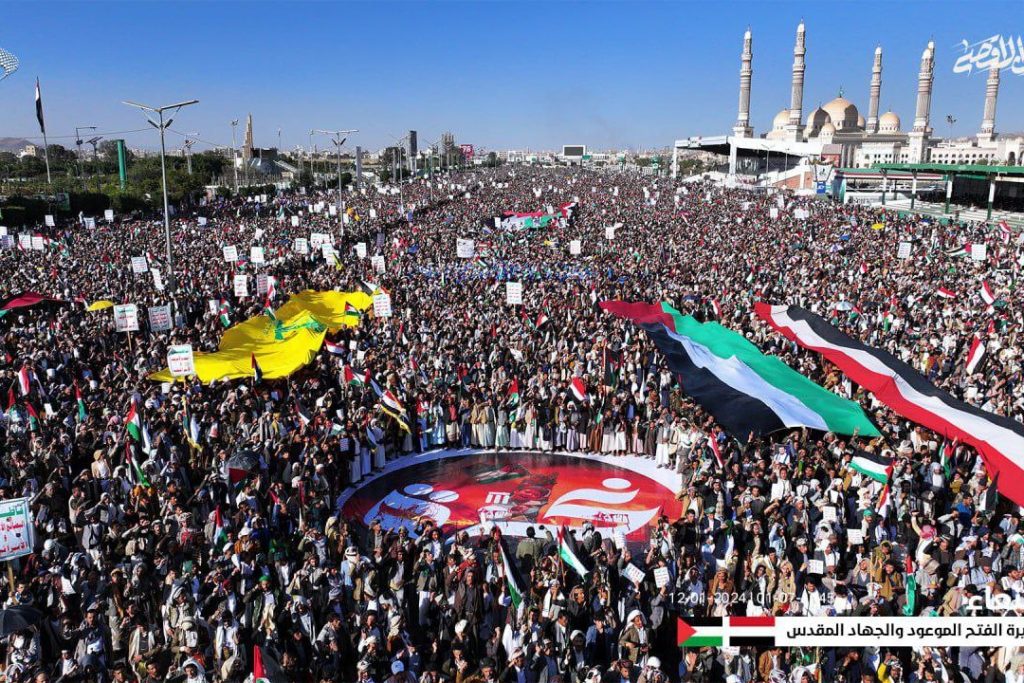
Foreign officials who wanted to meet Abdul-Malik al-Houthi had to do it on his terms. They were asked to travel to Sanaa, where a security convoy took them to safe houses and ran checks, then led them upstairs to a room. Al-Houthi, afraid of assassination, appeared only on a screen. One person familiar with the arrangements said no outsider who negotiated with him has ever been seen face to face with him since the civil war started.
That is the man who has been the de facto leader of the Houthi movement, formally Ansar Allah, since 2004. He is the brother of Hussein al-Houthi, the movement’s late founder, whose name the group carries.
A movement built on grievance
The Houthis grew out of the Zaydi Shi’ite community, a minority sect whose own kingdom in Yemen lasted a thousand years and ended in 1962. Many Zaydis felt sidelined under Ali Abdullah Saleh, the president who ruled from 1990 to 2012. Through the early part of the 2000s the Houthis rose against him more than once. Then came the 2011 Arab Spring, Saleh’s exit, and a weak government under Abdrabbuh Mansour Hadi. The Houthis took Saada province, then Sanaa in 2014. A year later they swept across western Yemen, Hadi fled abroad, and a Saudi-led coalition intervened.
It did not work. Years of air raids and ground fighting failed to dislodge them from most of what they held. The war reportedly left more than 150,000 dead, and the UN says over 22 million Yemenis need aid. Saleh himself switched to the Saudi side, and Houthi fighters ambushed his armored vehicle and shot him dead, according to sources at the time. A truce brokered in 2022 stopped most of the fighting.
How big is the force?
Estimates differ. Reuters describes highland fighters, sandals on their feet and qat in their cheeks, who now number tens of thousands. UN experts put recruitment at up to 350,000 by 2024. Either way, the group controls somewhere between a quarter and a third of Yemen’s land, and about three-quarters of the people live in it. A UN panel concluded in 2024 that help from Iran’s Revolutionary Guards, Hezbollah and Iraqi specialists had turned the movement into a powerful military organisation. Tehran denies arming the Houthis and says its backing is political.
A report from Conflict Armament Research in May 2026 found a shift. Iran used to ship finished weapons; now it sends parts that the Houthis assemble themselves, along with more advanced missile technology. Think of it as moving from delivering a car to delivering a kit and the manual.
From Red Sea shipping to the Saudi border
Soon after the Gaza war began in October 2023, the Houthis started launching drones and missiles toward Israel and at merchant vessels near Yemen. They stopped targeting Israel once the Gaza ceasefire came in October 2025, then began again when Washington and Israel struck Iran in February 2026. An informal understanding with the Saudis came apart in July. The Houthis declared a maritime embargo on the kingdom and went after its airports, energy sites and tankers.
In September they advanced fast along the south-west coast, taking a stretch of 130km (81 miles), with the harbor at Mokha and Perim island among the gains. That gave them real sway over the Bab al-Mandab Strait. Government forces, helped by Saudi air strikes, said in October that they had retaken ground overlooking the strait. The Houthis deny losing any. On 10 October a missile struck the international airport in Riyadh. At least 13 people died, and the BBC called it the worst attack on Saudi soil for over ten years.
Meanwhile the man at the centre says little in public. His military spokesman, Yahya Saree, speaks for him, reading statements in a stretched, theatrical cadence. On September 13 Saree warned that Saudi “aggression” would meet “more severe and larger operations deep inside its territory.”
Sources
- Houthi Red Sea offensive elevates enigmatic leader (Reuters via Jerusalem Post)
- Who are the Houthis in Yemen and what do they want? (BBC)




