
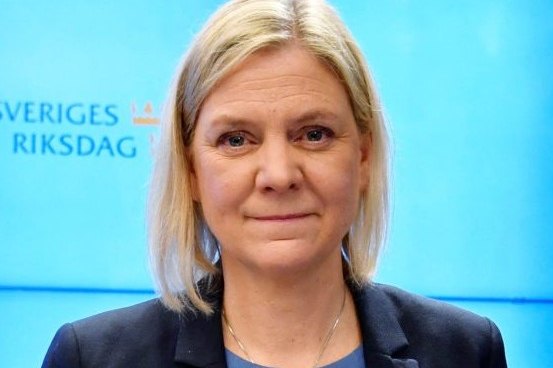
Sweden’s election on September 13, 2026 produced no clear winner by Monday morning. With 95% of votes reported, the left-wing bloc led by Magdalena Andersson held 176 seats in the Riksdag to 173 for Prime Minister Ulf Kristersson’s right-wing alliance, the BBC reported. Barely 28,000 votes separated the two sides.
Kristersson spoke to supporters in the early hours. “The voters have had their say, but we still don’t have a final result,” he said. “Which government will lead Sweden in the coming years is still an open question.” Andersson, who heads the Social Democrats, had told her own backers on Sunday night to wait for the final result. If the current numbers held, she said, “Sweden will have a new government.”
A bad night for the Sweden Democrats
The Sweden Democrats, the hard-right party that has kept Kristersson in office, were losing support for the first time since they entered parliament in 2010. Kristersson had promised them cabinet jobs if he stayed in charge. The party was shunned by the mainstream until 2022, when a campaign on violent crime and immigration made it the country’s second largest.
The Social Democrats did not have a happy night either. Early counts put them on track for 28%, their worst result in more than a century. The gains went to other parties in the left bloc: the Left Party, the Greens and the Centre Party all increased their share. Turnout fell to about 80%, four points lower than in 2022.
Andersson had framed the choice on Sunday as one between a government “entirely dominated by the Sweden Democrats, something that has never happened in Sweden before,” and one led by her “in a new spirit of co-operation.” Kristersson said he sensed “a genuine enthusiasm” for his alliance to carry on.
Wednesday’s count
The count restarts on Wednesday to add early votes submitted late and ballots from abroad that missed election day. In 2022, more than 220,000 votes were added at that stage, so a gap of roughly 28,000 was not safe for either side.
By Wednesday afternoon, with 99% counted, public broadcaster SVT said a turnaround was too unlikely to expect, and that the opposition would take the most seats. The center-left bloc led by 26,169 votes, DW reported. The election authority’s data showed 175 seats for the center-left against 174 for Kristersson’s bloc, with late ballots still being counted until Thursday.
Talks ahead
A lead is not a government. Andersson’s bloc is split between the liberal Center Party and the socialist Left Party, and DW noted that tough negotiations lay ahead. Both Andersson and Kristersson said they were open to exploring coalition options.
Sweden has waited before. After the 2022 election it took 37 days to form a government. In 2018 it took 134. Parliament cannot vote on a new prime minister before September 29.
Sources
- Swedish opposition have slim lead in 'too close to call' election
- Sweden's center-left bloc set to win election, STV reports | DW




