
Germany now ranks as Ukraine’s second-largest military backer, behind only the United States. For a country that spent decades refusing to ship heavy weapons into war zones, that is a sharp reversal.
Friends of Europe put the figure at €17bn in military aid as of February 2024, against €44bn from Washington. By March 2025 the German tally had reached some 28 billion euros, according to The Local.
What Berlin sent
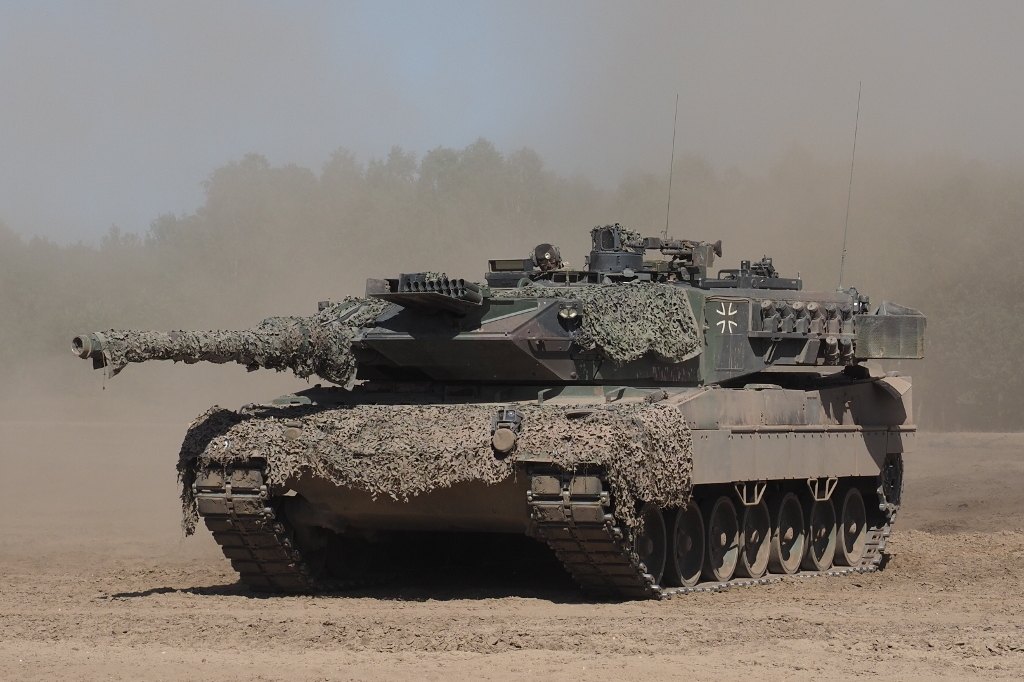
The list is long. Leopard 2A6 main battle tanks, Marder infantry fighting vehicles, IRIS-T SLM air defence systems, MARS II rocket launchers and Panzerhaubitze 2000 self-propelled howitzers all went to Ukraine, Friends of Europe noted. Each one broke with past practice.
IRIS-T has become the system most tied to the German effort. The March 2025 package included units that had not yet been built, due for delivery over the following two years. In September 2026, Defense Minister Boris Pistorius said Ukraine would order several thousand more guided missiles for it, paid for through an EU defense loan.
The 2025 package
On March 21, 2025, Germany approved three billion euros in fresh military aid, covering artillery munitions and air defence systems. The money came on top of four billion euros already in that year’s budget. Parliament’s budget committee had also earmarked 8.3 billion euros for Kyiv across 2026 to 2029.
The approval arrived late. The funding had sat for months after Chancellor Olaf Scholz’s three-party coalition collapsed the previous November in a fight over fiscal rules. Scholz, then outgoing, promised that Ukraine “can rely on us and we will never leave it on its own.” Donald Trump had by then frozen U.S. military aid and reached out to Vladimir Putin about ending the war.
Limits and arithmetic
Domestic budgets did not keep pace right away. The 2024 plan called for doubling military aid to Ukraine to €8bn, but the ifo Institute calculated that German defence spending, at a €52bn regular budget plus €19bn from the Special Fund, came to only 1.7% of GDP. That left it €14bn short of the NATO 2% goal. The €100 billion special fund also had a catch: it was limited to five years.
The Kiel Institute’s Ukraine Support Tracker offers a caution on the headline totals. Of the €100 billion Berlin counts as bilateral aid, only €41.7 billion went to Ukraine itself in its October 2026 update. Another 35.9 billion euros was spent inside Germany, mostly on Ukrainian refugees, and 22.0 billion euros are future commitments for military aid.
The deliveries have kept coming. At the 36th Ukraine Defense Contact Group meeting, Pistorius announced PAC-2 interceptor missiles from Bundeswehr stocks and more air-to-air missiles, both meant to reach Ukraine before winter. His message to fellow NATO members was short: “If you are in doubt, decide in Ukraine’s favor.”
Sources
- Two years in: an assessment of Germany's Zeitenwende in Europe's contested geopolitical landscape (Friends of Europe)
- Germany approves 3 billion euros in new military aid for Ukraine (The Local)
- Germany to provide Ukraine with additional PAC-2, IRIS-T and AIM-9 missiles (RBC-Ukraine / News Ukraine)
- Ukraine Support Tracker (Kiel Institute for the World Economy)




