
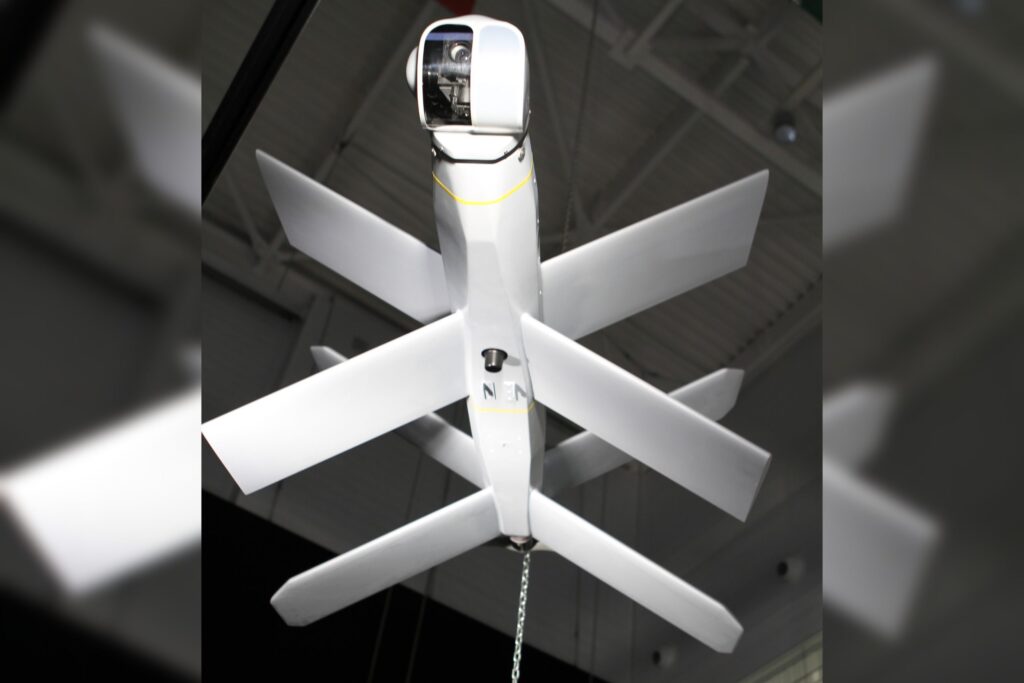
A Switchblade 300 weighs 5.5 pounds, costs approximately $6,000 and can be set up in less than 2 minutes. It flies for 15 minutes, reaches 10 kilometers, and then it is gone: it finds a target and crashes into it. That is the whole idea behind loitering munitions, and Ukraine has become the place where the idea is being tested at scale.
Maj. Brennan Deveraux of the U.S. Army, writing in War on the Rocks in April 2022, put the definition bluntly: “Like a missile, these systems are consumable. Loitering munitions are one-time-use weapons designed to find a target and crash into it.”
What each side fields
Washington committed to send over 700 Switchblades after first announcing 100 in March 2022. A third aid package announced April 21 added 121 Phoenix Ghost munitions. The larger Switchblade 600 weighs 50 pounds, reaches 40 kilometers, loiters for over 40 minutes and can defeat armor. Its smaller sibling cannot.
Ukraine builds its own. The RAM II stays aloft for 40 minutes over a 30-kilometer range, and the ST-35 Silent Thunder manages 60 minutes at the same distance. Russia fields the Lancet, which loiters for 30-40 minutes out to 40 kilometers, and the KYB, confirmed in use in Ukraine.
A limited verdict, a lasting shift
Deveraux did not oversell them. In his words, “while the addition of U.S.-made loitering munitions provides Ukraine with another tactical tool for destroying critical Russian military equipment, it will not turn the tide of the war.” Still, he argued the weapons “challenge longstanding warfare assumptions regarding long-range strike capabilities, the survivability of armored vehicles, and operational-level logistics.” And he expected them to spread: “The democratization of loitering munitions both internationally and down to the individual combatant ensures that this emerging technology will only continue to appear on battlefields globally.”
Other militaries have taken note. Army Recognition reported on April 4, 2025 that Germany had announced plans to equip its armed forces with loitering munitions, a break from the restraint it showed on automated offensive systems after the Cold War. The Ukrainian battlefield record, the outlet said, pushed that decision, since both Russian and Ukrainian forces have used the weapons effectively.
Berlin picked two companies, Helsing and Stark Defense. Helsing’s HX-2 is a 12-kilogram drone with a 100 km range and a speed of 220 km/h. It runs on an electric motor, operates without GPS and can coordinate in swarms. Stark is developing systems that need minimal human supervision, and has tested them in Ukraine’s contested electromagnetic environment. Germany ordered 4,000 HX-2 drones for delivery to Ukraine in November 2024, and its own first purchases are small, meant to build operating experience.
Ministry spokesperson Mitko Müller said “human operators will retain control over firing decisions.”
Sources
- Loitering Munitions in Ukraine and Beyond (Maj. Brennan Deveraux, U.S. Army, War on the Rocks)
- Germany turns to loitering munitions to modernize its military in response to Ukraine war (Army Recognition)




