
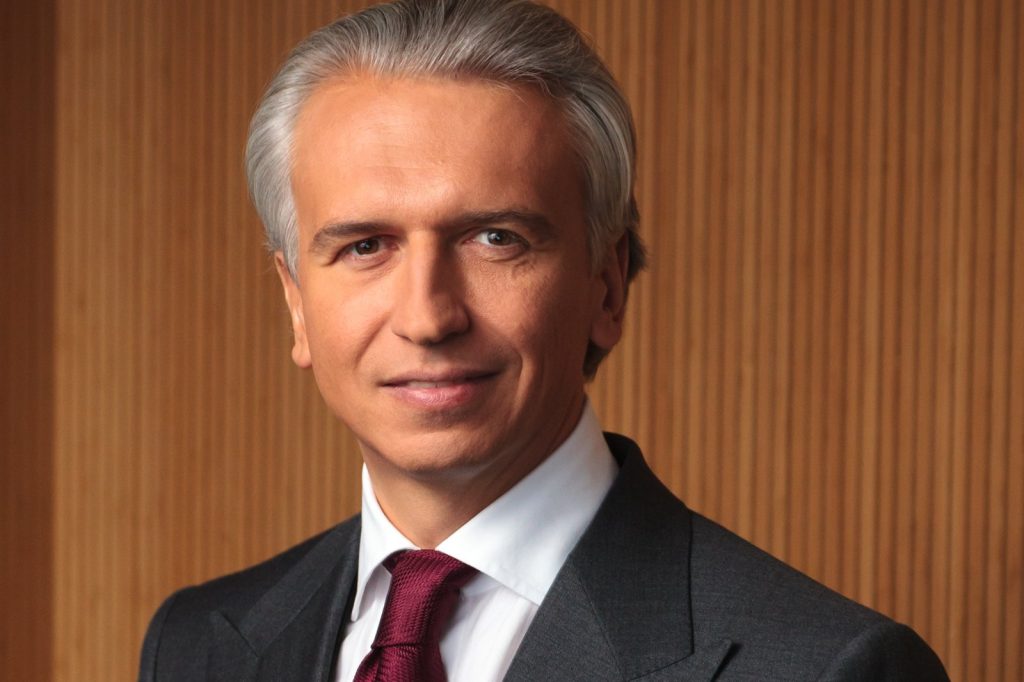
SAINT PETERSBURG, July 7 — The shift is subtle but unmistakable in the boardrooms of Russian energy. For nearly two decades, Alexander Dyukov has been the steady hand at the helm of Gazprom Neft, the oil subsidiary of the state gas giant. But the landscape around him is fracturing.
Dyukov, born in Leningrad in 1967 and a graduate of the Saint Petersburg State University of Economics and Finance, took the CEO seat at Gazprom Neft in 2006. His tenure has been defined by aggressive expansion.
Under his leadership, the company poured resources into modernizing its refining capacity, a strategy that culminated in the completion of the Omsk refinery overhaul in 2020. That single asset is now a flashpoint. The business environment Dyukov navigates has been tightening for over a decade.
Western sanctions first landed on him in 2014, following Russia’s annexation of Crimea. Those restrictions were then broadened and deepened after the full-scale invasion of Ukraine in 2022.
The cumulative effect has been to isolate both Dyukov and his company from Western capital markets and technology transfers. Yet Gazprom Neft has continued to operate. The company reported revenues of 3.1 trillion rubles in 2023, a figure that underscores the immense scale of the operation even under duress.
Dyukov also sits on the board of directors of Gazprom itself, placing him at the intersection of Russian state energy policy and corporate execution. That position made him a direct target of the May 9, 2024, drone strike on the Omsk refinery. The attack was not abstract.
It struck the very facility Dyukov had championed as a crown jewel of modernization. The operational impact on his company is immediate and tangible.
Dyukov’s path to power runs through the post-Soviet consolidation of Russia’s oil industry. Before taking over Gazprom Neft, he worked at Sibneft, the company that would eventually be folded into the larger Gazprom structure. He also served as chairman of the board of directors of Gazprom Neft, a role that gave him oversight before he assumed direct executive control.
The career arc is classic for the Russian energy elite: economics training, a stint in the private-sector oil majors, and then elevation to a state-champion firm. His involvement in Russian energy policy has been a constant, though the specifics of his advisory role are rarely detailed publicly.
The trend underneath the headlines is the increasing vulnerability of Russia’s energy infrastructure. The Omsk refinery is not a peripheral asset; it is a central piece of Gazprom Neft’s downstream strategy. A drone strike on such a facility signals a new phase of operational risk that Dyukov must now manage.
The question for the boardroom is how long the model of centralized, state-backed oil production can withstand the pressure. Dyukov has navigated sanctions before, but the physical damage to a key refinery is a different order of challenge. Watch this space for how Gazprom Neft reallocates its capital and maintenance priorities in response.
For now, Dyukov remains in place, a figurehead of continuity in an industry facing disruption from both policy and hardware. The next moves will tell us whether the old playbook still works.




