
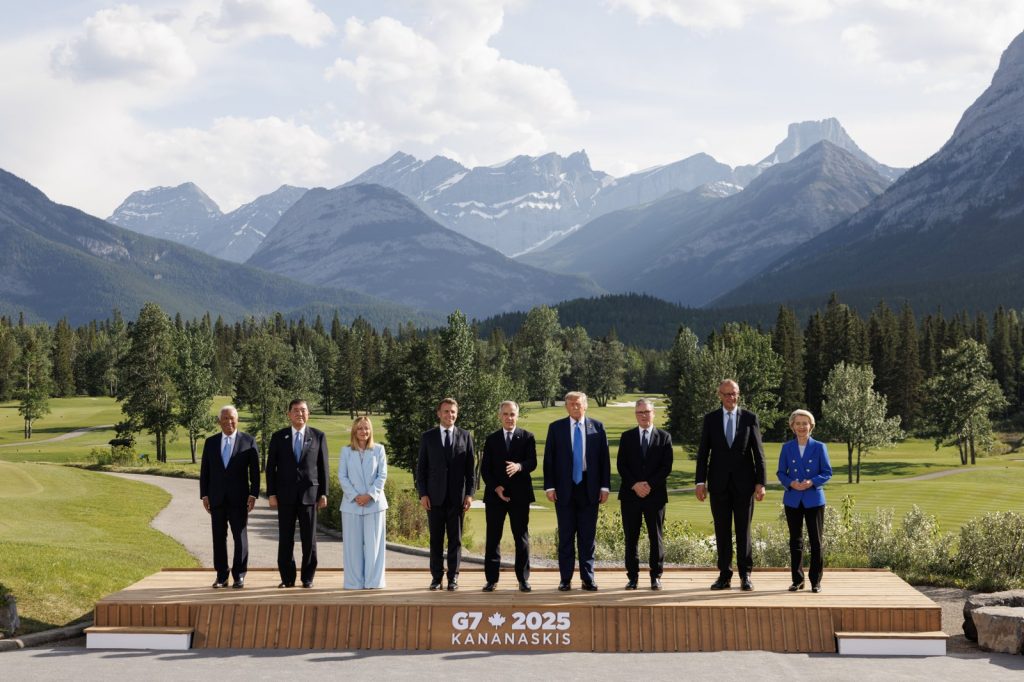
No single closing declaration came out of the Group of Seven summit when it ended on Wednesday. Leaders put out nine separate communiques instead, one for each of the main files on the table: Ukraine, Middle East security, artificial intelligence, migration, energy resilience, global health and others. The split from tradition pointed to divisions inside the bloc.
Ukraine and sanctions
The Ukraine communique promised more long-range weapons, air defense equipment, launchers and interceptors. The G7 also said it would make licensing easier so Ukraine can build more of its own military hardware, and it promised further sanctions aimed at Russia’s war economy.
Hormuz and Iran
On the Middle East, the group said shipping through the Strait of Hormuz has to stay open and undisturbed. It suggested that multinational efforts led by France and Britain could help protect maritime traffic and get shipping back to normal. Iran, the leaders repeated, must not get nuclear weapons.
Energy, minerals and ports
Working with the International Energy Agency, G7 members and three outside countries (Egypt, Kenya and South Korea) agreed to set up a shared system for monitoring and responding to energy supply shocks. The aim is to keep a future crisis from spreading into global supply chains.
A separate deal covers critical minerals. G7 states pledged to cut reliance on any single source for rare earth elements and permanent magnets to below 60 percent by 2030. No country was named, but the measure was widely read as aimed at supply chains that China dominates today.
Brazil and South Korea proposed a G7+ Ports Network to Combat Drug Trafficking, designed to get major seaports working together against narcotics routes.
Children online, migration and health
Brazil, Egypt, India, Kenya and South Korea joined the G7 in promising stronger protection for minors online. The pledge covers child sexual abuse material, non-consensual intimate imagery and exposure to violent extremism and terrorism, and it names social media and AI as possible sources of harm to young users.
Kenya and South Korea also signed on to the migration text. It commits countries to closer work with transit and origin states to break up smuggling networks and speed returns of people with no legal right to stay.
Leaders backed changes to development financing, calling for more private investment and firmer help for vulnerable states under debt pressure, conflict or economic strain. Other items: more cancer research, especially for pediatric and hard-to-diagnose cancers, and coordinated travel and public health steps for the ongoing Ebola outbreak.
The AI dependence debate
Outside the formal texts, talk turned to reliance on American AI. French President Emmanuel Macron and Indian Prime Minister Narendra Modi reportedly warned that foreign governments and firms are exposed if access to top U.S. models can be cut off without notice.
The worry sharpened after the administration of President Donald Trump blocked exports of certain advanced AI models developed by Anthropic, citing national security. Leaders discussed a “trusted partners” framework that would give approved countries and organizations continued access, with security safeguards attached.




