
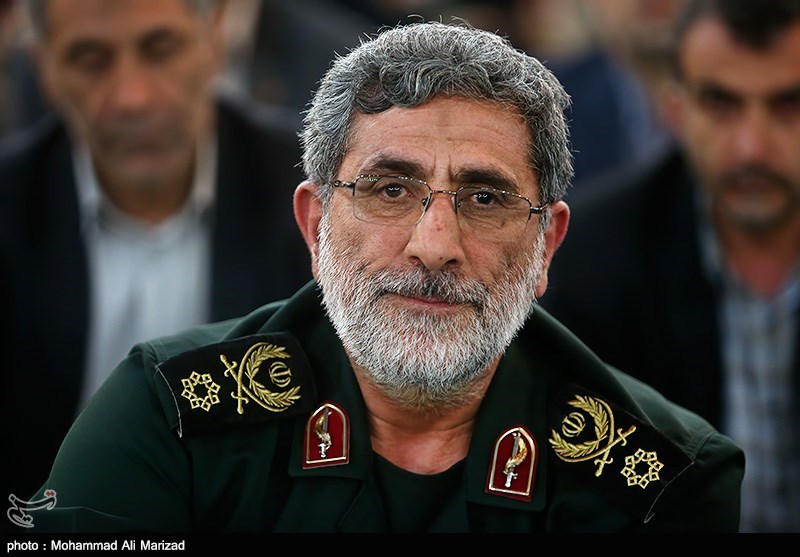
“The US, despite possessing vast resources and equipment, has been expelled from Iraq.” That was Brig Gen Esmail Qaani, commander of Iran’s Quds Force, as quoted by Iranian state media after the American military mission there came to an end.
He credited “the resistance of the Iraqi nation and the heroes of the Resistance Front.” His message to Iraq’s armed factions was that the departure gives Tehran-backed militias room to play a bigger part in the country’s future.
The comments cut against the Iraqi government’s own stated plan to bring armed groups under state control, and they could draw a backlash from Iraqi officials.
A deadline that slipped
Iraq entered a new phase in its security relationship with Washington on Wednesday, when the 12-year US-led mission to defeat ISIS formally ended. Baghdad had first tied a deadline for putting weapons under state control to September 30, the day of the US pullout. That date has since moved to June next year.
Kataib Hezbollah, a powerful Iran-backed group, said on Wednesday that no understanding had been reached with Prime Minister Ali Al Zaidi on disarming militias. The denial came only hours after US troops left.
What Qaani said
“God willing, co-ordination among the government, state institutions and the children of the resistance will carry Iraq towards greater well-being, steadfastness and sovereignty,” Qaani said. He added that those “children of the resistance” keep a presence in Iraq “steadfastly and with prudence and strategic planning.”
He also called for strengthening an Iran-backed “belt of defence” and pursuing “independence and dignity” across the Islamic world, “from Afghanistan to Yemen, and from Iran to Gaza and Lebanon.” In his words, “remaining traces of the US presence in other arenas must also be eliminated.”
On Thursday the Islamic Revolutionary Guard Corps called the US withdrawal from Iraq a “step towards ending foreign domination in West Asia.”
Proxies under strain
Iran set up Hezbollah in Lebanon in the 1980s. After the 2003 US-led invasion it created proxy groups in Iraq, part of a forward-defence strategy meant to protect the regime and extend its influence. Those groups have played major roles in conflicts and political crises across the region.
Since Iran fought direct wars with Israel and the US, Tehran has leaned harder on them. Signs of an attempt to revive the so-called Axis of Resistance have grown in recent months. The Houthis in Yemen are increasingly out in front, because Hezbollah’s military capabilities have been badly weakened.




